

Our Offbeat Life contains affiliate links & participates in the Amazon Services LLC Associates Program & other affiliate programs. If you buy something using an Amazon or other link, we may receive a commission at no extra cost to you. See our Disclosure for more details.
Choosing a Private Online Homeschool For Your Kids is Tough. Here’s How We Did It!

Can you believe we enrolled Little Man in a private online homeschool? It’s true! We realized that with the pandemic slowing our travel down to practically zero, we needed to offer Little Man more educational opportunities without leaving home.
Although we have been an unschooling family for two years now, our makeshift version of school at home lately wasn’t making anyone happy.
With far fewer regular opportunities for in-the-moment learning, we resorted to workbooks and tutoring. We all hated homeschooling. Sound familiar?
What We’ve Tried Previously
There is no one size fits all solution for kids to learn. Especially when it comes to online education, trial and error have been our key to success. We’ve been using some really cool online school programs for kids over the last year.
They aren’t formal, credentialed US education platforms but we have enjoyed them all for different reasons. Each one has its pros and cons. Unfortunately, we realized we needed a more robust solution going forward.
What’s best for us, may not be what’s best for another family. Our checklist below was created to help families determine what remote learning platform will work best for them.
Outschool
There is so much diversity on this platform! After all, where else can you find a class on the science of farts? Although we had some great teachers, it took trial and error to find programs he wanted to continue.
👉 We love Outschool and still use it for one-off classes.
It can get a bit pricey if it’s the primary education platform, though. At one point, the monthly total for everything he wanted was over $500! Needless to say, we did not do all of that. Oy!
Lingo Bus
👉 Lingo Bus offers online, one-on-one Mandarin language tutoring from native speakers in China.
I like the personal attention garnered from an individual tutoring session. Little Man loves his main tutor. Recently, he announced he will ONLY take classes with her.
That meant I had to cancel some sessions scheduled with other tutors and rebook with his favorite.

Lingo Bus is owned by VIPKid, the same company for which David teaches ESL. However, it only offers online Mandarin tutoring so it can’t act as a standalone learning platform.
What We’re Doing Now
Note: Galileo XP has rebranded and is now known as Kubrio!
At the beginning of July 2021, we enrolled Little Man in a private online homeschool for kids ages 8 to 18 called Galileo XP. As opposed to offering a formal, state-sponsored curriculum Galileo facilitates self-directed education.
Fun Fact: Self-directed education (SDE) derives from the self-chosen activities and life experiences of the learner. Those activities are not necessarily chosen deliberately for the purpose of education.
So how exactly does our kid learn? Little Man has access to clubs on a HUGE variety of topics. Some are led by adult professionals in their field (like Coding Club). Others are student-led based on learner interests (like Roblox club).
There are also one-month boot camps that meet semi-weekly. Plus there are hackathons for coding students to collaboratively code video games in a short period of time.
Part of the enrollment process was a one-on-one meeting with his check-in facilitator to discuss his goals. All of the necessary documents were pre-made for him. All he had to do was complete them with her!
Little Man attends a daily check-in each weekday with his facilitator and other kids. They discuss their plans for the day or week, how their plans went the previous day or week, and have fun together.
Little Man also attends a few clubs each day for 50 minutes each.
Currently, he’s enrolled in English Literacy, Coding, Minecraft Education, 3D Modelling, Spanish, Science, and Animation clubs. All of those are adult facilitator-led programs. In addition, he also participates in a few gaming clubs that are student-led.
In August 2021, he did Game Development and built his own video game! There have also been boot camps on stop motion animation, robotics, music theory, and science with coding that he enjoyed attending.
Choosing a Private Online Program
So how did we choose Galileo? How does any parent choose an educational online platform? Clearly, there is no best way to select the best private online homeschool.
Education is too personal of a style and decision for that to be possible. That said, there are some basic questions we asked to determine if the platform would be a good fit for the family. Here are some things we considered when making our choice.
- How large is the program and what is the student-to-teacher ratio?
- What is the weekly and daily time commitment for students?
- What is a typical day/week like for enrolled students?
- How is the education content delivered to students?
- Are the parent, student, and teacher roles clearly defined?
- Is the educational focus synchronous or asynchronous?
- What grade levels does the program include?
- Is the school accredited?
- What are the costs associated with the program?
- Which resources must be provided by the family? What resources are provided by the school?
- If a parent has questions about school policy or a student’s needs, is a live person available to respond (via chat, email, phone call, etc)?
- What is the school calendar like? Are there set start and stop times or can students enroll at any time?
- Can a student work through courses at their own pace, accelerating when possible or slowing down as needed? If so, does the school limit how quickly students can work through materials?
- What are the graduation requirements (senior project, volunteer hours, etc)\? How do students complete the program?
- How do students in the school prepare for life after graduation (trade school, university, entrepreneurship, etc.)?
What Do the Questions Mean?
Even with the checklist above, it can still be daunting to choose a private online homeschool. Let’s review the list a bit and explore the questions in more depth. I’ll use our selection process as an example, to help with clarity.
School Size
Some people believe that a large program offers a wider variety of options. This can be true because they often have larger budgets. However, a larger program also means larger class sizes.
A high student-to-teacher ratio often results in less attention on individual students. I sat in a lecture hall in college with over 60 other students. The professor didn’t even know my name until I asked some questions after class, just before the mid-term.

Some people have classes with hundreds of other students at once. That might have been fine for college. However, I would never want my kid to be a number early on in his educational development.
Sometimes a smaller online program is a better fit for some kids that need more individualized attention from their instructors.
We like that there is a balance of large and small group interactions with Galileo. The check-in groups have only a handful of kids but the clubs can have anywhere from four to 20+ kids.
The Galileo growth plan ensures that Little Man will always have opportunities for individual attention and small group interactions. This is very important to us as a family.
Time Commitment
A private online homeschool should not require they sit at a computer for 6-8 hours per day. Especially at a younger age, kids can only handle sitting still for so long. Much of the time in physical schools is spent moving around a classroom.
Students do circle time in the elementary years, group work during middle school, and lab work in high school. Elective classes like art, gym, and library time also include movement outside a desk.
Learning Tip: The National Board of Professional Teaching Standards suggest remote learning takes at most two hours daily for elementary, three hours for middle school, and four hours for high school.
Because Little Man’s education is self-directed, he gets to make his own schedule. He never has to spend more time in front of a screen than he chooses, so we know he isn’t feeling burned out during the day.
Day in the Life
Every private online homeschool has a different structure for how students spend their time. In addition, every parent has opinions on how they feel their kids should spend time with online education.
In order to ensure that an online education platform will suit a family’s needs and preferences, schools should provide some sort of insight to their daily and/or weekly schedules.
This may come in the form of a YouTube video, a printed outline or schedule, or a staff member may simply give a verbal explanation.
In our case, Galileo actually has an entire portion of their site dedicated to how kids spend their time. Because self-directed education is such a new methodology for parents, most have A LOT of questions.
Note: Galileo XP has rebranded and is now known as Kubrio!
By the time we decided to enroll, I was confident I knew what to expect. So far, it’s been pretty accurate.
Content Delivery
Every online learning platform has its own Learning Management System (LMS). Some are proprietary and uniquely designed for that school. Other programs use existing software, such as Google and Zoom.

In our education examples above, Lingo Bus and VIPKid use proprietary software whereas Galileo uses existing software to support their education initiatives.
All clubs, check ins, bootcamps, etc are held on Zoom while all calendars and documents are stored in Google.
One style isn’t necessarily better than the other. However, parents may more easily support their kids’ educational needs if a school is using software with which the adults are already familiar.
If the school uses custom software, it should prioritize parent training or provide guidance in using the system if necessary.
Role Clarification
One could also call role clarification the establishment of expectations. The transition to private online homeschooling can be a challenging one. Many online learning platforms understand this.
So they often offer some sort of printed guidelines to which parents can refer back. Galileo offered us a complete document listing the expectations for staff facilitators, students, and parents.
We were required to review these before completing our application process. They also ensured we had no questions about the expectations, which was very helpful.
Sometimes a private online homeschool doesn’t offer any sort of formal guidelines on expectations for students, parents, and teachers. If that’s the case, parents should confirm communication processes with the teachers.
They can ask when teachers are available for students to ask questions on learning materials. Parents should also ask about typical response times from teachers when a student needs assistance.
Synchronous vs Asynchronous Education
Synchronous classes run in real-time, with students and instructors attending together from different locations. Asynchronous classes run on a more relaxed schedule.
Students access their class materials during different hours and from different locations. There are benefits to both methods.
Synchronous often provides more interaction with teachers. However, asynchronous learning provides more flexibility. Synchronous is done on the teacher’s timeline while asynchronous is done on the student’s timeline.

Little Man had mediocre experiences with pre-recorded learning through Supernow and Outschool. For that reason, we didn’t feel asynchronous education would work as well for us.
Thankfully all of the check-ins, clubs, and boot camps at Galileo are conducted as synchronous learning.
There is still an asynchronous component, but it is the daily schedule set by the student. Because this is an aspect created and controlled by Little Man, he generally doesn’t have issues completing it.
Program Grade Levels
Public schools specialize in certain types of education (elementary, middle school, high school, etc). So, too, do private online homeschool programs. Since Little Man is still of primary school age, we wanted a program he could grow into a bit.
If he enjoys online learning, we will likely stick with it beyond our pandemic travel hold period. Little Man is in the lower range of Galileo’s program offerings.
So we knew we could easily continue on if we so choose. Not going through a selection process like this multiple times is always an extra bonus!
School Accreditation
The type of accreditation a school holds matters most for students planning to attend some sort of post-secondary education.
Some universities will not accept students from non-accredited high schools. In recent years, this has become less of an issue for homeschooled students.
Typically, homeschoolers can provide an educational resume in lieu of transcripts. However, some parents want to ensure an optimal chance for their students to attend certain programs. Thus, accreditation is more important to some parents than others.
In our case, we aren’t terribly worried about school accreditation because we feel we’re doing fairly strong due diligence in selecting a private online homeschool for our child.
However, we found it interesting that Galileo offers an accreditation track to parents who want one.
Program Costs
Obviously, each private online homeschool will have some sort of cost. After all, they are private rather than public schools. So having clarity regarding tuition fees is essential.
However, to ensure the school is a match to the budget available, it is also imperative to figure in more hidden costs. These can include a new computer to meet minimum school specifications or special software required by the school to enroll.

I was impressed that Galileo provided all of this to us as part of the enrollment process. Thankfully we have a laptop and headset that meets the school requirements. No extra paid software is required either.
In addition, we even get free subscriptions to several sites. Little Man was thrilled to discover he finally gets to use Minecraft Education! Traditional homeschoolers cannot get a private subscription. It is only offered to schools.
Plus, we can access an extensive Trello board listing optional educational resources in major subject areas. Most of them are free; none of the paid software is required!
Resources
Most private online homeschools will require families to provide or acquire their own computers. However, it is always helpful to confirm this expectation before enrolling.
The same goes for any required software that the school mandates. Parents should find out if required software licenses are provided by the school.
By ensuring they know what resources are provided (or not) by the school, families will understand how much work they’ll have to do upfront to set their student(s) up for success.
All our required resources (other than the laptop) were free downloads after enrollment was finalized.
However, we did have to do some prep work to ensure Little Man was ready for school. He needed a Gmail account so the school could add him to all its Google suite resources.
Little Man now has a synced calendar with all the school activities. He can simply copy the clubs he wants to attend to his own Google calendar.
School Calendar
Like brick and mortar schools, most online schools for kids do not follow the same calendar. They all start and end at different times of the year. Some schools are stricter than others regarding when students can enroll.
When we started “shopping around” for a remote learning platform, we didn’t realize private online homeschools would have summer breaks. So we would have had to wait two extra months to begin anything.
Thankfully, Galileo runs a year-round program. Students can start and stop at any time. In addition, enrollment can be paused at any time (for reasonable periods, of course).
Some families take a one or two-month break in July or August for the northern hemisphere summer.
Other families take such a break during the southern hemisphere summer, around Christmas time. For a full-time traveling family, we appreciate that sort of flexibility!
Course Pacing
Traditional schooling models tend to teach to the middle 50% of students. The most advanced 25% can’t work ahead while the struggling 25% must always try to catch up.
A student doesn’t always have access to an instructor as regularly in an online environment.
If they aren’t in the middle 50% it can be extra challenging. An advanced student may want to work ahead, so confirming that they are permitted to do so is very important to optimal online student success.
Thankfully, Galileo meets each student where they are in their education. Clubs, boot camps, etc can be attended by any age range. The only requirement is a desire to learn. There are also certain clubs for advanced-level students.
For example, there is a Spanish club and an Advanced Spanish club. Whether a student is ahead or behind others in their learning process is irrelevant. In a self-directed learning platform, each student is expected to work at their own pace.
Graduation Requirements
Most high schools have a certain number of credits required in education areas (Math, Science, Foreign Language, etc). In addition, there may be a minimum number of volunteer hours or even the completion of a thesis/project.
Especially for older teens, knowing exactly what is expected in order to formally complete the private online homeschool is essential.
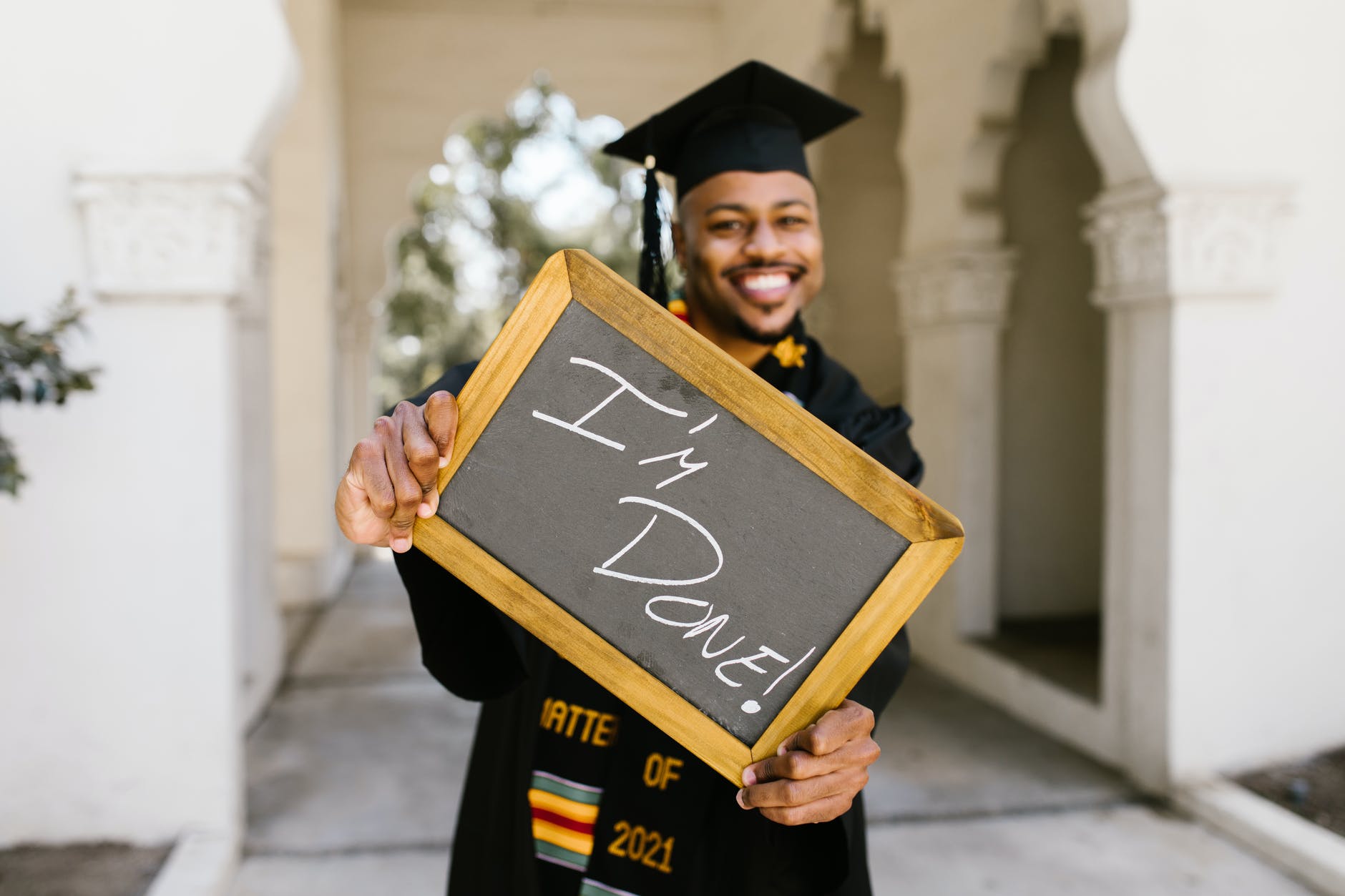
As a self-directed learning platform, Galileo does not have formal requirements for students. However, it does offer guidance to its enrollees in creating their own transcripts.
These transcripts outline all the completed projects and education the student has completed.
Often Galileo students have done things well beyond traditional education. This includes starting a business, creating art, composing music, or coding video games.
Universities are typically excited to consider self-directed learners applying without a standard transcript with grades.
Life After Graduation
The graduation requirements set by traditional private online homeschools aim to ensure graduates can apply for a job or go on to higher education. Parents should ask each online program they’re considering about graduation rates.
Knowing the top three categories of activities (getting a job, starting a business, attending trade school, etc) students pursue after graduation is also very helpful.
Galileo offers a free self directed education (SDE) course to parents. An entire section of that course is dedicated to discussing what sort of post-education opportunities its students pursue.
Many parents new to the concept of SDE are concerned that their student(s) may finish high school without a formal transcript. They may assume this means kids leave the private online homeschool without having quality life opportunities available.
However, the opposite is often true.
Many self-directed learners, including at Galileo, are better prepared to complete college or university. After all, they are used to the freedom to learn that is associated with choosing classes and choosing to attend those courses.
Conclusion
Choosing a private online homeschool can be confusing. But it doesn’t have to be. A family just needs to know what they want and what they need from a remote learning platform.
Hopefully, the checklist above and an outline of our experience with the process is helpful.
Even if a more traditional online school is a better fit for your family, Galileo’s clubs are also an excellent supplement as an after-school program. We enjoy Galileo and look forward to the pandemic ending so we can begin to enjoy the live Dojos as well!
If you made it this far, congratulations! Feel free to contact us with questions or thoughts on your remote learning search process. No family should feel like they must go it alone in their selection journey!


