
Our Offbeat Life contains affiliate links & participates in the Amazon Services LLC Associates Program & other affiliate programs. If you buy something using an Amazon or other link, we may receive a commission at no extra cost to you. See our Disclosure for more details.
How We Meet Digital Nomads as a Full-Time Traveling Family

Long‑term travel can feel both deeply connected and surprisingly lonely. When you move through new countries every few weeks or months, you rebuild your sense of community again and again.
And while many guides share quick ways to meet digital nomads, families often need something different. Including ours!
We need spaces where adults and kids can form real relationships, not just exchange social handles before everyone heads in a different direction.
After traveling full‑time as a family since 2019, we’ve learned that community doesn’t just appear.
It grows from small, intentional choices.
It comes from understanding the rhythms of nomadic life, noticing where people naturally gather, and creating moments of connection that feel safe and sustainable for both parents and children.
These are the approaches that have helped us build friendships across continents, the kind that make the road feel more like home.
Join Low‑Pressure Social Events Where People Naturally Gather
Some of the easiest connections we’ve made have come from places where people are already relaxed and doing something they enjoy.
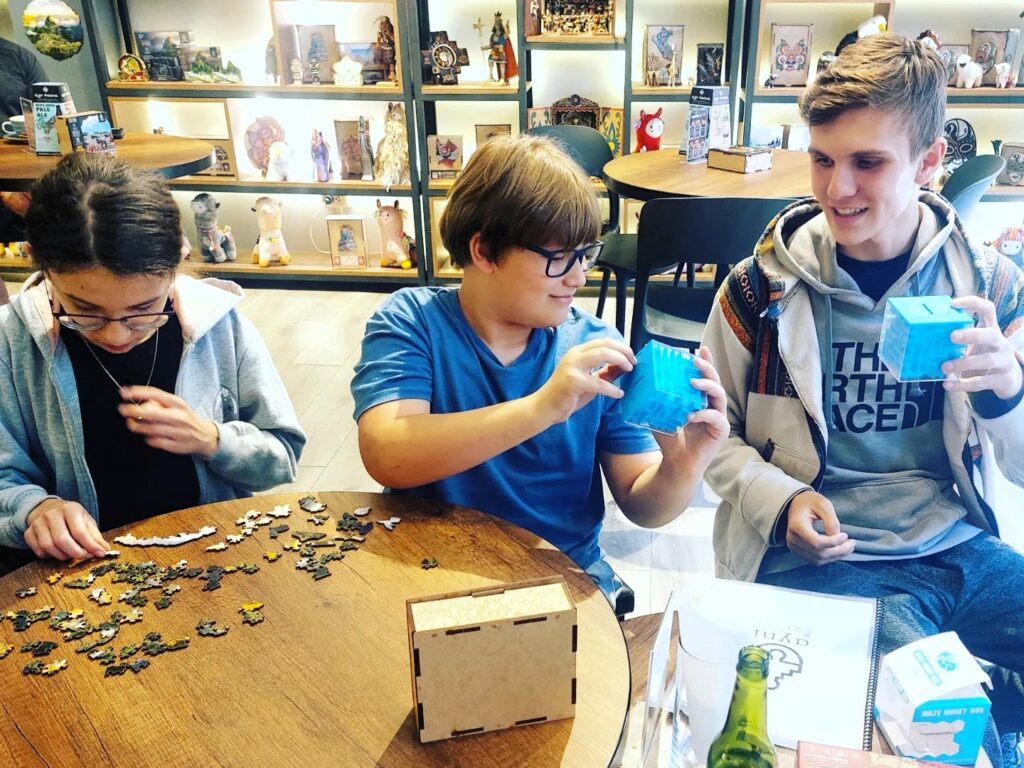
In Cusco, we walked into a small café for breakfast and realized it was also a puzzle shop.
They had their own designs mixed in with commercial puzzles, and the staff was the kind of friendly where you end up talking longer than you planned.
They mentioned their weekly speed‑puzzle night, so we went. It wasn’t a big event. Just a handful of families, a few long‑term travelers, and some locals who clearly came every week.
Kids moved between tables. Adults talked while working on puzzles. It all felt easy because no one was trying to “meet people.” Everyone was just there.
We’ve had similar moments at board game cafés in Malaysia and Japan. Shared activities take the pressure off. Kids settle in quickly, and adults follow their lead.
Use Local Digital Groups to Find Real‑World Connections
Local WhatsApp groups, Facebook communities, and small parent‑run chats have been some of the easiest ways for us to meet other families on the road.
These groups aren’t fancy. They’re usually a mix of long‑term travelers, expats, and local parents who just want to know what’s happening that week.
We’ve joined everything from neighborhood chats to worldschooling groups to small Facebook communities that only exist for one specific city.
Most of the time, someone is organizing a park day, a casual meetup, or a simple “we’re heading to this café if anyone wants to join.”
It doesn’t take much. One message usually leads to a real conversation, and that’s often all you need to get a sense of who else is around.
These groups also help you understand the rhythm of a place before you show up.
You see which areas families prefer, which cafés have space for kids, and what kinds of activities people are doing on a regular basis.
It’s a simple way to ease into a new city without feeling like you’re starting from zero.
Stay Long Enough for Real Relationships to Form
Slowing down has made the biggest difference in how easily we meet other families.
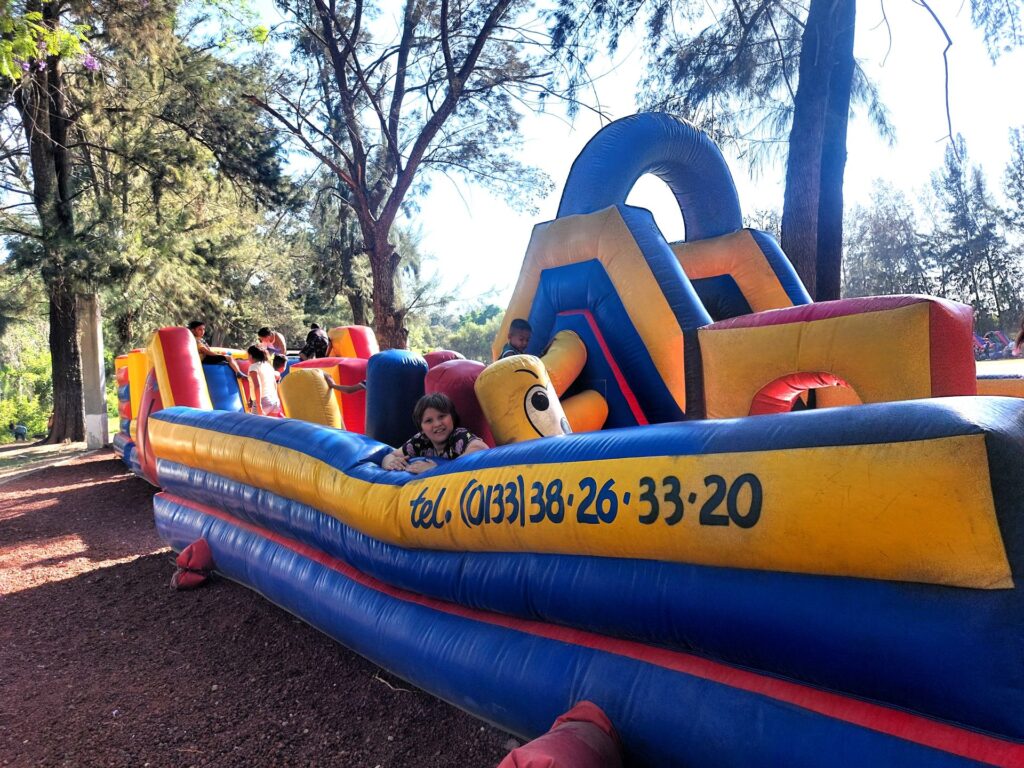
When we stay somewhere for more than a week or two, we start seeing the same people at the park, the same parents at the café, the same kids splashing in the pool.
Familiarity does most of the work for you.
We’ve noticed that kids pick up on this even faster than adults.
They recognize faces long before we do. They remember who had the blue scooter or who brought snacks to the playground last time.
Once the kids feel settled, the adults usually fall into conversation without much effort.
Staying longer also gives you a better sense of the rhythm of a place. You learn which days families tend to gather, which cafés are actually kid‑friendly, and which neighborhoods feel welcoming.
None of this happens when you’re rushing through a city. It shows up in the second week, sometimes the third, when the pace finally slows enough for real life to appear.
Create Simple Opportunities for Families to Gather
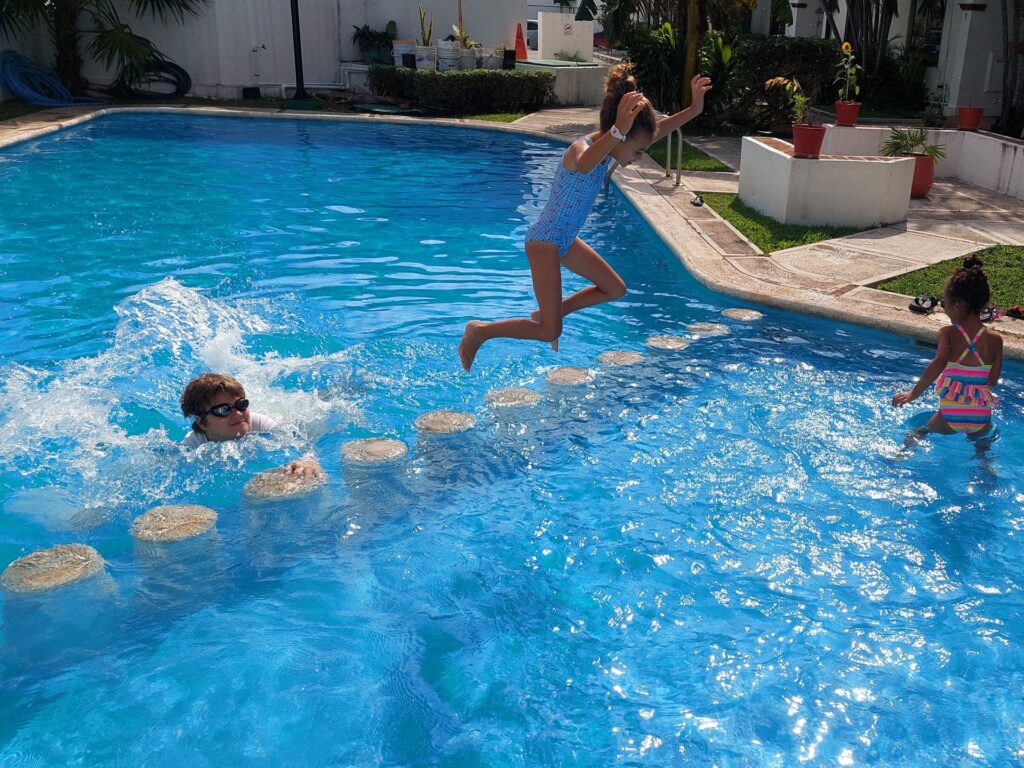
Some of our closest friendships have started with the smallest invitations. In Playa del Carmen, we asked a couple of families if they wanted to come over and swim.
Nothing organized. No plan beyond “we’ll be at the pool this afternoon if you want to join.”
One of the parents asked if they could bring another family they’d just met. We said yes, and that extra family ended up becoming some of our good friends.
It still makes me laugh how often things unfold that way. One casual invitation, and suddenly you’ve added people to your life you didn’t even know existed that morning.
We’ve learned that keeping things simple works best. A swim, a park afternoon, a walk to get ice cream.
Kids settle in quickly, and adults usually follow. You don’t need to host anything big. Just open the door a little and see who steps through.
Choose Accommodations That Make It Easy for Families to Meet
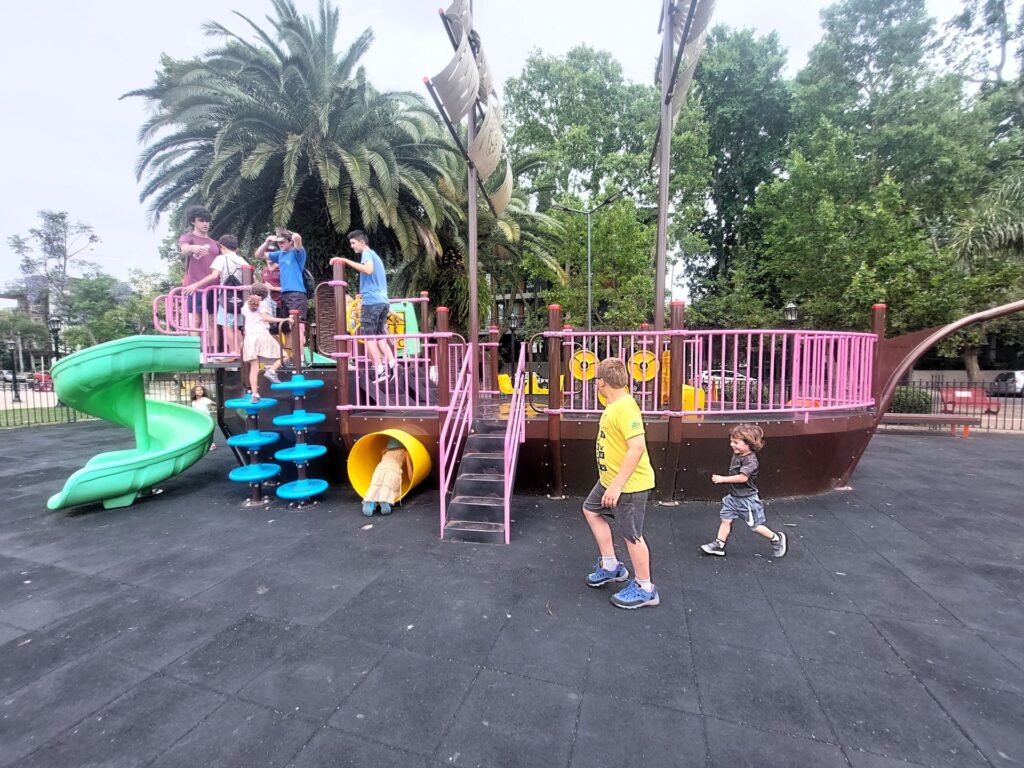
Where we stay has a big impact on how easily we meet other families. We tend to look for apartments or small complexes with shared spaces because people naturally cross paths throughout the day.
Pools, courtyards, and small common areas make it simple for kids to play and for adults to fall into conversation without planning anything.
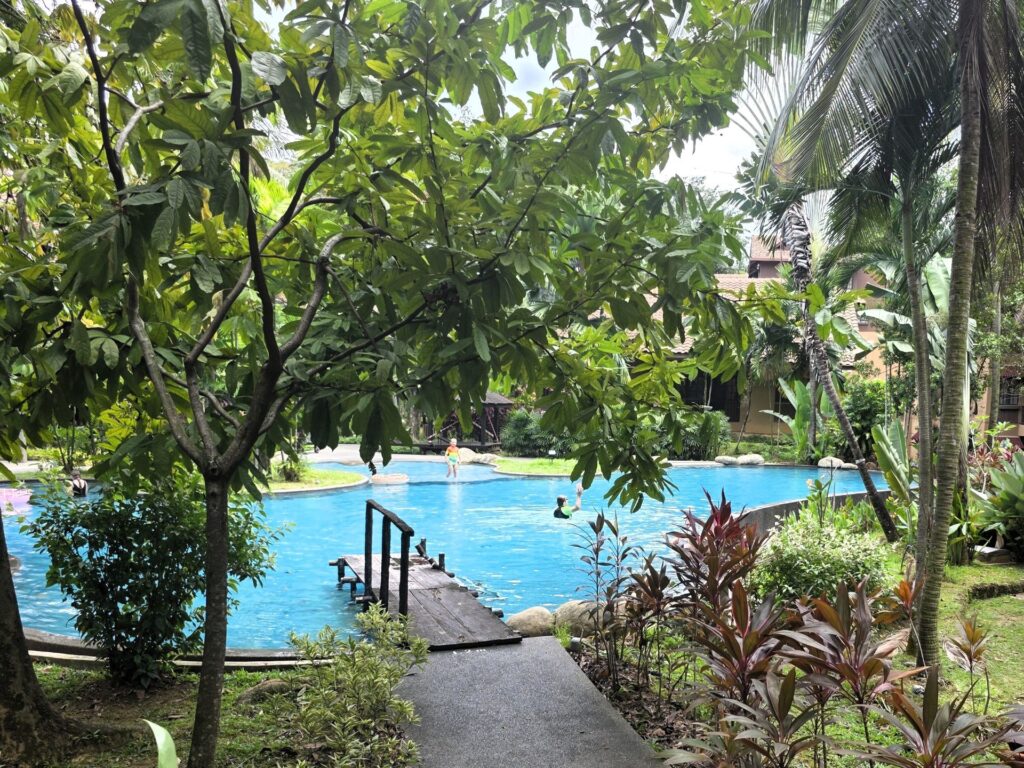
The first time we were in Malaysia in 2019, we met an expat family while swimming in our condo pool.
Our kids had the same name, which immediately broke the ice. That one moment turned into a friendship we still value.
The mom is one of my dearest friends, and we make a point to see them every time we’re back in Malaysia.
Shared spaces work well for us because they create a steady rhythm of familiar faces. Kids usually start things off, and the adults follow. It’s an easy way to get a sense of who else is around without having to seek anything out.
Pay Attention to the Natural Rhythm of a Place
Every city has its own rhythm, and learning to read it has helped us meet people in a way that feels comfortable for all of us.
Some places come alive in the late afternoon. We’ve found Malaysia is certainly one of those! Others have a steady morning crowd at the same café every day.
Parks fill at certain hours. Pools get busy at the same time each week. Once you notice the pattern, it becomes easier to show up when other families naturally gather.
This has been especially helpful for us because our son isn’t the one who runs up to a group of children right away. He warms up slowly. He watches first.
When we follow the natural flow of a place, he doesn’t have to initiate anything. He just has to be present long enough to feel comfortable, and that’s usually when things start to open up.