
Our Offbeat Life contains affiliate links & participates in the Amazon Services LLC Associates Program & other affiliate programs. If you buy something using an Amazon or other link, we may receive a commission at no extra cost to you. See our Disclosure for more details.
Why Worldschooling Communities Could Be Your Best Travel Decision Yet!

Wondering what worldschooling communities are and how they can help you as a full time traveling family? You’re in the right place!
In this article, we highlight the best features of our podcast on this very topic as well as offer the podcast links for your listening enjoyment. So let’s jump in!



Executive Summary
On this week’s episode of the Our Offbeat Life podcast, host David Cole has an insightful discussion with Rachel Carlson about creating global communities for worldschooling families.
Travel has always been a part of Rachel’s life, from weekend trips with her husband to bringing infants along on their adventures. In 2014, when Rachel’s kids felt lonely without consistent friends while traveling, she brainstormed solutions.
This birthed the concept of organizing regional “pop up hubs” for traveling families to meet up, explore destinations together, and form bonds beneficial for long-term global family travel.

After hosting events for over 50 weeks with hundreds of attendees, Rachel shares the many benefits of these worldschooling community connections. The conversation also touches on finding balance and rhythms during years of nomadic living.
If you seek camaraderie amidst the beautiful chaos of road life or considering leaping into full-time family travel yourself, don’t miss tapping into Rachel’s hard-won wisdom!
Topics covered:
- Benefits of attending a worldschooling pop up hub
- How Rachel structures balance working online and parenting teens
- Fostering kids’ independence based on region
- Rachel’s favorite cultural immersion story
- Budget tips for long term travel with kids
Show Notes
Podcast: Our Offbeat Life
Episode: “Why you need worldschooling communities in your travels”
Host: David Cole
Guest: Rachel Carlson
Rachel is the founder of World School Pop Up Hub, a network that facilitates meetups for location independent, worldschooling families as they travel.
Former educator and travel enthusiast, Rachel transitioned to full-time travel with her family in 2014. Her pop-up hubs, born out of her children’s need for connection while on the road, now serve over 375 families globally.
David Cole, host of the popular “Our Offbeat Life” podcast, is a champion for the worldschooling lifestyle and a guiding light for families aspiring to embrace full-time travel.
Having explored 37 countries, driven over 48,000 miles, and flown more than 151,000 miles, David uses his extensive travel experiences to coach families on the practicalities of globetrotting.
Through interviewing current family travelers about their triumphs and challenges, he provides invaluable insights and tips that encourage and equip families to leap into their own worldschooling adventures with confidence.
For travel inspiration and guidance from families living this lifestyle, have a listen to episode [#2] of Our Offbeat Life! Listen on iTunes, Spotify, or watch on YouTube.
Leave a Review!
Apple Podcast reviews are one of THE most important factors for podcasts. If you enjoy the show please take a second to leave the show a review on Apple Podcasts!
✔️ Click this link: Leave a review on Apple Podcasts
✔️ Hit “Listen On Apple Podcast” in the middle next to the picture.
✔️ In iTunes, Click “Ratings and Reviews” under the show name.
✔️ Leave an honest review.
✔️ You’re awesome!
Introduction
As a traveling family, it can be challenging to find a sense of worldschooling community and build connections. We have been worldschooling since 2019 and have experienced that challenge firsthand.
Constantly being on the move means leaving friends behind and having to rebuild your social circle in each new destination.
This is where worldschooling communities can make a big difference, especially through local meetups called “pop-up hubs”.
In this episode of the Our Offbeat Life podcast, world schooler and podcast host David Cole interviews Rachel Carlson, founder of the World School Pop-Up Hub.
Rachel is a worldschooling expert who shares how she created pop-up hubs to bring together worldschooling families as they travel.
We only get so many years with our children and I really encourage people to take time to be with their family, get to know your kids.
Rachel Carlson
Keep reading for key takeaways on the benefits of attending a hub and Rachel’s top tips for long-term family travel.
Rachel’s Background: From Weekend Getaways to Full-Time Travel
Rachel has always prioritized travel, from weekend trips before having kids to long holidays after getting married. Even after starting a family, adventures remained a huge focus.
When her kids were young they lived a traditional life in the U.S. – desk jobs, mainstream schooling, Rachel as a stay-at-home mom.
We were super happy, but we were not content. Like we had a great community and everything else, but felt like something was missing.
Rachel Carlson
But in 2014 they sold their house to pursue travel full-time, moving first to Hawaii, then road-tripping the mainland U.S. before settling down in South Carolina.
After a revelation that they could work location-independent jobs, they soon transitioned into worldschooling their kids while traveling indefinitely.

Bringing Together Traveling Families: The Birth of the Pop-Up Hub Worldschooling Communities
The concept for the Worldschool Pop Up Hub was born when Rachel’s kids complained about lacking friends on the road.
She realized they didn’t actually miss academics or school itself – they desperately needed worldschooling community with youth their own age.
Rachel discovered a gap serving this need for traveling families to connect. She hosted a trial one-week meetup in Mexico City, inviting families to explore together.
I said, well, there’s got to be other folks like us around who are just ready to travel more ready to meet up with people who understand that I don’t need to explain…
Rachel Carlson
It was a huge success! Eight families attended and bonded so much that her kids asked to do it again.
Realizing she’d created a sustainable business model, Rachel continued organizing these regional “pop ups” across the globe.
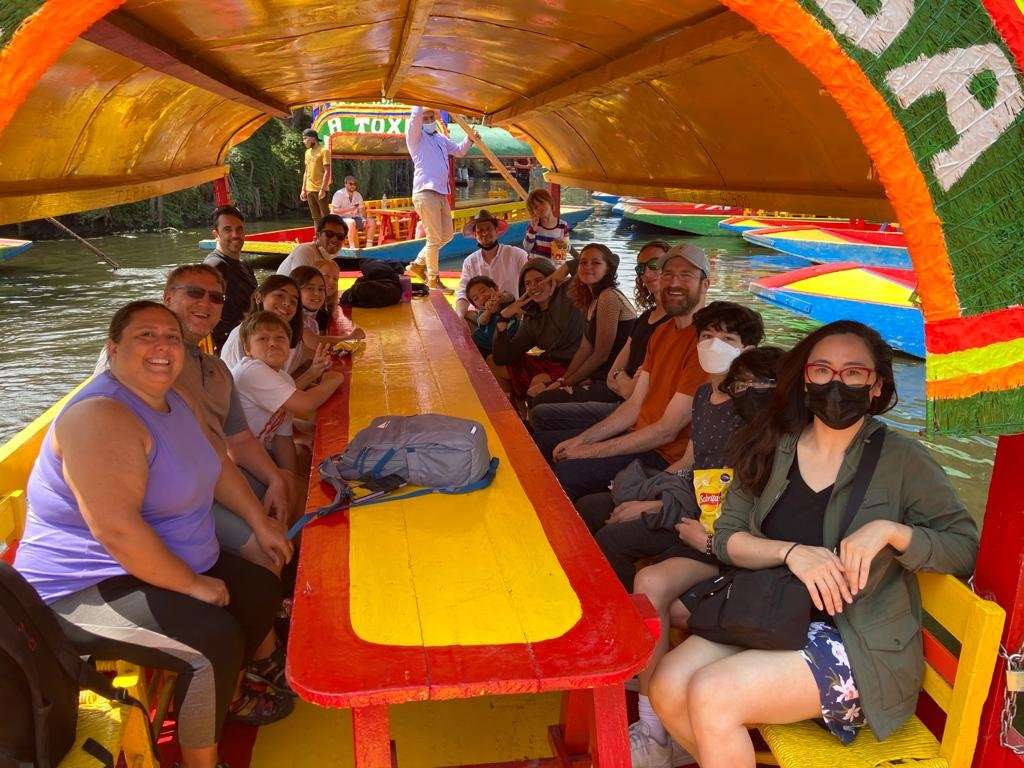
Now 375+ families have attended 50+ in-person events Rachel has hosted or facilitated through other traveling families. Like our family!
Benefits of Attending a Pop-Up Hub Worldschooling Community
As we can personally attest, attending a worldschooling pop-up hub event offers many rewards.
☑️ Alleviates Loneliness & Burnout
Humans need community for emotional thriving, but frequent moves mean leaving friendships behind.
Having built-in travel companions who implicitly understand lifestyle challenges provides vital social support. Both kids and parents can quickly make friends with fellow worldschoolers.
☑️ Gives Kids a Ready-Made Social Circle
Rachel’s kids blamed travel itself for their isolation, failing to recognize the actual issue – lack of consistent friends.
Pop-up hubs provide an automatic social circle for global nomad youth to bond over navigating a nontraditional upbringing. Exploring museums or nature hikes together sparks adventure and collaborative learning.
It’s such a relief. I mean, that’s definitely worth the money right there to have friends and a whole plan for the week.
David Cole
☑️ Offers Parents a Break from Planning
Travel requires extensive research and logistical planning. Having pre-coordinated regional events to simply show up for gives detail-oriented parents a break.
They can enjoy quality family time without laboriously orchestrating each day’s activities themselves.
☑️ Fosters Trying New Things Together
Kids resist tourist sites without entertainment value. But enjoying fresh cultural experiences alongside enthusiastically engaged youth brings contagious enthusiasm.
Peer encouragement draws kids into museums, architecture tours, etc potentially labeled “boring”…transforming them into lively participatory learning.

Tips for Long-Term Family Travel
Rachel shared the following hard-won wisdom for extended family travel success:
👍 Communication is Key
Check in frequently as children age regarding changing priorities and emerging needs. Be prepared to flex shared plans so everyone feels valued. Listen first, then discuss compromises.
👍 Give Growing Kids Appropriate Independence
Assess children’s maturity and regional safety to determine appropriate freedoms. Incrementally build autonomy as they gain skills for managing independence.
Check in frequently as children age regarding changing priorities and emerging needs. Be prepared to flex shared plans so everyone feels valued.
Rachel Carlson
👍 Embrace Surprises That Challenge Perspectives
Maintain an open mind about cultural differences. Model respectful acceptance of foreign traditions around gender norms, religion, etc. rather than judgment. Use surprises as teaching moments.
👍 Don’t overplan – Stay Flexible
Avoid overloading days with activities. Leave room for spontaneity to soak up local color. The most memorable moments often come from unplanned experiences where real life happens off the tourist trail.
The Worldschool Pop-Up Hub builds a worldschooling community for traveling families, facilitating meetups to form friendships on the road.
If you’re considering transitioning into long-term family travel, attending a regional hub event could be the perfect first step to making meaningful connections.

Conclusion: Finding Worldschooling Communities
Rachel Carlson created the Worldschool Pop-Up Hub to address isolation challenges for traveling families.
Local meetups help both kids and parents thrive emotionally while living nomadically long-term. The worldschooling community provides vital social support fueling adventure sustainability.
If you’re considering transitioning into long-term family travel, attending a regional hub event could be the perfect first step to make meaningful connections.
Rachel Carlson
Worldschooling Communities Executive Summary
This episode of the Our Offbeat Life podcast features host David Cole interviewing Rachel Carlson, founder of the World School Pop Up Hub. Rachel shares her family’s journey into full-time travel, from selling their house in 2014 to worldschooling their kids while working location independent jobs currently.
When Rachel’s kids complained about lacking friends and a worldschooling community on the road, she realized a major gap serving traveling families.
Rachel started hosting one-week pop up meetups in destinations across the globe for worldschooling families to hang out, explore together, and form friendships.
These pop up hubs alleviate isolation/burnout, give kids built-in friends, allow parents to take a break from planning, and foster trying new cultural experiences together.
Key tips Rachel offers for long-term family travel success include: prioritizing communication as kids age and interests evolve; scaffolding appropriate independence for growing teens; embracing cultural surprises with openness; and avoiding overplanning to remain flexible.
She created the pop up hub to address the emotional challenges families can face living nomadically, providing meaningful worldschooling community support.
Key Takeaways and Timestamps
[00:26] Rachel met her husband in 1994, started traveling early in relationship
[00:43] Had 5 years together before marriage, 5 more before having kids
[01:00] Ensured kids had passports as babies, traveled with them as infants
[02:00] In 2014 sold house without solid plan, moved to friend’s basement temporarily
[02:30] Relocated to Hawaii for 2 years, squeezed out by housing costs
[02:57] Drove across mainland US in van exploring potential next home bases
[03:15] Settled on Hilton Head, SC for 2 years, put kids back in public schools
[03:33] Both working online location independent jobs
[03:50] At end of school year, pulled kids out to worldschool/unschool
[04:10] Now in 6th year of full-time travel, oldest son graduated high school
[05:06] Founded pop up hub to address kids’ loneliness/lack of a worldschooling community
[05:55] Hosted first trial event in Mexico City, immediate success with 8 families attending
[09:35] Realized issue was lack of friends not missing school itself
[10:31] Some families join hub events across multiple continents
[11:04] Hub events give parents a break from planning with activities provided
[11:48] Kids more engaged in cultural experiences when with travel friends
[14:58] Kids help plan hub event activities based on interests
[23:38] Use “Schengen Zone” visa tactics to stay longer in Europe
[26:18] Both work online jobs for income along with small profit from pop up hub
[30:24] Typical daily schedule balancing family, work, and travel
[31:47] Allow older kids appropriate independence depending on region safety
[32:37] Helped son gain autonomy in Spain when culturally normal
[35:08] Model openness and respect when cultural surprises challenge perspectives
[36:30] Raw experiences traveling expand worldviews on poverty, traditions, etc
[38:34] Goal is progress not judging different cultural practices
[55:06] Have emergency fund before embarking on full-time travel
[55:14] There’s no “perfect” time – take the leap when “ready enough”
[55:40] Unschooling helps facilitate immersive travel learning
[56:39] Expect adjustment period, use it for family communication and bonding
Worldschooling Communities Podcast Transcript
[00:00:00] David Cole: hello, fellow family adventurers! We’re absolutely thrilled to have a chat today with Rachel Carlson, the innovative founder and director of the World School Pop Up Hub. She’s a connector, and she is here today to talk to us about the Pop Up Hub, her travels, and adventures. So, hello, Rachel.
[00:00:22] Rachel Carlson: Thank you so much for having me, David. This is great to connect again. I’ll just let people know that we first met about a year and a half ago in Merida, and then we saw each other again in San Miguel de Allende, and then again for another pop up in Mexico City. So, like, I love how these work. Like, we meet people, and then once they’re in our friend circle, it’s easy to find them again when we’re at the same area.
[00:00:43] David Cole: It’s so cool to just keep popping up again and back in everybody’s lives over and over again.
[00:00:50] Rachel Carlson: Right. Yeah, it’s been great.
[00:00:52] David Cole: So yeah, that’s the one of the coolest parts about that I found, at least with traveling and everything. But, for those people that aren’t familiar with you at all. I know I just gave it introduction.
[00:01:01] David Cole: Can you give people a little bit about. Who you are, what do you do?
[00:01:05] Rachel Carlson: Okay, sure. Let’s back way up. , I met my husband in 1994. I was probably 2 years old then. , no, so I was 18. We met at university. We, , started traveling Together really early on and realize that we loved it. We got married after 5 years of hanging out together and then we had kids another 5 years after that.
[00:01:24] Rachel Carlson: So we had 10 full years together before we added children to the mix and did lots of travel during that time. Rearranged our work schedules. So we could have project based, . Commitments. And then after that, we would go travel for an extended period and then do that over and over. And so when we had children, people said, Oh, how great for you guys.
[00:01:43] Rachel Carlson: Now you can settle down. And we’re like, wait, what? Why? Why would we do that? So there was no reason that we wanted to settle down. We love traveling. We wanted our kids to love traveling. So they all had passports as infants. , they were all babies on their first trips. And We were still living a traditional lifestyle.
[00:02:00] Rachel Carlson: , my husband had a desk job, my kids were in public school. I was a stay at home mom and we were happy. We were super happy, but we were not content. Like we had a great community and everything else, but felt like something was missing, felt like we weren’t quite with our people or doing what we wanted to do with our lives.
[00:02:21] Rachel Carlson: So we, , sold our house. This is in 2014 now. And we had no plan. We didn’t know what we were going to do. We moved into a friend’s basement she said, you can hang out here as long as you need to. We were known as the basement people for a couple months. And then 1 day, my husband said, we could just move to Hawaii.
[00:02:40] Rachel Carlson: It’s like, oh, we could move to Hawaii. So we did like, in 2 week turnaround. We had everything ready to go. Got the kids enrolled in school there and went and lived on the beautiful island of Kauai for 2 years. And after that, we kind of got squeezed out of housing which happens and came back to the continental U.
[00:02:57] Rachel Carlson: S. We picked up our van in L. A. and we drove all the way across the U. S. looking at, like, oh, could we live here? How about Taos? How about Scottsdale? How about, like, we just hit all these places across the U. S. and Got all the way to South Carolina. Nothing had connected yet and found Hilton Head, South Carolina.
[00:03:15] Rachel Carlson: And we said, either we turn south and head to Florida because we’re out of U. S. this direction, or we find something here. And we did. We found a great condo, jumped into the community there for two years, put the kids in public school. And so at the end of this, this is four years now that we’re living in fully furnished rentals because we’d sold everything off.
[00:03:33] Rachel Carlson: My husband brilliantly says, you know, we’re working online. At this point, both of us were working online and we could work anywhere that we have an internet signal. I’m like, are you kidding me? How did we not think about this five years ago when we sold the house? And so we wrapped up the school year with the kids, pulled them out.
[00:03:50] Rachel Carlson: All we needed to do was add in The homeschooling piece, which I’m a former educator. I’d read a lot about unschooling. I said, let’s just do a year of unschooling and see how it works. And it was. Perfect for us. And our kids. Let’s see. At that point, the oldest was 13. He is now 19 and he graduated from high school last year.
[00:04:10] Rachel Carlson: So the rest of our family, we’re beginning our 6th year of full time travel, but he decided that We were running his life for him, which is what teenagers are going to tell you. That’s part of their job is to figure out what they want to do with their lives. So he took a year off of travel to go live in Wisconsin, which was our home state.
[00:04:28] Rachel Carlson: And he went to high school in person for his senior year, and he just graduated June of 2023. And now he’s off on his own. And, wanting to travel some more. So he’s already taken two road trips this summer and trying to figure out like, how do I leave this travel into my life as well? Like with the budget he has now and with the desires he has.
[00:04:47] Rachel Carlson: So anyway, the rest of us are still enjoying this full time travel. And this probably segues into the pop up hub as we’re spending so much time together, which is great. Right? Like we only get so many years with our children and I really encourage people to take time to be with their family, get to know your kids.
[00:05:06] Rachel Carlson: And as I was getting to know my kids on a 24 7 basis, we realized traveling is super cool, but you don’t always meet people, and especially you throw COVID into the mix, and then it was very hard even coming out of COVID to meet people, people were still distancing or in their social bubbles, and I said, well, there’s got to be other folks like us around who are just it.
[00:05:25] Rachel Carlson: Ready to travel more ready to meet up with people who understand that I don’t need to explain like, no, my kids don’t go to school. No, I don’t have a house. Yes, my mail goes to someone else’s house, blah, blah, blah. Like, these people don’t even care that unless they’re actually interested, like, oh, how did you set up your mail? I’m having trouble with my mail service. So it’s a completely different conversation when you’re talking with other traveling families. So we ran an event just out of the blue. I said, hey, we’re going to be here for a week. If anyone wants to come and join us, come along. So eight families showed up within the first day.
[00:05:55] Rachel Carlson: The kids are like, oh yeah, we got to do this again. And so we ran one more later that summer. And again, it was a hit. We’re like, okay, this is a business. And again, not like. A business where we’re raking in millions and millions of dollars. It’s a connection service. Like we want people to find each other.
[00:06:10] Rachel Carlson: We want to allow other people to host events like this, you know, bring the world schoolers to you because there’s something really special about connecting with people who get you, who understand you and aren’t going to judge. They’re not going to be You know, raking you through the coals about are you educating your kids the right way?
[00:06:28] Rachel Carlson: Are you ruining their lives? You know, we get all sorts of questions. And it’s just nice to have, some people on your team that you connect with. So we started the pop up hub to do that. And that also provided our kids a chance to have socialization. As we traveled, so when we were in areas, sometimes it was hard to meet people.
[00:06:49] Rachel Carlson: We’re pretty good about talking with locals and meeting people, but through a wrench into that. So, basically, we knew that we had to put more effort into creating social situations for us and for our kids and. That’s kind of how this all began. And now it’s, it’s, it’s amazing. I just, I love connecting families together and seeing them over and over back on Facebook with new families that they’ve met.
[00:07:11] Rachel Carlson: And then, oh, we pulled this guy in who we saw 2 years ago somewhere else. And yeah, it’s really neat. Okay. So that probably was a lot of background.
[00:07:19] David Cole: That’s an awesome, that’s awesome background though. I mean, and you’re so passionate about about what you do about not only the traveling, cause you were doing that before the kids traveling during the kids setting up all these activities, not just for yourselves, but for the kids, I mean, that’s one of the wonderful things I like about the pop up pubs are not just for kids, they’re for adults too.
[00:07:41] Rachel Carlson: Absolutely.
[00:07:44] David Cole: So now how many. Popups, would you say you’ve done already or have you kept count?
[00:07:50] Rachel Carlson: Okay. So right now we have published 52 events. Not all of these have run yet. So there’s a dozen on the calendar now. So we’ve run 40. And probably of those I’ve hosted personally, I would say 25. So roughly, roughly those numbers. And we’re close to 350 families who have joined us over the last two, two plus years.
[Editor Note: This podcast was recorded in September 2023, so any numbers Rachel cites in the transcript were outdated by the time this episode was published. The real numbers are higher.]
[00:08:14] Rachel Carlson: Yeah, it’s amazing.
[00:08:15] David Cole: I love that you say that you’ve hosted personally because it, it’s not like you’re just some Joe Schmo trying to connect people and letting them do all the work, but you host some of ’em yourself. You have people, you give others an opportunity like us to an opportunity to do something where we are.
[00:08:35] David Cole: Connect with our own groups and expand our groups, which is kind of cool. Like what we’re doing in Buenos Aires in a few months. So it’s just really cool. And what you’re doing right there in Tokyo right now. So there’s all sorts of things. How did all of your experiences really lead up to the creation of the Pop-Up Hub, then.
[00:08:57] Rachel Carlson: So I think the main piece of the puzzle was the kids were not happy in the lifestyle that we had created. So for the first year, two years, it was still like that honeymoon phase. Everything was brand new and fresh. We were, seeing new places, going places all the time. And then once we settled into like, okay, this is our lifestyle.
[00:09:17] Rachel Carlson: Now, do we feel fulfilled? Do we feel that We’re doing the right things for our kids and the kids are like, you know what? We’re sick of this. We like traveling, but we really want friends. We really just want to be in one area so we can have friends and they equate that with going to school because that’s what they had known like when they had friends, they were in school.
[00:09:35] Rachel Carlson: So I said, we want to go back to school, which is fine. my oldest chose to go back to school and It wasn’t that I gave him permission. I mean, he was nearly 18, so he was going to do what he wanted to do, but I give them the opportunity to do what they need to. And with the school, it wasn’t that I’m against my kids going to school, but when we really dug deep, we saw.
[00:09:57] Rachel Carlson: You’re missing school, but it’s not because of the school piece. It’s because of the friends piece. And so we thought, how do we find more friends for you? And through the pop ups, it’s worked out really wonderfully because now some families travel with us. You know, I mentioned before that people come to multiple events.
[00:10:13] Rachel Carlson: So your family, you came to Merida, and then we saw you again in Mexico City, and it’s just really neat to be able to reunite with people along the way. But also we’ve had people join us on three different continents now. So they’re just like, well, where’s Rachel going to be? I think I’ll just kind of figure out my plan according to where they’re going to be, because then it’s easy.
[00:10:31] Rachel Carlson: And with the pop ups, you had mentioned the activities we plan a week’s worth of activities, people just come to what they want to. It’s not like you have to be there 8 a. m. till 10 p. m. every day. It’s just, you know, whatever interests you show up, there’s going to be people there. It’ll be fun. But it’s great for the adults too, because.
[00:10:48] Rachel Carlson: I don’t know who’s typically one adult is the planner in the household, and it tends to be me. And it’s just really nice to have a whole week where everything’s laid out. You get a little message in the afternoon. Like, here’s what’s going on tomorrow. 10 a. m. will be here. Noon will be there. After that, we’re going to this museum.
[00:11:04] Rachel Carlson: And just to not have that planning for a week is It’s such a relief. I mean, that’s definitely worth the money right there to have friends and a whole plan for the week. And it’s just like so simple. Just show up as you want to and as you can. So, I think has really been a great piece of the puzzle for us because we also attend pop ups that other hosts put on and just for those exact reasons.
[00:11:29] Rachel Carlson: I love just having that week laid out and all the social connections that come through it and with my kids now. So back to your question was Mhm. What led up to this, it was the social piece. And so now that we have different hosts and different events running all the time, we’re more likely to run into those friends over and over again.
[00:11:48] Rachel Carlson: And for the kids, they now have some very solid friendships that we stay in touch with online when we’re not in person. And then when we’re in person, it’s just like a big party. So yeah, it’s just, it’s been fabulous for my family. And I think for other families too, the feedback we get is that.
[00:12:02] Rachel Carlson: this is really what a lot of people needed.
[00:12:06] David Cole: And I think it really is what a lot of people need because I’ve talked to a lot of travelers and. I hear burnout stories all the time. Like, oh, we’re, we’re ruins out. We’re done with the ruins for a while. We’ve seen so many, they’re all starting to blend together or I’m done with beaches. I’ve seen so many beaches and to somebody who’s not a full time traveler, this sounds like a first world
[00:12:29] Rachel Carlson: We’re so petty. Yeah.
[00:12:32] David Cole: But I mean, it’s, it is a reality and you have to vary up what you’re doing and what you’re doing and where you’re going and who you’re seeing, because. You get lonely. Sometimes, you know, you and your spouse and that’s good. That’s great. And you and your kids. And again, that’s also great. But again, sometimes you do want something else.
[00:12:51] David Cole: And you do want to talk to somebody who maybe you’ve seen before and so you can reconnect and that’s what you guys offer with these pop up hubs. I love that. So, and the fact that they’re all planned out is awesome. Brodi does most of our planning. I’ll tell her a few key things that I want to do.
[00:13:09] David Cole: Like when we were in Peru, I just wanted to go sandboarding. That was my one thing. And we worked that in and things like that. but she does all the planning and when we find a pop up, it is so nice that she usually gets to have us break for a week where she doesn’t have to do it. So
[00:13:26] Rachel Carlson: it’s a huge help.
[00:13:28] David Cole: it really is. Now, what would you say?
[00:13:30] David Cole: What would your kids say are their favorite things about the pop up hubs? It’s just the social part. Or do they have like a favorite activity? They like the plan when you guys actually plan these or what would they say?
[00:13:45] Rachel Carlson: Well, I would say, first of all, is they help for the pop ups that I plan and they help with the planning and. we comb through articles about what’s great to do with kids in this area. There’s certain things like I love hot springs. So if there’s ever a hot spring around that typically gets put onto the plan.
[00:13:58] Rachel Carlson: When the kids, well, okay, they’re teenagers. So they like to visit Starbucks around the world. And I’m like, for a while I was hiding that like, why am I hiding that? Yeah, we’re super American. But the thing is, it is when you think about it, it’s culturally significant. Like, this is what Starbucks looks like in Mexico.
[00:14:15] Rachel Carlson: Here’s what it looks like in Paris. Here’s what it looks like in Tokyo. We’ve been to like four in Tokyo and and they compare prices. it’s just a way for them to see the world the way they like it. So a lot of times, even though we don’t say, all right, 2 p.m. we will be at Starbucks, a lot of times there is a chance for a coffee break where the kids can go off on their own or go to a mall or just do something team related. You know, just hang out without the adults there. Go hang out on the square, get an ice cream, whatever it is. So they look like that.
[00:14:44] Rachel Carlson: But the other thing Which I didn’t expect is that I try to include lots of different types of activities. So nature walks, museums, historical architecture, like just like bits and pieces. So you get a feel for the place that you’re visiting and my kids love going to museums with other kids. And I think part of the reason why is that they start seeing that material through their peers eyes.
[00:15:11] Rachel Carlson: And we have a very good friend who’s quite into 16th century art, and they could, explain, like, here’s why these things are posed in the picture this way, or this is what this is representing. And for Mike to hear that from another peer, it’s a lot different than listening to mom talk about it, or reading a book about it, or hearing, the curator at the museum speak about it.
[00:15:33] Rachel Carlson: And those are all valid ways to learn as well. But when it comes from a peer, it’s a lot different. So, when we were in Florence, one of our friends was going to be there and my daughter said, Oh, I can’t wait to go to the Uffizi with my friend because she knew she was going to learn a lot more because the friend was bringing that to the table as well.
[00:15:50] Rachel Carlson: And the last thing I want to say about the activities my kids, they will go on walks and hikes. But they sometimes whine about it. So when there’s other friends there, it’s like this magical thing that we can just walk and it’s not a problem. And nobody’s saying, can we just turn around now? Because they’re chit chatting with the friends and it just makes the whole experience so much more fun.
[00:16:11] David Cole: I agree. A lot less whining when there are other kids present and it’s not the peer pressure is that they have somebody else there, somebody that they can relate to their own level. Mine, my little man, he doesn’t normally love museums. Sometimes he’ll go and he’ll, yeah, he’ll talk to us about certain ones, but I remember a time in Merida.
[00:16:30] David Cole: And this is one of the pop up hubs that we went to with you guys. And he just made a brand new friend that day. And they were walking through the thing together and talking about the art and no, they weren’t making like adult comments about the art, but they were relating it to their own things or video games or like that.
[00:16:51] David Cole: I have a video of them that reminds me of the blood and whatever game and I’m like, oh, my gosh, but they’re talking about the art,
[00:16:58] Rachel Carlson: Yes. Yeah. Isn’t that hilarious? You would never expect. Yeah. Like you would not expect them to be able to draw a conclusion from their video games to like some. Actual valid art and you know and enjoy themselves in an art museum like it just it’s surprising and I love being surprised like that.
[00:17:17] David Cole: Yeah, those are pleasant surprises, especially as a parent. We love to see our kids growing and thinking for themselves. So that was awesome. And that’s the type of thing that this can do for traveling families. And a lot of our listeners are some of them are. Currently traveling and some of them are thinking about traveling and so I want to put out ideas out there that answer some of those questions that they’re getting some of the pushback that they’re getting from friends and family.
[00:17:43] David Cole: Some of the questions that they’re posing themselves and things like that. And this really leads to that socialization parts. And those that are really interested in unschooling and just world schooling in general. But I’m curious as to how you would define it. Unschooling in your guys’s lives.
[00:18:04] Rachel Carlson: so the way my kids learn is not in the school type manner. So it’s not unlearning, like they are learning plenty. They are exposed to so much. And when they see something they want to know more about, we find ways to make that happen. And sometimes that’s through an online class. Sometimes it is through visiting a place in person.
[00:18:25] Rachel Carlson: Sometimes it’s through purchasing workbooks off of Amazon and working through coursework. And that’s what my… Oldest child did so that he could graduate from high school. He needed to have those math credits. So I think we polished off 3 years of math in about 3. months. when you’re motivated and you want to do it, it’s really easy to learn it.
[00:18:45] Rachel Carlson: I just. Make sure I’m checking in with my kids about what they want to learn. Some people are radical unschoolers, meaning they don’t push their kids any direction at all. It’s all about the kids. I’m not so radical like we’re in Tokyo today. We’re going to go see one of the folk museums, which has different architecture from over the centuries.
[00:19:03] Rachel Carlson: Like this is what a village used to look like 200 years ago and, on and on. So. They don’t like going to those places, but I do. So I’m going to take them there. We’re here. We’re going to learn a little bit about this. And so I do give them pushes now and then when we go to a museum, I’ll tell them, go read that sign.
[00:19:19] Rachel Carlson: So you learn something. But again, it’s not like a big, I’m going to give you a test on this. When you come out of here. I just want you to go and just Know a little bit about it so you can appreciate it more than just looking at it. So that’s sort of how we run our schooling. And again, we’re all over the world.
[00:19:35] Rachel Carlson: So we see what society feels like in different areas. We seeold communist areas that are now rebuilding. it’s just. Places that have been hit by earthquakes or have been through war, and you can see how that’s affected that area and how business is coming up again, or maybe not.
[00:19:53] Rachel Carlson: And it’s just. Those sorts of circumstances really put you into. A different learning perspective, so you could read about it as much as you want, but when you’re there seeing it in person, it’s a lot different. We just spent some time in Normandy earlier this year and I am not. War fan history buff anything, but I like stories and when we were there on the beaches and could see, like, how precarious that whole thing was.
[00:20:21] Rachel Carlson: And, here’s the 1 bridge. If they had not captured this bridge, it could have just completely fallen apart. I mean, it was incredible and I was so interested in learning myself just because we were there. So we do a lot of immersive learning just so that. We know a bit more about the places we visit, and then the kids can take that experience and do whatever they want with it, you know, tuck it away for later if they want to or really interact with it and learn more about it on the spot.
[00:20:50] David Cole: Ah, it sounds like your travels have taken you all over the place. Is there a rhyme or a reason to where you go? Why you go?
[00:20:59] Rachel Carlson: usually budget is our top consideration. So, yes, we’re in Tokyo right now, but this was our cheapest flight from the continental US over to Asia. So we’re moving now throughout Southeast Asia. And we know that for sure we will be spending less money in these countries than we would have. Staying in the U.
[00:21:18] Rachel Carlson: S. So budget is a concern. Some of the other areas we’ve been. So if you’ve been in Europe, there’s something called the Schengen zone, which allows you 90 days as a tourist out of 180 and I think it’s. At least 26 countries are in that pact so you can spend 90 days within that group of countries and then you need to get out and go somewhere else.
[00:21:38] Rachel Carlson: so we’ve gone out to Romania and Turkey and other places to play that little dance. Like, now we’re in now. We’re out. We’re back in. And yeah, it’s worked out really well. so budget is a concern, but then also, like, New Zealand is 1 of our favorite countries. So, We ended up going there.
[00:21:54] Rachel Carlson: This is very early in our travels. I think 2019, but we got there and then we spent a full 3 months. So we’re able to spend the full visa. So, by the time you look at what that flight cost, well, especially for a family of 5, and that was thousands but we were able to, you know, kind of spread that out over a full 3 months so that the transport to get there didn’t really make a big hit in our pocketbook because we didn’t have any other very large transport.
[00:22:19] Rachel Carlson: Great. Pricing, you know, during that time. So we didn’t have a big flight until three months after that. But yeah, so sometimes it’s beauty. Sometimes it’s things that kids want to do. Like we learned how to scuba dive. And then we had the world school prom and a castle this year. So again, another little splurge event which worked out really nicely.
[00:22:37] Rachel Carlson: And that was the place in Normandy that we were. So, I mean, we mix it up a bit. So, I don’t really have like one set. Way of how we choose where we’re going. So sometimes it’s the destination. Sometimes it’s the budget. Sometimes it’s what the kids want to see. And then sometimes it’s if other people are running pop ups, and we have the opportunity to just dip down and catch that 1 before we go off, we’ll do that as well.
[00:23:03] David Cole: That’s awesome. So then I’m sure at this point now that we’re just talking about jumping all over the world here and in and out of the Schengen zone, people are wondering how you finance this lifestyle. Is world school pop up hub the only way that you finance right now? Or do you guys still work online jobs also?
[00:23:21] David Cole: Okay.
[00:23:22] Rachel Carlson: Okay. Well, I’ll just back up a minute. We’re not financing very much with the world school pop up hub. We are paying for our time and website, but I try to keep prices really reasonable because I think a lot of, people are brand new to this and it’s hard to jump into a longer or more a time or price committed sort of hub.
[00:23:41] Rachel Carlson: So we keep our prices low. I’m offering this as more of a service for people to come visit us or whatever host is out there. But yes, I am able to. Cover some of my accommodations, which is really nice. Other than that, we both work online, both my husband and I, and he works with stocks and investments.
[00:23:57] Rachel Carlson: So he’s a little bit tied to New York stock exchange hours which makes our Asia time a little tricky for him because the stock exchange will open at 10 30 PM in the evening. But he’ll figure it out. And then I’m also an author and a yoga instructor. But at this point I’m doing more work with the Pop-Up Hub than either of those skill sets.
[00:24:16] David Cole: I’m like, there’s always, there’s always work for yoga instructors everywhere.
[00:24:20] Rachel Carlson: Yeah,
[00:24:23] David Cole: So, all right. All right. And really what sets the Worldschool Pop-Up Hub apart from other pop ups or hubs that are out there? Like, what would you say makes it a good fit for families that are looking for that travel experience or that authentic travel experience?
[00:24:42] Rachel Carlson: so I think the main thing is we’re just offering week long gatherings, which just allows people to dip their toes in and see, like, oh, do I like hanging out with other worldschoolers? And again, it’s not a big price commitment. It’s not a big time commitment. We’re super flexible. Some of our families, even though we have 2 to 4 things planned each day, Some families will come and we’ll see them once or twice for the whole week.
[00:25:06] Rachel Carlson: And they have a great time. Like they just wanted to do a few things and there’s no judgment. It’s just come as you are, do what you like to do. Other people will print off the schedule. They’ve got highlights and everything else going on. And that’s how they want to do it. And that’s perfect too. I mean, there’s times where I’m like, all right, I’m heading out for the day.
[00:25:22] Rachel Carlson: I’m going to go home and have a glass of wine and put my feet up. They’re like, Hey, we’re going to the concert. And then the other thing that you have listed here. So, I think the flexibility is really a key like a signature piece of our pop ups. And then also just budget wise that we try to keep things really economical.
[00:25:39] Rachel Carlson: Families are in charge of their own lodging. So, yeah, if you want to stay in the 5 star resort, go for it. Awesome. Or if you want to be out of town in the little cheaper spot and then, take your 20 minute train ride into town so you can get to the center every day. That works too. And all the families do their own meals.
[00:25:54] Rachel Carlson: Again, some might eat out every meal. My family, we tend to go to the grocery store and grab, some cold cuts and cheese or whatever is available in the area we are. Right now we’re getting sushi. And taking a little picnic in a park. So I think that flexibility with budget also helps. And the other thing that sets us apart is we do not offer an education program.
[00:26:18] Rachel Carlson: So many hubs, what you’re buying into, you might buy into, full service meals or all your accommodation in the community, but typically there is also an educational component and we don’t offer that. So there’s no drop offs. This is Built for families for families to spend time together, explore together, but also spend time with other families.
[00:26:39] Rachel Carlson: And it’s just so neat to watch the kids connect and then the parents start hanging out and they’re, chit chatting like, Oh, you’re going to be heading there next. We might be able to do that too. And you know, I really just want it to be based in a social atmosphere.
[00:26:54] Rachel Carlson: But then have that little bit of exploration on top of it. And again, not charging an arm and a leg so that it’s open for everybody of all budgets. But, yeah, I just want super casual and fun and, like, not pretentious in any way that people can just come as they are.
[00:27:12] David Cole: Yeah. And there is some stability, which I like when I go to one of the hubs. I know that the host will always be at the events that are planned and that there’s so that there’s always gonna be some stability to it. So that’s what I’ve always enjoyed is yes, it’s planned out this. And I know what I can expect from a day to day, even if I don’t go to every single thing that’s out there.
[00:27:32] David Cole: so that’s really cool. Now sounds like you do a lot of work and with your husband now, especially on the different times on there, you’re like 12 hours ahead.
[00:27:42] Rachel Carlson: Right.
[00:27:44] David Cole: 13 hours ahead, 12 hours at something like that right now. That’s crazy. But juggling travel work family, it’s obviously not that easy for everybody.
[00:27:55] David Cole: How do you find that balance for you guys and still ensure that you’re doing the best experience as possible for your family, for the hubs, for everything.
[00:28:05] Rachel Carlson: Well, I’ll give you kind of a rundown of our day. So we currently I’m traveling with two teenagers. I haven’t said their ages. They are 14 and 16. And if you’ve had teenagers, you know that they like to stay up late at night and sleep in the morning. So usually starting in the morning, my husband and I are the first people up and we’ll knock off a couple hours of work together.
[00:28:25] Rachel Carlson: Well, not together. He and I will both be working separately, but at the same time, and the kids will sleep in. And after we get our work wrapped up. They’re usually rolling out of bed sometime between 10 and noon, we can have a little meal at home and then we’ll go out, explore together in the afternoon and then come back and we typically cook dinner at home and sometimes I’m also working again in the evening, same with my husband and the kids will do their goofing off or whatever and play video games online and I’ll go to bed before they do.
[00:28:55] Rachel Carlson: They’ll put themselves to sleep. which is so different than when they were little. I couldn’t imagine how much easier this is. Like, all right, guys, if you stay up too late, that’s your own darn fault. And if you’re grouchy tomorrow, I’m not helping. You took that on yourself. So, typically that’s what we do that.
[00:29:11] Rachel Carlson: We have work time in the morning. My husband tends to work more hours than I do. So when we’re in an area, we’ll double check like what things are super important for him. And then we’ll all plan that as a day. And then there’s other days that I can go off with the kids and you can hang out at some of the lesser known museums or places that didn’t interest my husband as much.
[00:29:31] Rachel Carlson: So we try to do a lot of things together. But then the nice thing also about having teenagers, especially more than one, is that we can send them. I’m off in the evening. So now as I’m putting my feet up at night, the kids are out there walking around Tokyo buying little musubi and sushi and mochi treats as they, check out those city lights and listen to the sounds and smell all the smells.
[00:29:53] Rachel Carlson: Yeah, so they can go off on their own and they tend to like that too. And I think definitely as they’ve aged we’ve. Built in more opportunities for them to be in safe areas where they can go off. And as long as they’re in pairs, it’s usually no trouble.
[00:30:08] David Cole: Yeah, that was going to be my next question. Cause I’m sure there are people out there wondering how do the kids go off and not get kidnapped. And What at what age did you start really trusting them with that kind of responsibility? I’m sure it was in groups and stuff like that. So you’ve got the older kids too, but
[00:30:26] Rachel Carlson: We rewind a little bit. When we moved to Kauai, my oldest was 10 at the time and is an avid fisherman, and we lived about a quarter mile from the ocean. So after school, he would take his fishing gear and his bike and he would go down. Ocean fish on his own and we’re living on an island.
[00:30:44] Rachel Carlson: Like where are you going to go? There’s always people willing to help. He was fishing right outside the library. So even though he didn’t have a cell phone, we knew that there were people if he needed assistance who would absolutely help. In a heartbeat, and so we’ve really built in a lot of independence for them early on when they were younger.
[00:31:04] Rachel Carlson: If we went to say. A shopping area that has a central location, if they wanted to go off on their own, like, hey, we want to go and. Buy a little ice cream or whatever. I’d say like, okay, I’ll sit here. Here’s some money and you can go do that. And then you come back here and, we’ll meet up with each other then.
[00:31:20] Rachel Carlson: So kind of practicing a little bit of autonomy. And as they’ve aged, then we’ve been in other areas. So we spent quite a bit of time in Spain. This was in 2020. So part of that time we were locked down. But when we were not locked down the culture there is so different. So my about 15, he was able to come home at two or three there was still like fami down for dinner like at m you know what?
[00:31:47] Rachel Carlson: There’s fa other people around again call and he jus to have that sort of autonomy that he could make those choices on his Shortly after that, we went to Tampa and I was like, all right, guys, you got to be home by eight. They’re like, what it was just 2 a. m. curfew. I’m like, no, no, no, no, no. We’re somewhere else. Now it is dark at 7 and, so again, they’ve, they’ve seen how we’ve looked at what is our situation here.
[00:32:21] Rachel Carlson: What are the risks? What are the benefits of being in certain areas? And they’ve come to learn that different parts of the world have different safety Issues. So, yeah, when we’re in an area that we feel safe and honestly, when we were in Mexico City, my kids were out at night, they were riding the Metro.
[00:32:37] Rachel Carlson: Like, I didn’t feel like it was dangerous there at all. So you’ve got to make judgment calls and of course, not be stupid. You got to be street smart, but there’s definitely you get good at it after a while, like, trusting your gut instinct. Like, this feels okay. This. This is all right. and letting the kids have a little more room when they need to.
[00:32:58] Rachel Carlson: And especially when my oldest, I mean, both my boys now are over six feet tall. So that makes a difference too. And if we were talking about just my daughter going out on her own, I probably would have a little different sentiment depending where we are on the planet. So some places it would be totally fine.
[00:33:13] Rachel Carlson: Others, I would just say like, bring your brother with you or bring a friend with you. So, that’s life too. So you’ve got to be able to. Work that out and figure out those things as you go.
[00:33:24] David Cole: Okay. Yeah, that’s life. these are the decisions. Parents have to make whether we are traveling or not. So it’s
[00:33:30] Rachel Carlson: That’s true.
[00:33:33] David Cole: now obviously travel definitely presents us with opportunities to learn and grow. So from your travels, what sort of experiences have changed or challenged your perspectives on different cultural traditions or societies?
[00:33:52] Rachel Carlson: Yeah, we’ve been exposed to a lot. And certainly areas where people are divided by class and income. So, like, the haves and the have nots and we try to. You know, some people, as they travel, they may stay in a resort and never see anything outside of that resort. That’s very different from the way of my family travels.
[00:34:11] Rachel Carlson: Of course, we stay in safe areas. We try to always make sure that we’re making proper decisions like that, but also we’re interacting with local people. So we see a lot of the differences between. What families have accessible to them. And I think that’s really good for our kids. And sometimes it’s really hard.
[00:34:27] Rachel Carlson: Sometimes there’s extreme poverty and, trash in the streets and kids without clothing. My kids have not been exposed to that much yet, but my husband and I, before we had children, we did a lot of those travels and it is, it just. It brings you to a different perspective about what we have and what we have available to us.
[00:34:49] Rachel Carlson: And as we travel through Southeast Asia, I expect that we’ll have more of those experiences coming up for our Children as well. And then we’ve traveled through different places that have different religious ideals. And we’ve been to places where women will cover their hair, especially when visiting mosques and other temples.
[00:35:08] Rachel Carlson: And again, it just, it shows us life can be different anywhere. And we’ve met lots of people who have traveled to different areas where women have different rights. And we can sit down and talk about those things. And we can say, you know, is this a comfortable thing for the women? Do the women want more rights?
[00:35:23] Rachel Carlson: and we can chat about that and see how that feels. And it’s not something that we say this is bad. Or this is wrong, because I mean, some of the things that my family like, Oh, my gosh, my shoulders are exposed right now. That might be, you know, really, really uncomfortable for somebody else to see.
[00:35:40] Rachel Carlson: But for me, it’s within my comfort zone. So we’re just like, very open to saying other people have different experiences within their comfort zone. And, we can compare and contrast, but it’s not necessarily saying this is right or this is wrong. It’s just accepting that. Right. This is how things are here, and we may or may not change that for ourselves, and we may or may not have an opportunity to make those changes, depending on where we are located at the time, either.
[00:36:07] Rachel Carlson: So, it’s just an interesting experience to be able to, dip into different cultures and societies like that. And I think it’s really good for my kids to see it firsthand versus. Reading about it somewhere or watching a documentary again, both valid ways to learn about something. But I just feel like I take a lot more away from something when it’s hands on.
[00:36:30] Rachel Carlson: And when I’m experiencing it firsthand,
[00:36:34] David Cole: So, do you have a, a cultural immersion story that’s like dear to you that you like to talk about or anything that comes to mind?
[00:36:44] Rachel Carlson: Yeah. Okay. So this is a pre children’s story. We were in Vietnam and in a very small village. And the reason we were there is we had met a young Vietnamese man. He was probably in his early 20s. We were in our mid 20s. And he had told us he didn’t have money to visit his family very often. And we said, well.
[00:37:04] Rachel Carlson: If you can take a little bit of time off of work, if we pay your way, would you be able to show us your village and meet your family and we could stay, and meet everybody and get that kind of a local experience that wouldn’t have happened otherwise? He said, Oh, my gosh, that sounds so much fun.
[00:37:18] Rachel Carlson: Let’s do it. So we did. We went to this teeny tiny town. It’s called Vietnam, and it’s on the border of China. We actually saw the border there. We did not cross, but we stayed within Vietnam and at one of the meals. Well, first of all, people always asked us like, Oh, are you married and do you have children and I would always respond like no, not yet.
[00:37:40] Rachel Carlson: Again, a cultural difference that certainly we were in our mid 20s we should have had plenty of children by this point and. And so they were maybe a little concerned that I wasn’t fertile, and we had this beautiful meal with a family they had three chickens, and, in my. First perspective was it was unfortunate, but they killed one of those chickens in order for our family to have a meal together as the honored guests, and they used everything.
[00:38:05] Rachel Carlson: So they drained the blood and the blood got cooked. They used all the inner parts, pieces I had never seen being, from a westernized culture. And not part of the farm culture. And so all these pieces are in different bowls across the table and they would come around and serve us different items.
[00:38:21] Rachel Carlson: And there is this cluster of globules and it was like all these little yellow balls, like teeny tiny ones. And then they got bigger and bigger and bigger. And I figured out that was the chickens ovaries as they were getting ready to produce eggs. And of course, they’re putting things on our plates. So we can’t really say no.
[00:38:38] Rachel Carlson: Thank you. And when it came to the chicken ovary part, the, the woman took her chopsticks and she put the whole thing on my plate. And I was like, oh, thank you. And I have never seen my husband look so relieved in his entire life. He was just like, God, I don’t have to eat that. And I’m looking at this thinking.
[00:38:58] Rachel Carlson: Okay, I have to eat it because if I say no, thank you, that would be very rude. And they had explained to me, like, this is to help you have children. So very much, you know, it was connected with the eggs and having children. And so I had to eat it. Luckily, it tasted like hard boiled egg yolk. I’m like, okay, I know that texture.
[00:39:15] Rachel Carlson: I know that flavor. And I did fine. But I was telling myself, like, you cannot gag. You cannot throw up. And Yeah, so anyway, it’s good to be pushed out of your comfort zone. And that one had a happy ending. We’ve also eaten some very unusual internal organs in different areas. And again, it’s, you have to be gracious and If someone gives you a gift, you say yes and thank you and please, and just have lots of gratitude that they shared with you and, and felt compelled to.
[00:39:46] Rachel Carlson: So, yeah, but that is one of my favorite stories. The weirdest thing I ever ate.
[00:39:51] David Cole: That’s, that’s very interesting. Yes. You’re right though. We, we ended up eating some different things, different places you go. Some of it’s great. Some of it’s not so great, or it doesn’t fit with our taste buds, but, but
[00:40:04] Rachel Carlson: Exactly
[00:40:07] David Cole: it’s always, it’s always fascinating to hear about personal experiences, especially from people who’ve been living this lifestyle for a while now, like you said, before you had kids. Now that you’ve had kids and probably continuing after the kids are gone and all off to college. But now that your kids are teenagers, how has your approach to travel changed as they’ve gotten older and continue to get older?
[00:40:31] Rachel Carlson: right. So we’ve touched on this a little bit. They’ve needed more autonomy and they needed that social circle. So definitely as they’ve aged. First of all, they’re telling us more of what they want and need, like when they were little, we could just be like, all right, guys, we’re going to the beach and everyone would go to the beach and have their buckets and swim and have a great time.
[00:40:49] Rachel Carlson: But now they’re to a point, especially when the oldest moved out. So he’s the fisherman of the family, and we have spent a lot of beach time and jetty time and fishing pier time. And the younger kids are like, we have seen enough beaches. We don’t want to do beaches anymore. We want big cities. And I was like, what?
[00:41:06] Rachel Carlson: I am not a big city person. I don’t want to be in big cities. I just, you know, give me, that beautiful blue water and a lounge chair, and I’m happy, happier than happy. And so no, we needed to do some big cities. And over the course of the last year and a half, we’ve been in, oh my gosh, so Mexico City, Denver DC, New York City, London Istanbul.
[00:41:30] Rachel Carlson: I mean, it’s keeps going on and on Tokyo and we’re having a great time. So we’re learning from our kids. Like, yeah, the reason they like the big cities is usually we can just give them a transport card and off they go and they can take the buses and the trains and the metros and go explore what they want to do.
[00:41:46] Rachel Carlson: And again, these are life skills that they’ve learned over time. So they’re very good at navigating. They get their little map app out and yeah. Follow the blue dot to get to where they want to go. And so the, and the other thing with the big cities is there are lots of museums. There are lots of parks.
[00:42:02] Rachel Carlson: There’s so much to do that we don’t get bored anymore. So, when we were in more rural areas, yeah, there was days that we just went to the beach and then we came home and maybe watched a movie together and it was fairly dull and relaxing, which I do miss a little bit. But now with the younger kids, they like the big cities.
[00:42:20] Rachel Carlson: They like. More things to do and more opportunities, lots of choices. So they help us with the planning. Now, they kind of direct us to what areas they’d like to go. And then also we try to build in places where there’s going to be friends for them and that they can. Have that autonomy that they’re able to get out and do things the way they want to as well somewhere safe.
[00:42:43] Rachel Carlson: I should mention that
[00:42:45] David Cole: Okay. Okay. do they tell you what they’re doing or is this a like a secret, like whenever they go out and about in the town?
[00:42:54] Rachel Carlson: I Think it’s both but also There’s an app called be real So, I don’t know if you’ve seen this yet And you just tell it what times on your in and you just say who your friends are and it’s social media And once a day, you’ll get a little ping that says it’s time to be real And you have two minutes to take a picture of whatever’s in front of you and then a selfie so that it’s basically it was designed so that if you’re like, sitting in a meeting like this is what I’m doing right now or if you’re in the metro that’s what I’m doing, but my friends are all world school friends.
[00:43:28] Rachel Carlson: So, What we see is like, Oh, they made it to the pyramids or Oh, this is great. They’re rafting down the river, whatever it is. And so anyway, I can spy on my kids a little bit because they’re also my friends and be real. So sometimes I’m like, Oh, that’s what you did last night. That looks pretty cool. I don’t know if I would have said yes, but good for you for going and checking that out.
[00:43:47] Rachel Carlson: So yeah, they, they sometimes tell us what they’re up to. And sometimes they don’t, but guess what? They’re teenagers. It doesn’t matter where you live. Yeah. That’s how it’s going to be. They could tell you I’m going to so and so’s house and they went completely the opposite direction. You don’t know. So, yeah, I think part of the thing with having teens to is realizing teenagers are going to need that freedom to do what they need to do, and they’re going to push for it. And it doesn’t matter what kind of lifestyle you’re leading. If you’re world schooling or traveling full time or in a community, like there’s going to be pushback and that’s how it’s supposed to happen. That’s how they figure out who they are and start building their way into their adult behaviors.
[00:44:30] Rachel Carlson: So that’s going to happen. You can’t stop it.
[00:44:34] David Cole: I’m glad I still have a few years to wait till that. Not that long, but a few years.
[00:44:40] Rachel Carlson: Oh man, but let me say too, like, it is so cool. Like, I really, really, I’ve loved my kids, of course, from the start, but this stage is so fun for me because we can have adult style conversations. I don’t need to worry if I’m swearing. I don’t need to worry if I, say something nasty and that was really off color and, they’ll nudge me and come right back with another witty comment.
[00:45:01] Rachel Carlson: And, it’s really cool seeing these kids. Step into adulthood and figure out who they are and decide what they like in their lives and how they’re going to do it. So, people are very concerned about having teenagers. But at the same time, I feel like this is a super cool part of their lives.
[00:45:18] Rachel Carlson: And it’s really neat for us that we get to spend every day with them. Whereas if they were going to school, I wouldn’t know. 80 percent of what they were doing, if not more. So now, we say, I know, like, 50%.
[00:45:33] David Cole: Yeah, that’s my favorite part about being before this is stay at home dad and now traveling dad with the kid. Is yeah, you get to be part of their life, not missing eight hours, nine hours plus commute of their day like you would in a traditional lifestyle. So
[00:45:51] Rachel Carlson: yeah, it’s 1 of the main benefits for sure.
[00:45:55] David Cole: So obviously travel is very complex. A lot of the families that we’re talking to are, that are looking to get into this, they might not know where to turn, what kind of resources to look up. Does world school pop up hub provide families with tools, resources to make the lifestyle real sustainable?
[00:46:15] Rachel Carlson: So, I mean, there’s not necessarily a tool, but when people attend our events, I’ve mentioned budget more than once. We’re not big spenders. We’re not going to Disney. We’re not going to resorts. We’re just checking out each area the way a local would. So if there’s a nature walk at the Arboretum, or a program put on by the local university, or like in Merida, there were all those cultural programs where they had the pock to pock ball game experience in the evening, and then the live music, and the street markets, and so like that’s how I like to travel.
[00:46:47] Rachel Carlson: And I want people to know, you don’t need to spend a fortune to live this lifestyle. We are literally living on less money now than we would be had we stayed in the States. And and we’re having a much richer experience. So I think when people attend our events, they’re like, Oh, let’s look at what’s on the schedule.
[00:47:06] Rachel Carlson: This is how Rachel decided. you know, and sometimes there’s a day pass for a park or an entrance to a museum, but at the same time, you’re not going to skip all those things. So I try to have a good assortment of, some paid items, but typically nothing, super expensive.
[00:47:21] Rachel Carlson: It’s not going to be a 200 day for your family. it might be five to 10 entrance fee. And so what I want people to take away though, is that you can have a really full experience without. A lot of financial commitment. So of course if you’re in Siem Reap you wanna spend the $37 to go see Angkor Wat.
[00:47:40] Rachel Carlson: Okay. Like, that’s gonna be something you have to do when you’re in Cambodia. But other than that, it’s like the $2 tuk tuk rides that you can go down and have the, experience of the night markets and walking through the streets to see what life is like in this area. So I want people to know that.
[00:47:58] Rachel Carlson: It doesn’t have to be, your days booked top to bottom with lots and lots of expensive options. There’s many things that you can do right there, like walk through the park, go see the flamingos coming in to the nature preserve, go, be part of the local culture and see what neat events are going on that really don’t cost an arm and a leg.
[00:48:18] Rachel Carlson: So I would say that’s a resource in itself, but I don’t actually like package that and sell you like, here’s how to not spend money when you travel. Maybe I should do that. I don’t know.
[00:48:28] David Cole: I hear a book coming on. All right. Lightning round,
[00:48:35] Rachel Carlson: Okay, I don’t have any coffee left.
[00:48:39] David Cole: Hopefully you might’ve answered my question.
[00:48:41] Rachel Carlson: Okay, that’s a both
[00:48:42] David Cole: That’s a both. Okay. Coffee all day or are you a coffee morning or coffee all day person?
[00:48:49] Rachel Carlson: okay, so I only drink decaf coffee right now because my body is like you can’t handle caffeine and the amount of coffee you want to drink because I drink about six cups of coffee a day. So, I will drink it all day long, but. Without the caffeine.
[00:49:04] David Cole: Cat or dog? Cat. Pool or beach?
[00:49:11] Rachel Carlson: Beach.
[00:49:13] David Cole: Would you rather be able to understand and speak every language in the world or be able to teleport anywhere at any time? Bibbidi
[00:49:23] Rachel Carlson: Ooh, that’s a tough one. I might go with languages, and I’ll tell you why. Because I would love to be fluent in a language, and I’ve just come to learn about myself. I don’t want to put in the time. Like, I’ll learn little bits and pieces, but I just… I don’t want to put in the time to be fluent. So someone could just wave the magic wand and dap me on the head.
[00:49:43] Rachel Carlson: I’ll take it. Yeah.
[00:49:45] David Cole: boo. Yes. All right. Now imagine this, you get off the plane at your next destination and you arrive to the zombie apocalypse. Oh, you’re able to get to your bags. What’s the first thing you would grab and why?
[00:50:05] Rachel Carlson: Oh man. We have kitchen knives. I think that would be, I would arm myself some way. So that would be my best choice.
[00:50:16] David Cole: All right. Now travel trivia. What is the Japanese traditional art of paper folding called?
[00:50:25] Rachel Carlson: Oh, origami,
[00:50:27] David Cole: Yes. What is one famous ancient civilization that existed in Mexico? Before the arrival of the Spanish conquistadors. Yes.
[00:50:38] Rachel Carlson: The Mayans,
[00:50:41] David Cole: All right. Which famous national park in the United States is home to the famous geyser called Old Faithful?
[00:50:51] Rachel Carlson: Yellowstone,
[00:50:52] David Cole: Yes. All right. Which famous prehistoric monument located in England is known for its massive stone circle? All
[00:51:03] Rachel Carlson: Stonehenge,
[00:51:05] David Cole: right. One more. Which iconic twin towers in Malaysia are a popular tourist attraction and one of the tallest twin towers in the world?
[00:51:16] David Cole: All right.
[00:51:18] Rachel Carlson: the Patronus Towers
[00:51:20] David Cole: Petronas,
[00:51:21] Rachel Carlson: Kuala Lumpur.
[00:51:22] David Cole: They call for ding, ding, five for five. Very
[00:51:25] Rachel Carlson: Oh, I was actually really nervous.
[00:51:27] David Cole: Oh, you’re great at trivia pursuit. There we go. All right. As we kind of wrap up do you have any personal tips or advice for families considering embarking on their own longterm or lifelong travel adventure?
[00:51:44] Rachel Carlson: I would say for people who are interested in this lifestyle, There’s not going to be a perfect time to start, you’re never going to feel 100 percent ready. So just look for ready enough, maybe. And of course, you’re going to need a little bit of savings to have a backup plan and emergency fund, but if you wait for the perfect timing, it’s never going to happen.
[00:52:06] Rachel Carlson: So just don’t wait. And I said before, we only have so many years with our kids. And if you can carve Full time travel into that plan for your kids, even if not traveling just full time with your kids. It’s hours. You’re not going to get back again because when they’re adults, they’re adults, and they’re going to go do their own thing.
[00:52:24] Rachel Carlson: And it’s really nice to build that bond while you still have them under the same roof. And then as far as. Starting on your travel. Just go somewhere you know, don’t overthink it. There’s so many resources online. You can just type in any search engine. You like traveling with kids in X, Y, Z, and I promise you, there’ll probably be an article maybe from Our Offbeat Life.
[00:52:47] Rachel Carlson: I don’t know. But there’s plenty of information out there. Like you don’t have to reinvent the wheel every single time you go a place. So just try it out. Jump in. And no. Also, I talked about a honeymoon period. If you do jump into full time travel. Yeah, there’s going to be a honeymoon period. There’s also going to be an adjustment period, but that gives your family the opportunity to start communicating really well with each other because you can sit down and find out whose needs are not being met.
[00:53:14] Rachel Carlson: What needs and wants do we need to make more of a priority for our family? And you can work together. And I think that brings our families so much closer together than we would had we just remained in a typical lifestyle. You go off to school, you go off to work, we come back and. Have a quick dinner and then you’re off at your practice and this person’s, catching up on work and not having that chance to talk to each other.
[00:53:37] Rachel Carlson: So I think it’s really important to be communicating well, when you’re on the road, and also to just jump in as soon as you’re almost ready.
[00:53:48] David Cole: Very cool. Well, finally, we love hearing about future plans. Can you give us a sneak peek as to what’s next for the world school pop up hub?
[00:53:59] Rachel Carlson: Oh, my okay, so I’m just going to pull up my list here. We have a dozen events going on right now. So right now, Cincinnati, Ohio. In September, we have Valencia, Spain and Seoul, South Korea. In October, oh my gosh, Marathon, Texas, Malaga, Spain, Taipei, Taiwan, and Tokyo, Japan. And then in November, Kobe, Japan. So those are like back to back you can attend both of them, there’s a few days in between.
[00:54:24] Rachel Carlson: Also November is Budapest, Hungary. And then December is Buenos Aires and Lisbon. And, the thing is, I’ll be running in Seoul and Taipei, and then everything else is run by other hosts which are world schooling families who have realized, like, hey, we need to be hanging out with other world schoolers, we want our kids to connect with other kids, and, you know, we’re getting lonely, we want friends along our way, and it makes the path so much more fun.
[00:54:49] Rachel Carlson: So, Buenos Aires, I happen to know some people who are going to be there, you want to talk about that a little bit?
[00:54:55] David Cole: Yeah, definitely. We’re looking forward to the Buenos Aires one. We’re working hard setting up a really good itinerary that we can put together. That’s going to be very kid friendly. Get the parents some time to like, hang out, get to know each other a little bit better. It’s our yeah. Final leg really on our whole America’s tour that we’ve been doing for two years now.
[00:55:20] David Cole: So we really kind of want to put all stops out for it and it’s literally right before we go off to our Antarctic cruise to do, you know, Christmas in Antarctica right afterwards, which people are welcome to try to get on that cruise if they can still. But we do have a Facebook group for it. So if people are curious, they can join the Facebook group.
[00:55:39] David Cole: Just look for the Buenos Aires pop up on Facebook and you’ll find it pretty easily. And we’re going to be putting together a whole list of activities. And when people come down to the event, they get the full itinerary and they get to hang out with us.
[00:55:54] Rachel Carlson: Awesome. Big bonus.
[00:55:57] David Cole: Yes. And I mean, if there’s any full time travelers that are going to be down there also, we might even do some really cool for the, for the podcast, we might do some really cool live episodes as well.
[00:56:08] David Cole: So instead of having to just meet Tokyo to Argentina like this, it might be a, a different experience as well. So, if you’re interested in anything like that those are the types of activities that we’re looking at doing down there.
[00:56:20] Rachel Carlson: no, it’ll be fantastic. There’s so much in that city. And yeah, I mean, it would, it would just be really hard to be bored.
[00:56:28] David Cole: Yes, and folks that are interested in working with Rachel, she’s been amazing. This is our first time hosting one of the pop ups, a long time attendees, first time host. But she’s great at helping us walking us through all the little pieces and processes, giving us advice on what we can do and and how to plan things.
[00:56:48] David Cole: So, if you’re looking at hosting one of these yourself, definitely reach out to her and I’m sure she can set you on the right path.
[00:56:56] Rachel Carlson: Yeah, absolutely. So I think we’re probably close to 20 different hosts. Now we’ve been working with us and getting events on the calendar. And it’s really what I wanted for the Pop-Up Hub was that there would be events running worldwide that I don’t need to run myself because if people are only going where I’m going,
[00:57:14] Rachel Carlson: We would just have a really weird travel path. So I just want people to have the opportunity to tap into community wherever they’re roaming. And I just think this is a great way to do it. And once you know the families also, I should mention. So for you guys, you’re already in Argentina. A lot of times, even though the event is one week long, the families stay longer than that so they can meet up beforehand or hang out afterwards.
[00:57:38] Rachel Carlson: You don’t feel like you just have to show up for the week and then get the heck out of there. So it’s a lot of people stay for a full month and it’s just, it’s really quite nice.
[00:57:47] David Cole: I think we’re going to be in when it’s ours for about four months, and we’re only holding the event for one week. So, I mean, there’s lots of opportunity for for folks if they want to come down. And I know we already know, a couple other families that are going to be there at the same time anyway, and they’re going to be coming to the event.
[00:58:03] David Cole: So, yeah, if you’re able to make it down to the event. It’s just going to be the final week that we’re there, but there’s going to be a lot of things going on, lots of time to hang out. Like I said, we’re there for four months. So,
[00:58:16] Rachel Carlson: Yeah. So I’ll just say it’s going to run December 10th to 16th and we’re in the year 2023 right now. So if people are listening to this in the future, they know they missed out, but they should look again because you guys probably have another one set up sometime soon. They’re so fun.
[00:58:31] David Cole: oh yeah, they’re very fun. and I hope to be able to talk to some others that are hosting some of the events as well. And we can let people know about their events as well. So that’s, that’s going to be really cool to to stay tuned for.
[00:58:42] Rachel Carlson: Excellent.
[00:58:43] David Cole: All right. Well, again, Rachel, thank you so much for your time today.
[00:58:48] David Cole: Is there anything that you still want to get off your chest?
[00:58:53] Rachel Carlson: I know. I just, I want to get out to this Japanese folk village. My kids always tease me whenever we go past a historical village. I’m like, no, don’t let mom see the sign. She’ll drag us in there. Yeah. So that’s, that’s our plan for today. So today’s about me, not about the kids
[00:59:09] David Cole: Awesome. Well, I know
[00:59:11] Rachel Carlson: and that’s okay too.
[00:59:12] David Cole: with your day. Yes, it is. It is okay. So I know you’re just getting started with your day. So you have a wonderful day. And those of you listening, enjoy the rest of your day, whether you’re beginning, middle or end of your day. we will be seeing you around.
[00:59:27] Rachel Carlson: Thanks so much, David.
[00:59:29] David Cole: Thank you. Bye, Rachel.


