
Our Offbeat Life contains affiliate links & participates in the Amazon Services LLC Associates Program & other affiliate programs. If you buy something using an Amazon or other link, we may receive a commission at no extra cost to you. See our Disclosure for more details.
How a Family Bus Conversion Turned This Family’s Travel Dreams into Reality

Wondering what it’s like to do a family bus conversion to take your kids on the road and explore more together? You’re in the right place!
We discussed that exact topic with Carla and Donny, American parents living in Chile with their kids.
They’re selling their hotel and converting a bus so that they can spend more time together driving around South America. How cool is that?!



Family Bus Conversion Executive Summary
The Our Offbeat Life podcast hosted by David Cole takes listeners along on unconventional journeys into the lives of full-time travelers.
In this episode, he interviews Donny and Carla, a married couple with two kids who turned their desire for change into a global family adventure.
After getting bitten by the travel bug, Donny and Carla explored the world with their young children to prove extended family travel was possible.
They created a home base by buying an eco lodge in Chile, but are now converting a bus into a mobile home to facilitate their next chapter of nomadic living.
Their family bus conversion story inspires others to envision and manifest their own unique lifestyles centered around new cultures, rich experiences, and boundless possibility.
Topics Covered
- Catching the family travel bug
- Finding a long-term home base overseas
- Running an eco lodge in Chile
- Worldschooling and unschooling kids
- Converting a bus into a mobile home
- Preparing kids for a nomadic lifestyle
- Financing perpetual family travel
- Strengthening family bonds through shared adventures
Family Bus Conversion Show Notes
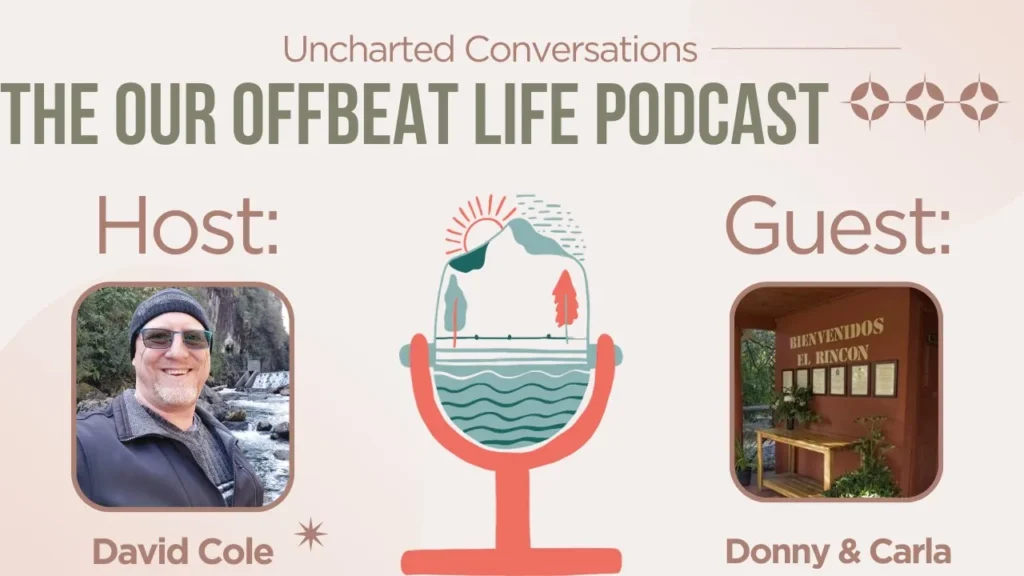
Podcast: Our Offbeat Life
Episode: “10 acres to a bus | El Rincón”
Guest: Donny and Carla
Host: David Cole
Donny and Carla, the visionary owners of El Rincon, an eco-lodge nestled in Los Angeles, Chile, have charted a unique path inspired by their travels across seven countries and a deep-rooted commitment to sustainable living.
El Rincon, a testament to their passion for community, sustainability, and exploration, has served as a sanctuary for nature-loving travelers.
Their family bus conversion is the next chapter in their adventure-filled life. Now, they’re ready to transition towards a smaller footprint, planning to sell El Rincon and embark on a new journey in their converted family bus.
This new venture continues their mission of forging friendships and discovering the world, one mile at a time.
David Cole, host of the popular “Our Offbeat Life” podcast, is a champion for the worldschooling lifestyle and a guiding light for families aspiring to embrace full-time travel.
Having explored 37 countries, driven over 48,000 miles, and flown more than 151,000 miles, David uses his extensive travel experiences to coach families on the practicalities of globetrotting.
Through interviewing current family travelers about their triumphs and challenges, he provides invaluable insights and tips that encourage and equip families to leap into their own worldschooling adventures with confidence.
If you feel inspired to design your own unconventional lifestyle after hearing Donny and Carla’s story, check out the full episode to follow their journey from stationary living at an eco lodge to mobile living in a converted bus designed for full-time family travel!
Listen to Season 1, episode [#6 ] of Our Offbeat Life! Listen on iTunes and Spotify, or watch on YouTube.
Leave a Review!
Apple Podcast reviews are one of THE most important factors for podcasts. If you enjoy the show please take a second to leave the show a review on Apple Podcasts!
✔️ Click this link: Leave a review on Apple Podcasts
✔️ Hit “Listen On Apple Podcast” in the middle next to the picture.
✔️ In iTunes, Click “Ratings and Reviews” under the show name.
✔️ Leave an honest review.
✔️ You’re awesome!
Introduction
Have you ever imagined quitting your job, packing up your family, and hitting the open road indefinitely? It’s a common daydream, but few actually take the leap into full-time travel.
Many families dream of traveling the world, but few ultimately take the leap to live a location independent lifestyle.
However, the adventurous spirit of one family proves that not only is full-time travel achievable – it can transform and strengthen family bonds in profound ways.
Meet Donny and Carla, owners of a Chilean eco lodge turned nomads-in-training. Along with their two children, this couple is undertaking in a family bus conversion into a mobile home to facilitate their next chapter of full-time travel.
Their unconventional journey demonstrates that with intention, resourcefulness and a willingness to take risks, families can design lives centered around new cultures, rich experiences, and limitless possibility.
Early Adventures with the Kids
After tying the knot in Italy and immersing themselves in the diverse culture of Argentina, Donny and Carla were smitten by an insatiable wanderlust.
Eager to escape the “rat race,” they embarked on a strategic journey, testing the waters of international travel with their two young children.
After having kids, we just, well, we got married in Italy and then we traveled to Argentina and that kind of sparked the traveling bug.
Carla
Little did they know that one day a family bus conversion would be in their future. Their unique adventures, from road tripping across the U.S. to living abroad, not only proved that extended family travel was feasible, but also hinted at the possibility of a more permanent, adventurous lifestyle.
The experience sparked a realization – this wasn’t just a fleeting phase, but a long-term commitment to a life less ordinary.
Finding a Home Base in Chile
Donny and Carla, armed with meticulous research and a dream of location independence, found their slice of paradise in Chile, perfectly balancing their love for travel and the desire for a nurturing home base.
This destination ticked all their boxes: affordable living, legal homeschooling, open residency policies, and fertile land ripe for cultivation. The 10-acre property they purchased wasn’t just a home, it became a successful eco-lodge.
For four years, this haven served as an enriching environment for raising their globally-minded children, who absorbed cultural wisdom from guests hailing from over 35 countries.
Chile just made it so easy and it was, um. It was everything that we wanted and it just happened that we found this place.
Carla
Little did they know, their journey was just beginning. As their global exploration continued, the idea of a family bus conversion began to take root. Their vision?
To create a unique, mobile space that would allow them to continue uniting work, education, and family life, all while being immersed in nature and the world’s diverse cultures.
With their eyes set on new horizons, DOnny and Carla prepared for the next chapter of their worldschooling adventure.
Benefits of Extended Family Travel
Donny and Carla have witnessed firsthand how full-time travel strengthens their family fabric. Their kids relish the hands-on pursuits that displace textbook learning – like harvesting food they cultivated near the eco lodge’s river in Chile.
With adaptability muscles exercised regularly by new environments and people, their kids tackle fresh situations with resilient confidence instead of fear.
I think the takeaway is that the things that my kids have learned on the road, whether it be at the desert or whether it be in forest, are much more memorable them than something they saw in a book or read in a a book.
Carla
Running an Eco Lodge, Building Worldly Kids
For four enriching years, Donny and Carla operated an eco-lodge on their idyllic property in Chile. This natural sanctuary served as a cultural melting pot, hosting guests from over 35 countries and offering their children a global perspective.
Their forested haven was a playground for learning, where the kids honed their self-reliance through practical skills like animal husbandry, gardening, and handling power tools.
They understand when they make decisions on buying things and are asking for things. To make sure that there are things that one can go with them into this next chapter.
Carla
However, after welcoming several Overlanders – independent travelers living out of their vehicles – an idea began to take root.
A family bus conversion seemed like the perfect solution, a way to blend the permanence and consistency the children needed with the couple’s enduring wanderlust.
The family bus conversion concept was appealing, packing their off-grid lifestyle into a mobile home that could take them anywhere.
Inspiration Strikes: Converting a Bus
So, they embarked on a meticulous journey of converting a bus into a family-friendly house on wheels. Every feature was designed with multi-functionality and hidden storage in mind.
They have involved the kids at every step to build excitement about their upcoming adventures. They taught their children to value experiences and lifelong learning over material possessions, preparing them for a life on the road.
So, they decided to put the eco-lodge up for sale and started the family bus conversion project. They are custom-designing it to support their nomadic lifestyle, the bus is being equipped with hidden compartments and high-tech features.
As soon as the lodge sale is finalized, they plan to finish the bus and traverse Chile’s diverse landscapes as a self-sustaining, road-tripping family unit, embracing a whole new chapter of adventure and discovery.
Conclusion: Family Bus Conversion
Donny and Carla, a globetrotting duo, have charted a course unlike any other, deftly navigating embassy bureaucracies, border crossings, and varied income strategies.
Their lifestyle is a testament to their commitment to family bonding and a thirst for worldly wisdom.
At the heart of their adventures is their family bus conversion, a mobile dwelling that allows them to maintain perpetual motion while embracing the richness of life on the road.
Their story is more than just an adventure; it’s an inspiration. They’ve crafted a meaningful life by seamlessly integrating work, family, and travel, demonstrating that families can redefine success on their own terms.
By taking calculated risks and relentlessly pursuing their dreams, they’ve managed to build a lifestyle that was once thought inconceivable.
If you can make it happen in any way, shape or form, if you can design it to where it works out for your family and that’s something you want to do, do it. Don’t wait.
Carla
This isn’t just about Donny and Carla; it’s about what’s possible for you too. What’s stopping you from embarking on your own family bus conversion travel adventure?
With strategic planning and a clear vision, you can create a vibrant, exploratory life that’s uniquely yours. A family bus conversion could be the key to unlocking your own unconventional lifestyle, just as it has been for Donny and Carla.
Their journey serves as motivation for families dreaming of a similar path. Perhaps it’s time for you to ignite your own unique lifestyle. After all, with determination and careful planning, you too can experience the joy and enrichment of a life on the road.
Leave a Review
Apple Podcast reviews are one of THE most important factors for podcasts. If you enjoy the show please take a second to leave the show a review on Apple Podcasts!
✔️ Click this link: Leave a review on Apple Podcasts
✔️ Hit “Listen On Apple Podcast” in the middle next to the picture.
✔️ In iTunes, Click “Ratings and Reviews” under the show name.
✔️ Leave an honest review.
✔️ You’re awesome!
Key Takeaways and Timestamps
[00:01:09] – After getting married in Italy and visiting Argentina, Donny and Carla caught the travel bug and realized they could make traveling with young kids work.
[00:02:02] – They selected countries to travel to based on criteria like homeschooling laws, residency requirements, and business opportunities.
[00:03:31] – They bought an eco lodge property in Chile that met their criteria: good for homeschooling, affordable land, stable climate, etc.
[00:06:12] – Running the eco lodge allowed their kids to be “world schooled” by interacting with guests from 35+ different countries.
[00:11:37] – They are converting a bus into a mobile home to bring their home along with them on adventures across Chile.
[00:16:11] – They are preparing their kids for mobile living by downsizing possessions and helping them take ownership of designing the bus.
[00:22:29] – Their kids have learned useful real-world skills from living on the road and at the eco lodge.
[00:31:28] – Challenges adjusting to a new country remind you not to stress small stuff and you can choose to make the best of any situation.
[00:44:29] – Get all your paperwork like degrees and certificates in order before moving abroad to avoid having to return later.
Transcript
[00:00:00] Hello, and welcome to another episode of Our Offbeat Life, the podcast that takes you on a journey into the unconventional lives of full time travelers. I’m your host, David, and today we’re diving into a truly unique story. Meet Donny and Carla, a couple who turned their desire for change into an extraordinary adventure.
[00:00:38] David: Together, with their two children, they’ve explored the globe. run an eco launch in Chile and are now turning a bus into a home on wheels. Their story is a testament to the power of embracing change and the unexpected turns life can take when you dare to dream big. So sit back, relax, and set off on this exciting journey with us as we talk with Donny and Carla.
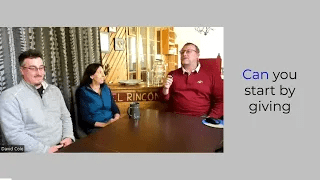
[00:01:09] David: Welcome Donny and Carla. Can you start by giving us a little bit of background on your family and your decision to travel full time?
[00:01:18] Carla: Uh, I guess I’ll take that one. so I was born in Argentina and I moved to the U S when I was, um, 14. I met Donny, uh, shortly after, he was my unofficial English tutor.
[00:01:30] Carla: And, after having kids, we just, well, we got married in Italy and then we traveled to Argentina and that kind of sparked the traveling bug. In him mostly because he hadn’t really traveled and when we had kids, we decided we need to make a way to find a way to make it work without being in the rat race.
[00:01:45] Carla: And so we decided to travel to a couple countries that we had hand selected to see how that went and see if we could survive being together 24 7 and how that would play out with small kids and,it worked out and it’s really a good experience. So we just kind of kept it going.
[00:02:03] David: Very cool. Very cool.
[00:02:05] David: All right. So,yeah, so it sounds like right off the bat, you started traveling internationally with your wedding international, everything went off right off the get go. So are your favorite places that you’ve been to, even just before settling here in Chile?
[00:02:21] Donny: I thought all the places, every place had definitely its positives and negatives. They were all fun.
[00:02:27] Carla: Yeah, I think all countries, I think we, because we were so strict in our criteria on selecting them as far as homeschooling went and residency progress and what we can invest into, have a business that would sustain our family.
[00:02:40] Carla: So a lot of research went into what countries we visited in the reasons why we did. so all of them had something that like tugged our heartstrings. All of them was somewhere that we could see ourselves living full time. unfortunately, not all of them worked out just for capital reasons or for visa reasons or for many, many other things that were kind of a barrier and Chile just financial.
[00:03:02] Carla: Yes, for sure. And Chile just made it so easy and it was, um. It was everything that we wanted and it just happened that we found this place that was allowed our kids to actually be free range kids. the flora and fauna in Chile is one of like the best worldwide for being safe and our child was under the impression that nothing wanted to attack her ever.
[00:03:21] Carla: And so this was like a very special place that we found where our kids were next to a river and where they can develop all these. senses in nature without us being completely freaked out, you know, places like Costa Rica or Australia. And we visited some of those, but we just didn’t feel a strong connection to what we were wanting to do.
[00:03:39] David: Awesome. Awesome. So like, I know you went to some other places like, Ireland and,uh, Italy, obviously. So what would you say were the, the things that you loved or the reasons why you didn’t, settle in those areas?
[00:03:56] Carla: I think one of the biggest reasons was residency requirements, um, really allows you two years outside of the country before you have to return, to keep residency and a lot of other countries had the six month requirement where you have to six, six months in six months out.
[00:04:12] Carla: And that didn’t really appeal to us also the financial aspect of it was a lot easier to buy bigger chunks of land here than. affordability wise in Europe and, the US. And so, um, Chile just had a lot of the things that we liked, very lax laws about building permits and homeschooling being legal. And there was just a lot of pluses to Chile and, my family being from Argentina, we’re a little bit closer.
[00:04:38] Donny: And Carla, she speaks good Spanish. Spanish was a major, was a good one.
[00:04:42] Carla: Yeah, a major plus.
[00:04:43] Donny: We went to the Netherlands and, the whole English language barrier was quite hard on…
[00:04:50] Carla: both of us. So yeah, so Chile won. We had all the things that we wanted and more.
[00:04:56] David: All right. So yeah, Chile.
[00:04:57] Donny: Bugs don’t attack you as much as some of the other places. Affordability’s good,good, big chunks of land, which is awesome.
[00:05:05] David: Speaking of big chunks of land, you settled here and you bought El RinCon. So tell us about the eco lodge.
[00:05:15] Donny: Well, we, wanted to, live and work like at home. We didn’t want to have to, you know, one of us leave. Originally in California, before kids, her and I were both all over the country, all over the state. And then we had the first child, we still traveled very, traveled quite a bit with the first child. He was raised in a hotel room. He learned how to walk in a hotel room, how to crawl, how to, we did everything in and out of hotel rooms. The second one slowed that down quite a bit, but I was still traveling a lot. So the, the big point of it was to, to just kind of all be together in one property
[00:05:55] Donny: to be able to work and to play and to be able to, to not have to leave and negotiate, you know, all outside environments.
[00:06:03] Carla: We, we accomplished that by by world schooling kind of reverse by having people come to us as opposed to going out into the world and That was, that brought so many pluses to us because, well, cost effective wise, like we didn’t travel anywhere, but our kids were exposed to, you know, 35 plus different nations.
[00:06:21] Donny: Well, it’s an international guest house. Yeah. So we had from day one, when we got here, we. We were getting people from, from all around the world staying here. So it was kind of a shock to us, from almost like the second or third night, just having people, you know, show up that were from Germany and from, Sweden and, and, you know, speaking different languages that, that were not even English or Spanish and trying to, to negotiate all of that.
[00:06:54] David: So that sounds like it’s been interesting trying to run the property, with international clientele. You’re only a couple hours from Santiago, so we’re sure there’s a lot of clientele coming from all over the world.
[00:07:07] David: so what has this
[00:07:08] David: experience running the place been like?
[00:07:13] Carla: I used to work for a small winery in Bed and Breakfast in California.
[00:07:16] Carla: So, knowing kinds of the ins and outs and then the property, when we purchased the property, the property was already top rated. and it was already, um, listed in many places in Europe and the U. S. And so, a lot of that had been done. And then we were really fortunate to have Lonely Planet come and visit us, which is not a paid, advertisement publication.
[00:07:35] Carla: Which was, that was really, really a cool thing. So it’s been, it’s been interesting because every day is different. every day there’s a new challenge or a new, a new project, new surprise. Yeah, definitely. And we’ve learned so much about just living in nature and seeing the cycle of everything. Our kids have, you know, learned the cycle of where food comes from and, and animal processing and things that we wouldn’t have had a chance to do back in our old life.
[00:07:59] Carla: And, things that I think, We’re going to be very worthwhile to them in the future. I think anywhere we go, I think those are skills that they take with them. How to chop down a tree or how to pick a tree to build versus a tree to burn. Lots of things that we’ve learned that we never thought we’d be learning.
[00:08:12] Carla: So it’s been fantastic in so many aspects. a little bit challenging here and there for sure, but, we wouldn’t, we wouldn’t change it. I think it’s been
[00:08:20] Carla: amazing, amazing journey.
[00:08:20] Carla: amazing journey.
[00:08:21] David: That’s awesome.
[00:08:23] David: Yeah, that’s really cool. So, um, we got here
[00:08:26] David: and I know that we’ve been having a blast. You guys are fun hosts, showing us your bus, which we’ll get to in a little bit on how you’re converting that.
[00:08:35] David: but then like you told us
[00:08:37] David: right off
[00:08:38] David: the bat that you’re planning on selling the place. You’ve got it on the market. Yeah.
[00:08:42] David: Let’s
[00:08:42] David: give people out there
[00:08:43] David: are listening, maybe they’re even
[00:08:45] David: interested
[00:08:46] David: in,
[00:08:46] David: uh, settling down and looking for a property. So let’s give people a little bit of an idea about the property.
[00:08:52] David: Ooh, what amenities it has, what, what it’s like running it, that type of thing, coming, you know, your sales
[00:08:58] David: your elevator pitch. Okay,
[00:09:00] Carla: So the property consists of 10 acres. it’s a native food forest. So you have over a hundred trees that are fruit or nut bearing, medicinal plants on site. We are a riverfront, so water is never a shortage here.
[00:09:14] Carla: this region is very well known for its berries and its fruit exports. So we have the best fruit year round, which is why we picked it here we loved further south, but we were a little bit hesitant on growing, um, season because it’s so short due to the. The climate and snow and whatnot, and then further north, you encounter a lot of the heat and drought problems.
[00:09:35] Carla: So this was like a perfect place because the climate was very similar to what we were used to. And, we, like I said, we bought this place that was already established. So a lot of the footwork was already done Um It’s
[00:09:47] Carla: been here 25 years. and the forest really here is self sustaining. We get enough fire wood from the forest.
[00:09:54] Carla: We get food from the forest. We have our own animals. so it’s been a tough decision to decide to sell. But we know that we can’t Leave for an extended period of time with animals and whatnot on site. So the best decision would be to have another family that maybe wants to create some sort of, of roots or an eco community or keep going with this project.
[00:10:15] Carla: And,
[00:10:15] Donny: there’s just so much future opportunities to there’s, there’s,
[00:10:19] Donny: there’s so much land and so many beautiful locations where you can add another cabin
[00:10:24] Donny: and,
[00:10:24] Donny: uh, make it however you, you want it.
[00:10:27] Donny: add animals. And
[00:10:30] Carla: currently the hotel counts with five guest rooms, up to two people in each guest rooms and one independent cabin, the main house, laundry facilities, storage facilities, and then, yeah, shop and all the tools and everything that you would need to run to run the places, is the hope.
[00:10:47] Carla: And then, we’re transitioning to a much smaller location.
[00:10:51] David: Yeah, let’s
[00:10:52] David: talk about
[00:10:53] David: So you’re currently converting a bus to a liveaboard.
[00:10:58] David: How did this idea really come about? And,
[00:11:02] David: What’s the
[00:11:03] David: process been like
[00:11:03] Carla: so far? So the process, I’ll let Donny go over that, because he’s more of a process guy than me.
[00:11:10] Carla: But, so
[00:11:11] Carla: when we got
[00:11:11] Carla: stuck on the pandemic, the idea was here to be for about three years, four years, learn Spanish, and then do South America when everybody knew Spanish. COVID kind of threw the plans out the window for everybody. So, we had some friends who stayed with us for four months, and they had to live aboard, and we thought, That is something that really interested us because it would reduce our amount of lodging by a huge amount, and it would allow us to go kind of our o at our own
[00:11:37] Donny: Overlanders.
[00:11:38] Donny: Yeah, we’ve we we opened up the the
[00:11:40] Donny: property to Overlanders.
[00:11:42] Donny: now we we get a ton
[00:11:43] Donny: of,
[00:11:44] Donny: Vehicles now from
[00:11:45] Donny: all around the world. We just
[00:11:46] Donny: like what a nine
[00:11:47] Donny: ton, overlander come through here. Winch down
[00:11:51] Donny: some big
[00:11:51] Donny: trees for us. And,
[00:11:53] Donny: and
[00:11:53] Donny: we really liked that,
[00:11:55] Donny: lifestyle of just being able to You know, just, just
[00:11:58] Donny: have your house with you and just to go wherever at
[00:12:00] Donny: speed that
[00:12:01] Donny: you want to go at.
[00:12:02] Donny: and
[00:12:03] Donny: we thought that
[00:12:03] Donny: really a neat,
[00:12:05] Donny: neat way to, to see the world or to, to explore.
[00:12:09] Donny: So,
[00:12:09] Donny: so yeah, we, we just kind of,
[00:12:11] Donny: you know, how can we do this, being, you know, having
[00:12:14] Donny: such a big property and, and, and, you know, how do we, how do we condense that into
[00:12:18] Donny: an overlander
[00:12:19] Donny: or.
[00:12:21] Donny: And
[00:12:21] Donny: we, we couldn’t figure it out.
[00:12:23] Donny: So we, we basically just kind of looked into trying to get the biggest vehicle that we can get, that didn’t really
[00:12:29] Donny: any kind of
[00:12:30] Donny: special licensing or special fees or special anything. So we, we, we kind of bounced back and forth and
[00:12:38] Donny: kept
[00:12:38] Donny: kind of falling back to like a bus. Was something that we can get, that
[00:12:43] Donny: fairly
[00:12:43] Donny: good size and that we can customize it to fit, our lifestyle and that we could, try to be as comfortable as we could in it.
[00:12:52] Carla: We figured it’s different if you’re going on a trip for a couple months versus a couple of years. And so we figured we wanted to make sure that our kids had stability and like a little home base while we, while we do this. And that was important to us to be able to have our library and certain things that we’ve.
[00:13:07] Carla: We really take for granted if we didn’t have them. So,
[00:13:10] Carla: that was
[00:13:11] Carla: the bus. That’s how it was born.
[00:13:14] David: Yeah, that’s a really cool idea.
[00:13:15] David: I’ve seen, during our travels, plenty of
[00:13:18] David: people with liveaboards. you’re the first ones I’ve met that was making a bus their home, which is going to be really cool to see when it’s finished.
[00:13:25] David: it’s
[00:13:26] David: really
[00:13:26] David: cool project as
[00:13:27] David: seen as
[00:13:28] David: you’re going through it right now.
[00:13:30] David: With,
[00:13:30] David: Right now you’ve got the walls that are getting ready to go up. You’ve already framed them out. how
[00:13:35] David: do you think this
[00:13:36] David: project is going to take once you ready to finish the bus and get on the road.
[00:13:44] Donny: we’re going, at the
[00:13:45] Donny: speed. It’s, it’s kind of like a projects, not the primary project, but it’s kind of a project that we do when we don’t
[00:13:51] Donny: have anything
[00:13:51] Donny: else, uh, overly pressing, But it’s, it’s kind of fun. We’re making
[00:13:55] Donny: kind of enjoyable and.
[00:13:56] Donny: we’re, we go
[00:13:57] Donny: there with the kids and everybody, and we,
[00:14:00] Donny: we set up like cardboard walls
[00:14:01] Donny: we put like, you know, buckets for toilets and we’re kind of shuffle everything around
[00:14:06] Donny: kind of get a layout and, and
[00:14:08] Donny: we go shopping and we pick out, you know, what, what do you want for this? And what do you want for that? And the kids, kids really liked the, the, the fake grass, the turf or like their bedroom walls.
[00:14:18] Donny: And we’re like, Oh, that works. it’s been a fun process when it gets done and I guess when we need it to be done, I don’t, I don’t know, we’ll,
[00:14:28] Carla: the, the bus kind of depends on the, and the sale of the place. And so we hope that it’s ready by the time we get ready to sell, but we know we’ll be using the bus this summer as an additional room. And so it’s going to be
[00:14:39] Carla: kind of like a, a
[00:14:41] Carla: theme room. And so we know that we have kind of a deadline there. So hopefully in the next two
[00:14:45] Donny: Yeah. So probably that more of a primary.
[00:14:48] Carla: So it’s kind of a primary project to kind of pushed a little bit
[00:14:53] Donny: need up that up a little bit. Yeah.
[00:14:55] David: That’s
[00:14:56] David: that it’s going to be a theme room type thing,
[00:14:58] David: if you have it ready for the summer, because, you know, there’s a
[00:15:01] David: of people that would get a
[00:15:02] David: kick out of coming down and staying in a, a bus room.
[00:15:06] David: That’s just really cool
[00:15:07] David: I mean,
[00:15:07] David: you’re going to have a
[00:15:08] David: bedrooms in there. You got that living room.
[00:15:10] David: they can’t just
[00:15:11] David: drive off with it, huh?
[00:15:14] Carla: Not yet. Not yet. Not at this point.
[00:15:16] David: But I love
[00:15:18] David: you’re involving the kids so much in the process. Like you
[00:15:21] David: said, setting up the cardboard walls,
[00:15:23] David: checking out a floor, floor plan, helping them
[00:15:26] David: figure out
[00:15:26] David: They, they want
[00:15:27] David: the grass, uh, carpeting and wallpaper. That’s what we’re
[00:15:30] David: going to go with. I love that.
[00:15:31] David: ’cause involving the kids, especially since they’re moving,
[00:15:34] David: into a different lifestyle is really cool. Now, that brings
[00:15:39] David: to the other thought about how do you think the kids are going to really adjust the transition?
[00:15:44] David: From this
[00:15:45] David: 10 acre living lifestyle down to a bus lifestyle, live aboard lifestyle?
[00:15:52] Carla: I think Well, because we’ll be traveling and they’ll still have an outdoor space of some sort. We’ll still be somewhere where they can explore. the idea of us going to be minimalistic is something that we’ve tried to convey to them for a while now. You know, that materialistic things aren’t really something that we want to lug around, only special things will go.
[00:16:11] Carla: So they understand when they make decisions on buying things and are asking for things. To make sure that there are things that one can go with them into this next chapter, or that they understand that there are things that are going to have to be left behind so we’ve, we’ve fully gone over that topic with them and they understand so we have effectively started packing her house and done things to prepare ahead of this change because we understand it’s, you know, it’s easier to go from much smaller processions to almost none than to go from a whole lot to none.
[00:16:41] Carla: So, we’ve made that change gradual for them as we go.
[00:16:45] Donny: And we, we also use the bus as, as like
[00:16:48] Donny: a form of home, homeschooling too.
[00:16:50] Donny: So, so the buses is stripped out
[00:16:52] Donny: they were
[00:16:52] Donny: there with that process of tearing everything out. They, they helped them, you know, unbolt or unbolt, unbolting all the seats,moving outdoors,
[00:17:00] Donny: were, they were involved in that whole process,
[00:17:03] Donny: ripping out all the, the
[00:17:04] Donny: the cabling,
[00:17:05] Donny: putting everything back in.
[00:17:07] Donny: I mean, we’re
[00:17:07] Donny: teaching our kids, you know, a little bit about the electrical for the bus, the mechanical, how to change a tire. they’re involved in all
[00:17:15] Donny: the parts of the bus
[00:17:16] Donny: that I don’t
[00:17:17] Donny: definitely normally kids would not be,
[00:17:20] Donny: included in, you know, like how
[00:17:22] Donny: the engine work?
[00:17:22] Donny: Like,
[00:17:23] Donny: what is this? What’s that? and so it’s, it really makes it like a part that they understand how it works and they understand like
[00:17:32] Donny: everything in total.
[00:17:34] Donny: And I
[00:17:34] Donny: I think they’re much more connected to it in that sense.
[00:17:38] Carla: definitely. have taken ownership of it. They, they are already. Kind of possessive of where their space will be and how that will be played out and what they want as far as, um, connections
[00:17:49] Carla: they do their schooling inside, even if we’re not doing schooling in the bus, they will go in the bus with their stuff to read or, so they’ve, they’ve really, they’ve really just taken to it. So it’s, it’s been nice because they’re just as excited as we are about
[00:18:02] Donny: We, we talked to him about how.
[00:18:04] Donny: You know, how are we going to put lights in the room? Let’s
[00:18:07] Donny: put some like led
[00:18:08] Donny: strips
[00:18:09] Donny: and like, how should we mount those and how should we switch those?
[00:18:12] Donny: and then, you know, should we get all
[00:18:14] Donny: and do like a voice thing or a
[00:18:17] Donny: special push button and I’ll hide the switch. So only,
[00:18:20] Donny: you
[00:18:20] Donny: know, only we know
[00:18:21] Donny: to turn it
[00:18:21] Donny: on or off
[00:18:22] Donny: you know,
[00:18:23] Donny: just kind of special
[00:18:25] Donny: little weird things that, that
[00:18:27] Donny: they can
[00:18:27] Donny: of think of and they can kind of plan out and they could actually install and. Make work. Make
[00:18:33] David: work.
[00:18:35] David: That is awesome. Because, yeah, getting kids involved is
[00:18:38] David: it’s just
[00:18:39] David: cool.
[00:18:39] David: part of homeschooling. It’s part of the,
[00:18:41] David: the unschooling process where they learn things that they not
[00:18:45] David: would learn in a traditional school. Yeah. So now, then that
[00:18:50] David: of brings us to
[00:18:51] David: the next chapter of your life.
[00:18:53] David: on the bus,
[00:18:54] David: this place is sold, you get on the road.
[00:18:57] David: How do you plan on financing that lifestyle our watchers are always looking for ideas on how they too can live abroad, in different types of lifestyles.
[00:19:09] Carla: so that’s, that’s the main reason why we picked this experience, the Eco Hotel. It’s because we knew we can run it and make a living and, afford to travel in off season, which didn’t pan out for other reasons.
[00:19:19] Carla: but the idea would be to do the same on the road is to buy another property with some sort of, cabins or, a smaller property probably, and then just have it financed as an Airbnb and then just allow us to travel with those funds until we decide to settle. we probably wouldn’t be leaving Chile just because of that two year rule.
[00:19:35] Carla: because residency is already finished here. So, and because Chile is so diverse that it would take us probably a whole two years if we actually really did drive all of Chile and explored all of Chile. So there’s plenty to explore here. the people are amazing.
[00:19:50] Donny: honestly, we don’t, I
[00:19:51] Donny: think we really know how we’re going to
[00:19:53] Donny: survive or, you know, how
[00:19:54] Donny: going to make it.
[00:19:55] Donny: I think, you know, watching podcasts like this and figuring out what other people are going to do. Um,
[00:20:00] Donny: Um,
[00:20:00] Donny: Definitely speaking to the
[00:20:01] Donny: that are already doing it and
[00:20:03] Donny: seeing how they kind of make money and how they survive
[00:20:06] Donny: I think that you definitely kind
[00:20:08] Donny: understand
[00:20:09] Donny: what really
[00:20:10] Donny: need in order to survive
[00:20:13] Donny: and you find out when Um, you’re kind of living more
[00:20:16] Donny: a minimal life that you really don’t need a lot, you know? and if you’re you’re willing to work and there’s always there’s always work.
[00:20:24] Donny: So I mean carla and I we we love working and We’re not shy of
[00:20:29] Donny: of
[00:20:30] Donny: getting our hands dirty. And I think for, you know, for that reason, I
[00:20:34] Donny: wherever we go, I think we’re definitely gonna, you know, find work and be able to
[00:20:39] Donny: put
[00:20:39] Donny: on our
[00:20:39] Donny: table and then,
[00:20:41] Donny: then
[00:20:41] Donny: who knows, who knows
[00:20:42] Donny: I mean, the fact that
[00:20:43] Donny: you’re opening that door for any kind of possibility, I mean,
[00:20:46] Donny: knows what’s going to happen, you know, but
[00:20:48] Donny: The fact that we’re, we’re out there with
[00:20:51] Donny: Ready to to jump on whatever boat.
[00:20:57] Carla: we had, we had some fire dancers who saw potential, so we can be fire dancers. can be bus driving fire dancer. So literally, you know, they, they, there’s
[00:21:05] Donny: sell tacos on the side of the road. We have an ice cream machine. What kind of kitchen do you plan on this thing? I don’t know yet.
[00:21:13] Carla: We, um.
[00:21:14] Carla: wherever you live, the monthly
[00:21:16] Carla: expenses are going to be there. I guess it’s just a matter of how you choose to spend those years that you have with your children. whether that’s prioritizing how big your house is or how small the house is, it’s, I don’t think it matters. I think if you really want to make it work, you’ll find a way.
[00:21:31] Carla: And I know that a
[00:21:31] Carla: of people
[00:21:32] Carla: say, there’s so much standing in my way, but time is so short. It’s time is so relatively short when you think about it, that if there is something
[00:21:39] Carla: stands
[00:21:40] Carla: in your way, like, I mean, we all have that. Like we all have that. What if what if yeah, but if you just if you don’t ever jump you don’t ever know and I think like
[00:21:48] Carla: We just got a couple, just
[00:21:49] Donny: a few years, and then our, you know, our kids aren’t going to want to hang out with us no more, so then it’s like, okay, well, might as well, you know, go pick up a job or something, and, and, you know, do our own thing again, but right now, while our kids really, you know, still like us, and they want to hang out with us, like,
[00:22:04] Donny: We’re going to make the
[00:22:04] Donny: and let’s go, you know, let’s go and hit the road and see what kind of trouble we can get into.
[00:22:12] Carla: it’s going to be an adventure. It’s and it’s, it has been already. I know our kids are not leaving, not living the normal, normal life. And I think that, um, the kids that they meet along the way who are also living this kind of life have just inspired this, this, this form of schooling that offers them.
[00:22:29] Carla: Yeah. Yeah. It’s nothing like you can read in a textbook and I think that’s, that’s really important. I think the takeaway is that the things that my kids have learned on the road, whether it be at the desert or whether it be in
[00:22:38] Carla: forest,
[00:22:38] Carla: are much more memorable
[00:22:40] Carla: them than something they saw in a book or read in a
[00:22:42] Carla: a book.
[00:22:42] Carla: And I think, that’s all we take away in the end. So if I have those, then that’s makes me feel very rich inside. So, that’s, that’s what we’re aiming for.
[00:22:52] David: That is outstanding. Yes. it’s all about
[00:22:54] David: the kids. It’s
[00:22:55] David: our relationships. it’s about experiencing the world. And
[00:22:59] David: mean.
[00:23:00] David: the world is huge and it’s what we’ve definitely noticed.
[00:23:03] David: And, we’ve, it seems to be a common theme when I
[00:23:06] David: I talk to world schooling
[00:23:08] David: travel families, is that the world is so big that we want to get out there and explore it
[00:23:14] David: and not
[00:23:14] David: kind of be stuck in our own little
[00:23:16] David: neighborhood for forever,
[00:23:18] David: So that then you get to see more of the diversity and you get to experience it kids grow into Very unique people who are gonna do things that
[00:23:28] David: I still have no idea,
[00:23:30] David: At this point since ours is still young, but the world is their oyster
[00:23:34] David: as the saying goes.
[00:23:35] Donny: And they’ll have the tools.
[00:23:36] Donny: They’ll have the tools and the experiences to be able to to adapt to these new situations in these new Whatever the life, you know the future throws at them they You should hopefully be able
[00:23:48] David: to deal with it. Definitely. I mean, and you’ve got skills that you’ve already been imparting to your kids.
[00:23:53] David: Just being here the week that we’ve been here,
[00:23:55] David: the
[00:23:55] David: very first day, your daughter showed my kid how
[00:23:58] David: change
[00:23:58] David: a chain on the four, a four wheeler,
[00:24:00] David: quad.
[00:24:01] David: And, I’m like, your daughter’s younger than my son, which is like, alright,
[00:24:05] David: this is a skill
[00:24:06] David: not every kid out there has.
[00:24:09] David: So.
[00:24:10] Donny: Yeah. Yeah. Well, the chain pops off, right? Like you’re going to figure out pretty quick. And you’re out, you’re out in the boondocks. You’re going to figure out pretty quick how to get it back together.
[00:24:19] Donny: So,
[00:24:21] David: so, and then, your, your, your, your son also just the other day cooked us an amazing meal and he’s the same age as my kid and
[00:24:27] David: and my kid won’t even touch the stove yet,
[00:24:29] David: except for grilled cheese. He’ll make
[00:24:30] David: grilled cheese. So, It’s just been pretty
[00:24:34] David: So with all that said now, I know you’ve had some really cool adventures.
[00:24:38] David: You’ve had some cool stories i’d like to i’d like to hear a couple of them so like some of your travel stories or some of the cool stories that you had just from the guests that you’ve had visit Here, okay. What comes to mind?
[00:24:51] Donny: we’ve just, we’ve had such amazing, that’s one thing that I would have never thought about
[00:24:55] Donny: Buying this
[00:24:57] Donny: is the guests that we get.
[00:24:59] Donny: I mean, we’ve had what we’ve had just in the last month.
[00:25:01] Donny: had fire dancers. We had a guy from,
[00:25:04] Donny: France that
[00:25:06] Donny: a magician and he did some stuff that just absolutely blew my mind. we’ve just had, we’ve had so many people from so many different places. What what else
[00:25:17] Carla: so it has been that’s that’s one of the aspects that we’ve really liked about the owning the hotel has just been how much we’ve received from our guests without them knowing what an impact they’ve made on our children or you know doctors from zimbabwe who came and talked to sophia about practicing medicine in remote villages people that have explained to tristan, drone footage video from their motorcycles just all these
[00:25:41] Donny: Film directors. Yeah, we’ve had come in that’s give given Tristan like
[00:25:46] Donny: You know, editing tips
[00:25:47] Donny: his
[00:25:47] Donny: computer from people that have actually produced films.
[00:25:51] Donny: we have artwork in our house from artists who have just come for a night and stayed for a couple.
[00:25:56] Donny: artists were like, Oh, I haven’t painted for, you know, like a couple of days.
[00:26:00] Donny: Like I’m just itching to paint. And
[00:26:02] Donny: and we’re like, Hey,
[00:26:03] Donny: got some canvas and we got some paints. And they’re like, let’s do it. And we, yeah, we have, we have paintings hanging out.
[00:26:09] Donny: we, a lot of, a lot of people come and they, they, you know, they talk about, Oh, I’m, I’m from Ireland and I make the best, you know, Ireland or the Irish soda bread.
[00:26:19] Donny: And we’re like, well, we, you know, we have a kitchen let’s, let’s do it. So they, they make their, their, their specialties from their, their, their nation, their nationalities. we’ve
[00:26:30] Donny: had pancakes
[00:26:32] Donny: Netherlands, Dutch babies. Dutch babies from some Dutch couples.
[00:26:37] Carla: We’ve sent Christmases with different people and different costumes and different songs for
[00:26:43] Carla: We have a
[00:26:43] Donny: birthday banner that stays up all the time. It’s around here and it’s always somebody’s
[00:26:48] Donny: birthday. So
[00:26:49] Donny: just gives us that excuse to, you know, like, Hey, it’s
[00:26:52] Donny: so and so’s birthday.
[00:26:53] Donny: Like let’s Let’s do a birthday
[00:26:55] Donny: And then, you know,
[00:26:56] Donny: we bust
[00:26:56] Donny: the flour and the sugar and we make a little birthday cake.
[00:26:58] Donny: And,
[00:26:59] Donny: our kids have had,
[00:27:01] Donny: don’t even know how many languages of, you know, the birthday song, like sung
[00:27:05] Donny: to them. And,
[00:27:07] Donny: And, we do it
[00:27:08] Donny: to other people and it’s, just a little birthday party.
[00:27:10] Donny: It’s nothing extravagant, but it’s. It’s nice. And it’s memorable.
[00:27:15] Carla: It’s memorable. We can say that most kids remember their birthdays or have an aspiration to come back for a
[00:27:20] Carla: So yeah,
[00:27:21] Carla: we feel very
[00:27:22] Donny: proud of
[00:27:22] Donny: And not people, not many people expect it. You know, they show up and say, Oh yeah, our birthday is, you know, a week from now. We’re like,
[00:27:27] Donny: well, hey, let’s have a little
[00:27:28] Donny: party and let’s, you know, have a little cake.
[00:27:30] Donny: and make it happen
[00:27:32] Donny: And make it happen, it’s fun.
[00:27:34] David: That does sound fun. Yeah. So many different
[00:27:37] David: people coming through, celebrating their
[00:27:38] David: birthdays from all over the world.
[00:27:41] David: Sounds really cool. Yeah.
[00:27:42] David: yeah. You brought up, artists and, I’ve been through here. You’ve got a lot of really cool stuff. And now again, going
[00:27:49] David: downsizing,
[00:27:49] David: that’s the next process.
[00:27:51] David: What are you doing to prepare for your downsizing into the, into the bus?
[00:27:56] Carla: so we were fairly selective when we moved here about the things that we brought, we brought mostly tools and things that would help us run the.
[00:28:02] Carla: The lodge and a few pieces of furniture that were special to
[00:28:06] Carla: We’re going to us for one reason or another family heirlooms or things we collected along the way. and now those things will be packed away in a container and they’ll wait for us for wherever our final destination might be. but for as far as the bus, we’re we’re very conservative in what we’re taking with us and then the rest of the furniture will just wait for us.
[00:28:23] Carla: But the downsizing things has definitely begun. We have definitely started packing things away. The less that we have the better. It will be
[00:28:29] Carla: we
[00:28:30] Carla: Get ready to move on and make it much much easier for the buyer to understand what they’re what they’re buying and for us to Know what we’re taking and how much space we need really so it’s begun
[00:28:39] Donny: and I think it’s
[00:28:40] Donny: hard it’s it’s hard to you know downsize and to get rid of a lot of the
[00:28:46] Donny: a
[00:28:46] Donny: a lot of the
[00:28:47] Carla: I’m
[00:28:49] Carla: Ready for
[00:28:50] Carla: it after after having this size I’m ready to just fit in
[00:28:52] Carla: a shoe box You know
[00:28:54] Carla: stuff and then just go
[00:28:55] Donny: what you really need it’s it’s it’s
[00:28:57] Donny: very little so
[00:28:59] Carla: Yeah, we’re ready. We’re ready.
[00:29:02] David: There’s always, there’s always one
[00:29:03] David: person in the family who’s. Holds on to things more than the other. I was that one in our family. Like, when we get back, I’m sure there’s going to be a whole bunch at my father in law’s basement that I’m going to be like, why did I hold on to that?
[00:29:17] Carla: Yeah. And then he’ll be like, well, we should keep that just in case.
[00:29:20] David: Exactly. Exactly.
[00:29:23] David: Well, then, that also
[00:29:24] David: me to challenges.
[00:29:26] David: So, what have been some of the biggest challenges that
[00:29:28] David: had, or that
[00:29:29] David: you’ve faced while living abroad? Well,
[00:29:34] Carla: Well,
[00:29:34] Carla: um.
[00:29:35] Carla: Um, being that I
[00:29:36] Carla: speak Spanish, it was fairly easy for us to do the residency process.
[00:29:40] Carla: When I say fairly easy, I mean as far as like language barrier and applications and whatnot, that was fairly easy without needing any legal assistance. having said that, our son was one of the people that was included in one of the government breaches and so his information was lost in the system and that has been really the ongoing challenge with our situation.
[00:29:58] Carla: a little bit of you know, banking issues just here and there where you, you know, opening accounts and stuff. Basically, you’re starting a whole new life in another place. So there are challenges to be encountered. There are things that you, you know, the kind of butter you use or the kind of detergent use won’t be available.
[00:30:15] Carla: You’re, you’re basically just, It’s changing your entire life to another country. So many challenges you’ll encounter, which are just nuances. And then as soon as you get through them, you realize like, that’s really not that important, right? Like they don’t sell five pounds bags of baking soda here like they do at Costco.
[00:30:31] Carla: And that’s, this is a really big deal for the first year because we really like making volcanoes and we have to buy like a hundred grams of baking soda. But then in the grand scope of things, you realize that’s really not important. And so you learn to kind of just. You learn a new lifestyle. You learn how to do things that might have been challenging in the past and now just seem kind of like another thing you just do kind of like when you enter a new country and you go through immigration and you go through your visas and everything.
[00:30:56] Carla: It becomes kind of like a second nature you become accustomed to it and it becomes part of your, your process and so the things that you think about before you set off and things that you stress about. Sometimes they’re just that, just things that you think about that will never happen or will never manifest in that way.
[00:31:12] Carla: And so you just learn to just kind of roll with it and just make the best of the situation wherever you are. No, it doesn’t matter what country you travel to or where home is. Home is where your family is and the, you can make the best of it or you can make the worst out of any situation. I think it’s just mindset.
[00:31:28] Carla: So,
[00:31:29] Donny: and it’s the, it’s
[00:31:30] Donny: it’s the, it’s the part of the adventure of, of, of traveling.
[00:31:34] Carla: You’ll
[00:31:35] Carla: remember it either as a, an anecdote, a funny story or a lesson. So it will, it will
[00:31:40] Carla: up again in some of that
[00:31:42] Carla: form. And, the lessons are usually the hardest ones to, to retell, but, um, they all work out in one way or another.
[00:31:49] David: Yeah, as the, as
[00:31:50] David: the saying goes,
[00:31:51] David: eventually. Stories,
[00:31:53] David: You can always tell the story again. And like people say,
[00:31:56] David: you’ll laugh at it when you
[00:31:57] David: you
[00:31:57] David: tell the story
[00:31:58] David: Sometimes it takes a
[00:31:59] David: longer than
[00:32:00] Carla: hours. Yes. Yes many years, but you will eventually learn to laugh about it. So
[00:32:05] David: So, then what
[00:32:07] David: of advice would you give to?
[00:32:09] David: family travelers who are looking to get on the road?
[00:32:12] David: Whether they’re going to
[00:32:13] David: going like we are
[00:32:14] David: full time on the road, or
[00:32:17] David: they’re looking to just move abroad and find
[00:32:19] David: find a place like you did.
[00:32:22] Carla: well, first, I think a lot of people, um, set out and maybe don’t do a lot of homework. So for us, that was really important because we didn’t have like a humongous budget.
[00:32:32] Carla: So to do the homework of, what country was going to be feasible for working in, um, visas. And a lot of people on, on the world school or site sometimes say like, I want to go anywhere in the world, not realizing that there is a lot of requirements to actually move to another part of the world. So I say research is first because, We could have probably used some of our budget money that we traveled to a few different places in different ways.
[00:32:55] Carla: Had we known that the residency was going to be so difficult for us. so I would say research what’s important to your family. If homeschooling is important to you, I would, you know, make sure you stick to countries that allow homeschooling. Decide what your family is looking for what’s important and then go after that dream.
[00:33:12] Carla: sometimes people get really like scattered brain, like, oh, there’s a flight here on sale. And, and then they run out of funds before they actually truly get to invest in a long term time, a long term lifestyle that will support it. And so, I say, just do a little bit of research, figure out what’s important to your family and go somewhere where you can explore a little bit extended period of time.
[00:33:31] Carla: If you’re going to set up roots, if that’s the intent of, of going somewhere is to set up roots and kind of. Live like a local then, find somewhere that you’re going to really jive with and your family really enjoy being there. and then just do it. Just go for it. I think it’s, it’s really. and it’s really, tragic when you wake up and you realize you maybe had the means to do that and your children are now grown and you’re all alone.
[00:33:52] Carla: And now you set off to travel and you see those people that fall asleep and the gondolas and you feel really sorry for, for that kind
[00:33:58] Carla: travel you’re really sorry that you
[00:34:00] Carla: waited your, you know, your, your golden years and then here they are and there’s nothing really to enjoy about them. So I say if you can make it happen in any way, shape or form, if you can design it to where it works out for your family and that’s something you want to do, do it.
[00:34:14] Carla: Don’t wait. Time is. Time is not promised to anyone, so just go.
[00:34:18] Donny: Yeah, we’ve had a lot of that. A lot of the older people show up and they said, Oh, you know, the Chile’s always been on our, our list of things see, and now we’re doing it. And,
[00:34:27] Donny: you
[00:34:27] Donny: know, they can, they got their little walkers
[00:34:29] Donny: but they’re doing it, which is awesome.
[00:34:31] Donny: And, and I would say, yeah, you can research
[00:34:33] Donny: until you know you’re blue in
[00:34:34] Donny: the face, but really, you just got to go do it, you know, and, and, and sometimes Even what your research
[00:34:41] Donny: really work
[00:34:42] Donny: for you, so you just, you just gotta just jump on it and see what happens. And if it works, like it will work.
[00:34:49] Donny: And if it doesn’t work and it just doesn’t work, you know, then it’s kind of
[00:34:52] Donny: back to
[00:34:53] Donny: to the drawing boards. And then, you know, you, you go from there, but, but really you just, you just gotta put one foot in
[00:34:58] Donny: of
[00:34:58] Donny: of the
[00:34:59] Donny: and
[00:34:59] Donny: and just, just do it.
[00:35:00] Donny: And
[00:35:01] Donny: like said it, that was a big part. It was just go somewhere, live there for a month, two months.
[00:35:05] Donny: Three
[00:35:06] Donny: months, however long, you know, your visa or whatever
[00:35:08] Donny: can do. And you really get a kind of
[00:35:10] Donny: feel
[00:35:10] Donny: the community, the,
[00:35:13] Donny: the, the outlook on the entire location. And then, and then you can kind of make that, that decision from there.
[00:35:19] David: Excellent. So I love that you both made some great points there. I mean, just
[00:35:24] David: go do it, uh, because you know,
[00:35:27] David: whether
[00:35:27] David: you’re young, whether you’re old,
[00:35:29] David: if you
[00:35:30] David: feel in a need to go travel now, might as well go travel now. but trust me, it’s easier to do it before your knees and your
[00:35:38] David: and your neck
[00:35:38] David: start aching or
[00:35:40] David: you’re stuck
[00:35:41] David: in a wheelchair or a walker. but.
[00:35:44] David: even if you are there and you still want to do it,
[00:35:46] David: yes,
[00:35:47] David: people can make it happen.
[00:35:49] David: even when
[00:35:49] David: in a wheelchair, even when they’re in a walker, they just might not have the
[00:35:52] David: same experience that you would have had. At the younger age, and doing it with children. you get to have these experiences while they’re still young, while they’re not teenagers and not ready to start ignoring you.
[00:36:04] David: Yeah. So that’s our fears as parents. Right? so
[00:36:10] David: what’s next?
[00:36:11] David: you get the bus going
[00:36:12] David: here soon, get
[00:36:14] David: this place sold. What
[00:36:16] David: want to do first? What’s
[00:36:17] David: like the first thing?
[00:36:18] Carla: Oh, that’s a, that’s a hard one. I haven’t thought that far ahead.
[00:36:23] Donny: I don’t know if we’re going to take a right at the end of the
[00:36:25] Donny: the road
[00:36:25] Donny: a left at the end of the road.
[00:36:26] Donny: Like we’re just gonna.
[00:36:28] Carla: Well, it depends on season. If it’s winter, we wouldn’t go down south and if it’s, you know, summer, we would go head south. So,
[00:36:34] Donny: but see, I like the snow, so
[00:36:35] Donny: I think we should go down
[00:36:37] Donny: in the winter.
[00:36:37] David: We just came back from skiing, San Carlos de Bariloche and it was great if you like skiing and that’s down south.
[00:36:44] Carla: So yeah, so we’re not really sure. I think, no, we’re not really sure what’s first after we, after we make a break for it. It’s, the unknown, I guess, that’s calling us to it. It’s just the fact of not knowing what, what happens next. That’s exciting.
[00:36:59] David: All right. All right.
[00:37:01] David: now we’ll do a little lightning round. Ooh. So
[00:37:05] David: let’s see how we do here. coffee
[00:37:07] Donny: or tea? Tea. She’s a tea. All right. Always tea. I’m a definitely coffee. All
[00:37:13] David: All right, cats or dog?
[00:37:16] Donny: dogs.
[00:37:17] Carla: Yes. Dogs.
[00:37:18] David: Tell everybody how many dogs you have.
[00:37:20] Carla: We at one point had eleven, but we have four now, so we’ve scaled it down.
[00:37:26] David: Pool or beach?
[00:37:28] Donny: I’m gonna say pool.
[00:37:30] Donny: Yeah,
[00:37:31] David: yeah.
[00:37:31] Donny: love the concept of a beach, but I hate the reality of it.
[00:37:37] David: I’m with you on that.
[00:37:38] David: I going for hikes beach, and
[00:37:41] David: maybe even playing frisbee or whatever on the beach. But yeah,
[00:37:45] David: clean up afterwards,
[00:37:47] Carla: It’s quite labor intensive. So yeah, yeah.
[00:37:50] David: right. would you rather be able to speak every language in the world or teleport
[00:37:58] David: anywhere at any time?
[00:38:00] David: Teleport.
[00:38:01] Donny: Oh, teleport, yeah.
[00:38:02] David: Transportation, huh? Yeah, definitely.
[00:38:05] David: All right. Now
[00:38:06] David: imagine this. You guys
[00:38:09] David: are driving South, you get out of your bus. It’s the zombie apocalypse. Yeah, it’s here. You’re there. It’s there.
[00:38:19] David: You get, you’re able to, your bus breaks down, you can’t drive anywhere at this point. What are you going to do?
[00:38:25] David: You
[00:38:25] David: can get to your bags, you can get to your luggage, but what are you going to do?
[00:38:30] David: What are you going to
[00:38:30] Donny: do? I think we can fix it.
[00:38:33] David: All
[00:38:34] David: Alright. So you’re going to
[00:38:35] David: to take time. You’re
[00:38:36] David: to fix the bus.
[00:38:38] Donny: Oh, I don’t know, that’s… I’m going to grab my
[00:38:40] Carla: torch and just… Just go for it.
[00:38:42] Carla: Oh, yeah.
[00:38:42] David: You love that
[00:38:43] Carla: Right, I am a torch person. I was going to say freeze trace, but that’s not, it’s not feasible. But a torch. I’ll grab the torch. That’s my answer.
[00:38:52] David: Yeah, you might, you might survive.
[00:38:53] David: He’s fixed on the bus.
[00:38:54] David: got
[00:38:54] Donny: the torch going. Right, like. Right, I don’t know. That’s, that’s a good one.
[00:38:58] David: What would the
[00:38:58] David: the kids do?
[00:39:00] Donny: do?
[00:39:02] Carla: Collecting zombie jerky.
[00:39:03] Carla: And
[00:39:04] Carla: I don’t know. I don’t know what they would do. Like, hopefully they’re. They’re hiding somewhere. Right. Hopefully they’re right. They’re in our, we’re do I see that
[00:39:16] Carla: We’re
[00:39:17] Carla: our, our, our bus will have a secret compartment. So they’re in your secret compartment. Oh yeah. We got all clients.
[00:39:22] Carla: They’re in the
[00:39:22] Donny: secret compartment. We’re trying to make all kinds of secret little cubbies and right compartments and little places where we push buttons and, you know, little drawers pop out and, At least that’s the theory. That’s what we’re thinking. It hasn’t happened yet, but that’s the theory. It’s
[00:39:40] Carla: what we’re aiming to do.
[00:39:42] David: Alright, very
[00:39:44] David: fun, very fun.
[00:39:45] David: Alright, so now, I’m just curious. Usually I like to do a little travel trivia.
[00:39:51] David: So give me one big, piece of,
[00:39:55] David: One thing that people don’t know about Argentina,
[00:39:59] David: you’re from Argentina.
[00:40:00] Carla: Oh God. One thing people don’t know about Argentina.
[00:40:03] Donny: Yeah?
[00:40:04] Carla: oh no. Now you’ve stumped me. what do you know about
[00:40:09] Carla: Argentina? No. You don’t know about Argentina.
[00:40:11] Donny: Little
[00:40:12] David: known fact.
[00:40:13] Carla: Gosh,
[00:40:14] Carla: I don’t think people know everything about Argentina. No, I,
[00:40:16] Donny: El Gauchos. I like the
[00:40:18] Donny: El Gauchos. Everyone
[00:40:19] Donny: Gauchos. I didn’t know, I didn’t know anything about the El Gauchos.
[00:40:22] David: Tell me. I’ve not, I don’t know. The el Gauchos, not everybody knows
[00:40:24] Donny: the el Gauchos.
[00:40:26] Carla: are the traditional Argentine
[00:40:28] Donny: the cowboys? Mm-hmm. . And they’re they’re pretty, they’re pretty, they’re pretty
[00:40:32] Donny:
[00:40:32] Carla: Yeah. They’re the ones that cross over the Andes with animals and they’re, they’re pretty intense as far as survival skills and just being,
[00:40:40] Carla: It
[00:40:41] Carla: can do it all. Really? They’re just, yeah, they’re, they’re pretty
[00:40:44] Donny: Yeah. I didn’t know anything about the el gauchos until Carla’s. your friend’s dad an El
[00:40:49] Donny: Gauchos
[00:40:50] Donny: And he pictures and he has like his, uh,
[00:40:54] Donny: stuff on the walls. And I was like,
[00:40:56] Donny: like
[00:40:57] Carla: the tools and weapons that
[00:40:58] Donny: is pretty, this pretty hardcore like stuff like, they
[00:41:01] Donny: do like a little whippy thing and they let it go and a rock flies and
[00:41:05] Donny: they
[00:41:05] Donny: camp out under the stars. And yeah, it’s, it’s, seems a little bit more like, I guess, a hardcore
[00:41:11] Donny: like a normal American cowboy, I would say.
[00:41:14] Donny: but
[00:41:14] Carla: without guns, we don’t have guns.
[00:41:16] Carla: Yeah. Yeah.
[00:41:18] David: All right. So now,
[00:41:20] David: what is Chile known for? What is unique about the
[00:41:24] David: the country?
[00:41:26] Carla: Oh, Chile has so much uniqueness to it, starting from the desert to the glaciers. Um, and that’s one of the reasons why we picked Chile is because you can travel in Chile for years and still not get to see everything. starting from, from the Atacama desert, where it has the flowering desert that happens every four years.
[00:41:42] Carla: The driest desert? The driest desert in the world. to the, to the glaciers down south and the penguin colonies and all the things in between Chile that make it such a, such a unique location for, for having every kind of weather and every kind of microclimate and every kind of, every species of flora and fauna here are, Are non venomous.
[00:42:04] Carla: And so it really is just really a hands on country. It’s very, very friendly to explore and very easy. The freeways here are top notch from anywhere in Central and South America. So it just, Chile is a very, the access to health care and fresh produce and organic things is, there’s, there’s so much unique about Chile, but, I would say the most unique is the variety of landscapes that you can encounter here.
[00:42:28] David: Nice.
[00:42:29] David: Yeah, that’s really cool. I love you, Chile. Whenever I pointed out to my students, because I always were asking where I am, they’re always amazed how long and skinny the country is.
[00:42:39] Carla: Yes, yes. You can, um, you can drive Chile from tip to tip, I think, and if you drove straight through, I think it would take a total of like 37 hours just driving non stop.
[00:42:50] Carla: And that’s only to the parts you can get to, so it’s quite a, quite a long country.
[00:42:55] David: It is very long. Yes. All right.
[00:42:57] David: let’s go let’s go to Italy now, okay,
[00:42:59] David: We’ve you’ve been there. So
[00:43:01] David: What city in Italy
[00:43:03] David: what city in Italy is known for
[00:43:06] David: its vast canal system?
[00:43:09] Carla: I mean, this one, right? Okay, well, I’ll take this one.
[00:43:12] Carla: Venice, right?
[00:43:13] Carla: Yeah. Venice is amazing.
[00:43:15] Donny: but nobody tells you it doesn’t smell very good there. No,
[00:43:19] Carla: a little bit, a little bit on the non fresh
[00:43:21] Donny: I think it depends on when you
[00:43:23] Donny: get there is what I heard. But when you were there. would say more like, ah,
[00:43:30] Donny: yeah, I, I thought it smelled very,
[00:43:32] David: not very good. All right, now,
[00:43:37] David: All right,
[00:43:38] David: now we’ll go to Ireland.
[00:43:40] David: What is the
[00:43:41] David: Blarney stone known for?
[00:43:46] Donny: Oh, I have no idea.
[00:43:48] Carla: Oh, my God. The Blarney
[00:43:50] Carla: Blarney stone, you kiss it for good luck.
[00:43:52] Donny: Yeah, I didn’t
[00:43:53] Carla: kiss it. Well, okay, you didn’t kiss it, but you’re supposed to kiss it for good luck. So I guess only I have good luck.
[00:43:59] David: Oh, you know, I
[00:44:00] David: would definitely be
[00:44:01] David: Kissing it. I don’t care how many other people have kissed it.
[00:44:03] David: Right?
[00:44:06] Donny: I missed that part. All
[00:44:08] David: right, all
[00:44:08] David: right. as we wrap up, do you
[00:44:10] David: any parting words,
[00:44:13] David: tips, wisdom, parents who might be trained to set out? anything that you wanted to get off your chest before we’re done for today?
[00:44:22] Carla: I guess my one big tip for most families who want to move abroad is get all your paperwork up still before you leave your country of residence.
[00:44:29] Carla: That is like, that was a major hurdle for us for our, our college degrees. so just get everything up still before you go, even if you don’t think, yes, even if you don’t think you’re going to be staying in another country that happened to us, we, we decided that we were going to. Move and then it became kind of a hurdle to that.
[00:44:50] Carla: So, Get rid of all that stuff or take care of all that stuff before you set off on the road You might find a place that you love more that to settle in And you don’t have to go back home to get all that stuff
[00:44:58] Donny: And we’ve heard a
[00:44:59] Carla: a
[00:44:59] Donny: lot of people happening to like the husband or the wife
[00:45:02] Donny: to leave
[00:45:03] Donny: to go home just for just to get paperwork and that’s And that is true.
[00:45:09] Donny: That is, it’s, it’s very hard to do down here. It’s
[00:45:12] Carla: costly. So if you think about heading out on the road, there chances are that you will fall in love with another place, that you will find a place that you just absolutely must stay at. And so, for that reason, just get all your paperwork in order before you go, tie up any loose ends.
[00:45:27] Carla: And then you don’t have to worry about when do I have to race back home? Because I can guarantee that once you start getting that feeling for traveling and you start seeing your children thrive in situations that normally they wouldn’t have, that that is going to motivate you to keep going. That’s going to make it even that much more addictive for you to keep moving and keep learning that way and keep connecting that way with your family.
[00:45:50] Carla: so the more things that you can cross off that list before you go, the better off for you.
[00:45:54] Carla: Yeah.
[00:45:55] Donny: You? Mmm, no, I think that was a pretty good one, that paperwork.
[00:45:59] David: All right. then last, uh, how can people get in touch with you? Somebody is interested potentially in El Rincon.
[00:46:07] David: Chile El Rincon.
[00:46:09] Carla: so we have a few different ways you can get in touch with us through Facebook, which is International Guesthouse El Rincón.
[00:46:15] Carla: You can go to our website, which is elrinconchile. cl and you can find us on booking. com and Airbnb platform. So you have a variety of ways that you can get in touch with
[00:46:25] Donny: Los Angeles. We’re
[00:46:27] Donny: in the, we’re close to the town of Los Angeles, Los
[00:46:29] Carla: Angeles, Chile, Los Angeles, Chile. Yes.
[00:46:33] David: Yes, not to be confused with California, so
[00:46:37] David: it is
[00:46:37] David: still chilly, which is long and skinny, just like California.
[00:46:40] Donny: Yeah, and it’s off of Route 5, which is like Pan American 5, all on the same freeway,
[00:46:47] Donny and Carla Close-up (1): right
[00:46:48] David: on by. Are you sure
[00:46:48] David: we’re not in another dimension here?
[00:46:51] Donny: It’s pretty
[00:46:51] Carla: close. It’s pretty close. Right? People say this is a time warp zone, so
[00:46:54] Carla: Yeah.
[00:46:55] Carla: you never know.
[00:46:56] David: All right. Well, it was wonderful speaking with you both.
[00:46:59] David: thank you
[00:46:59] David: for coming on the podcast.
[00:47:00] David: Thanks for having us as guests here at your uh, Eco Lodge. It’s been a great time and I think people outside out there are gonna love hearing from you.
[00:47:08] David: Yes.
[00:47:08] Donny: Well, thank you. And definitely. Yeah. Thank you for blessing us with your, all of your skills and, and all of the, the opportunities and everything that you brought to, to our family too.
[00:47:21] David: All right. Well, thank you everybody.
[00:47:23] David: And that brings us to an end of another fascinating episode of Our Offbeat Life. A huge thank you to Donny and Carla for sharing their incredible journey with us. Their story serves as a reminder that life is an adventure, and the only limits are the ones that we set for ourselves.
[00:47:44] David: So, our listeners out there, if Donny and Carla’s story has sparked a desire for change in you, remember that it’s never too late to start your own adventure. Whether you’re traveling full time, moving to a new country, or simply stepping out of your comfort zone, there’s a whole world waiting for you.
[00:48:05] David: Until next time, keep dreaming, keep exploring, and remember life is best lived off the beaten path. I’m David, signing off. Bye.


