Our Offbeat Life contains affiliate links & participates in the Amazon Services LLC Associates Program & other affiliate programs. If you buy something using an Amazon or other link, we may receive a commission at no extra cost to you. See our Disclosure for more details.
Unpacking the Adventures of a Full Time Traveling Family | Meet the Coles

Wondering what it’s like to be a full time traveling family? You’re in the right place!
In this article, we highlight the best features of our podcast on this very topic as well as offer the podcast links for your listening enjoyment. So let’s jump in!


Podcast Executive Summary
We discuss the benefits and challenges of traveling as a lifestyle and working remotely. We share our tips and strategies for creating a location-independent lifestyle and how we incorporate education into our travels through worldschooling.
Plus, we talk about the Offbeat Life podcast and how it aims to inspire and empower listeners to create their own offbeat lives by featuring stories of people who have successfully pursued unconventional paths.
Overall, this full time traveling family episode provides valuable insights and inspiration for anyone interested in creating a location-independent lifestyle or pursuing unconventional paths.
It showcases the possibilities of creating a life that aligns with one’s passions and values and highlights the challenges and rewards of traveling as a lifestyle and working remotely.
The podcast provides a platform for others to share their stories and inspire listeners to pursue their own offbeat lives.

Episode Topics Covered
- The benefits and challenges of traveling as a lifestyle and working remotely
- Tips and strategies for creating a location-independent lifestyle
- Incorporating education into travels through worldschooling
- The Offbeat Life podcast aims to inspire and empower listeners to create their own offbeat lives
- Interviews with other travelers and creatives who have pursued unconventional paths
- Monetizing a travel blog and providing assistance for family travel planning
- Online ESL teaching and Search Engine Optimized Freelance Writing and Editing
- Changes in education policies and adapting to new circumstances
- Pursuing a life that aligns with one’s passions and values
Podcast Show Notes
Podcast: Our Offbeat Life
Episode: “Unpacking the Adventures of a Full Time Traveling Family | Meet the Coles
Guest: Brodi Cole
Host: David Cole
As a former human resources director turned full-time travel blogger at Our Offbeat Life, Brodi focuses on helping families journey safely out of their comfort zones.
She also founded a consulting arm for personalized travel advice ranging from remote work logistics to worldschooling curriculum.
In addition to being dad and chief navigator on the family’s Pan American road trip, David runs The Tutor Resource, an online platform supporting location-independent educators and other remote workers.
He provides tips for others who want to teach remotely or travel while working.
For more inspiration, listen to the full conversation with David and Brodi in this episode of The Offbeat Life podcast!
Check out season 1, episode [#1 ] of Our Offbeat Life! Listen on iTunes and Spotify, or watch on YouTube.
Leave a Review!
Apple Podcast reviews are one of THE most important factors for podcasts. If you enjoy the show please take a second to leave the show a review on Apple Podcasts!
✔️ Click this link: Leave a review on Apple Podcasts
✔️ Hit “Listen On Apple Podcast” in the middle next to the picture.
✔️ In iTunes, Click “Ratings and Reviews” under the show name.
✔️ Leave an honest review.
✔️ You’re awesome!
Introduction
In this episode, join us, David and Brodi, as we share our journey towards becoming digital nomads and traveling the world with our son. We discuss our backgrounds, how we finance our lifestyle, and the challenges we faced along the way.
We also talk about worldschooling, a form of education that combines travel and learning, and how we educate our child while on the road.
Throughout the conversation, we share our insights and experiences as digital nomads, providing valuable information for those who are interested in pursuing a similar lifestyle.
The “Our Offbeat Life” podcast aims to inspire and empower people to live a life of freedom and adventure, and this episode is a great example of how we are doing just that.
Background
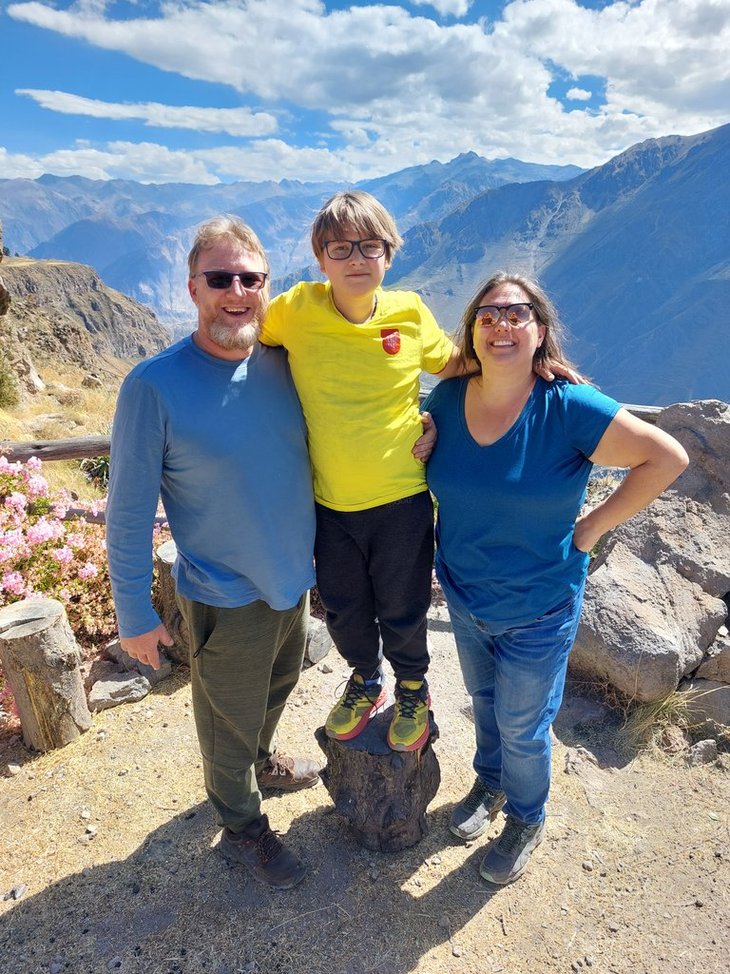
We’re David and Brodi Cole, a couple who waved goodbye to our corporate jobs to embrace the lifestyle of digital nomads, to become a full time traveling family around the world with our son.
Prior to becoming a travel blogger, Brodi had a successful career as a human resources director for a large corporation.
Travel had always held a special place in her heart, with numerous trips abroad sparking her interest, but it was only after her role was downsized that she decided to turn her passion into a career.
David, on the other hand, had been teaching English as a second language (ESL) online for several years before we made the decision to become digital nomads.
His experience with remote work was instrumental in providing financial support for our family as we embarked on our travels.
Together, we took the leap into the digital nomad lifestyle, blending our skills and passions to craft a new way of life for ourselves and our son.
Our backgrounds in corporate America and online teaching prepared us to thrive as digital nomads. Our love for travel and adventure fuels our motivation to continue this journey.
Becoming Digital Nomads
As digital nomads, we enjoy the freedom to work remotely from any corner of the globe, provided there’s an internet connection.
We’re part of a community of individuals who’ve chosen to live a location-independent lifestyle, often exploring the world while working online.
We, David and Brodi, decided to embark on this journey after realizing our desire for more freedom and flexibility.
We yearned to travel and spend more quality time with our son, while still maintaining financial stability. Recognizing the potential of online work, we seized the opportunity it presented.
However, shifting to a digital nomad lifestyle wasn’t without its hurdles. One of the biggest challenges we grappled with was financing our lifestyle.
Transitioning to a digital nomad lifestyle had its hurdles, with financing being one of the biggest challenges we faced.
Another challenge was striking a balance between work and travel. We had to learn how to manage our time effectively, prioritizing our work while still immersing ourselves in our travels.
Despite challenges, we overcame them by staying focused on our goals and persisting. We established a successful online business, enabling us to travel the world while working remotely.

Worldschooling
As worldschooling advocates, we’ve embraced an educational approach that combines travel and learning. This education style turns the world into a classroom, giving our son firsthand experiences of diverse cultures, languages, and history.
Worldschooling offers numerous benefits. It exposes our child to diverse perspectives, fosters independence and adaptability, and promotes experiential learning.
We educate our son on the go, integrating learning into daily activities. To make it engaging, we use various resources and strategies.
We use Khan Academy and Duolingo for educational content in various subjects and languages. Minecraft and BrainPOP provide interactive learning experiences.
We also utilize local museums, historical sites, and cultural events for hands-on learning.
Encouraging our son to journal his experiences promotes reflection and enhances his writing skills. Worldschooling has proven to be an enriching and effective education method as we travel.
By utilizing diverse resources and strategies, we offer him a comprehensive education and unique worldly experiences.

Lifestyle of a Full Time Traveling Family
We’ve journeyed extensively across South America, traversing countries like Peru, Ecuador, and Colombia.
Our travels have gifted us with unique experiences such as hiking up to Machu Picchu, venturing into the depths of the Amazon rainforest, and immersing ourselves in indigenous cultures.
We’ve encountered challenges like language barriers and cultural differences, but they’ve fueled growth and learning.
Embracing travel as a lifestyle offers advantages – exploring new places, meeting diverse people, and immersing in different cultures. It also provides a flexible schedule and the freedom to work from anywhere.
However, every silver lining has a cloud. Adapting to new environments and being away from loved ones can be challenging. Planning our travels involves research and spontaneity.
We prepare by researching destinations and activities, but also embrace unexpected opportunities and changes to our itinerary.
Adapting to changes requires flexibility, an open mind, and leveraging local advice and recommendations.
In essence, adopting travel as a lifestyle has enriched our lives, making them more fulfilling and adventurous. We continue to welcome the challenges and opportunities that come our way with open arms.
Our Offbeat Life Podcast
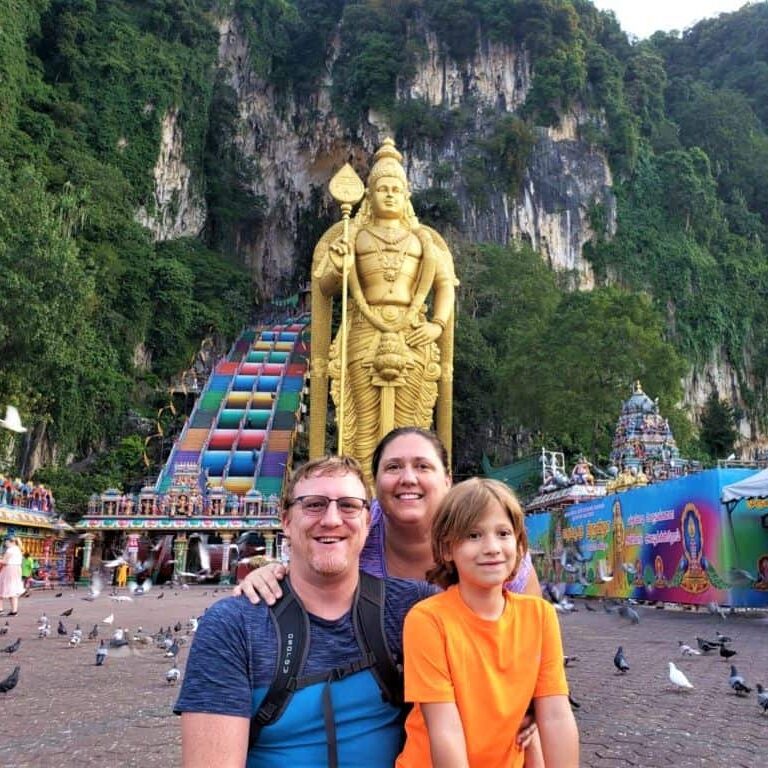
Through our podcast, Our Offbeat Life, we aspire to inspire and empower you to carve out your own unique path. We bring you stories of individuals who’ve successfully tread unconventional roads.
We host guests from diverse backgrounds – entrepreneurs, travelers, creatives – who share their experiences and insights on aligning life with passions and values.
Our lifestyle as digital nomads is closely tied to the ethos of the podcast. We share our journey, our triumphs, and challenges, and offer insights into creating a location-independent lifestyle.
Join us as we explore the offbeat paths that make life more fulfilling and exciting.
Conclusion
As digital nomads, we’ve managed to blend our passion for travel with our work, and we love sharing our strategies for creating a location-independent lifestyle.
We also talk about our experiences as a full time traveling family with our son and the way we fold education into our voyages via worldschooling.
Our journey is meaningful as it demonstrates the potential of molding a life that syncs with your passions and values. It spotlights the hurdles and rewards that come with choosing travel as a lifestyle and remote work.
Through Our Offbeat Life podcast, we give others a stage to narrate their tales, inspiring listeners to chase their own unique paths.
We resonate with digital nomads and travelers, sharing insights for a successful location-independent lifestyle. Discover the perks of worldschooling and integrating education into travel experiences.
Ultimately, our story and podcast aim to inspire and empower you to craft a life that aligns with your passions and values, embracing the opportunities and challenges that accompany it.
Leave a Review!
Apple Podcast reviews are one of THE most important factors for podcasts. If you enjoy the show please take a second to leave the show a review on Apple Podcasts!
✔️ Click this link: Leave a review on Apple Podcasts
✔️ Hit “Listen On Apple Podcast” in the middle next to the picture.
✔️ In iTunes, Click “Ratings and Reviews” under the show name.
✔️ Leave an honest review.
✔️ You’re awesome!
Key Takeaways and Timestamps
✔️ The importance of being trustworthy and experienced in what you’re writing about when blogging. [00:00:28]
✔️ The benefits and challenges of traveling as a lifestyle and working remotely. [Throughout the Podcast Conversation]
✔️ Tips and strategies for creating a location-independent lifestyle. [Throughout the Podcast Conversation]
✔️ Incorporating education into travels through worldschooling. [Throughout the Podcast Conversation]
✔️ The Offbeat Life podcast aims to inspire and empower listeners to create their own offbeat lives. [Throughout the Podcast Conversation]
✔️ Interviews with other travelers and creatives who have pursued unconventional paths. [Throughout the Podcast Conversation]
✔️ Monetizing a travel blog and providing assistance for family travel planning. [Throughout the Podcast Conversation]
✔️ Online ESL teaching and Search Engine Optimized Freelance Writing and Editing. [Throughout the Podcast Conversation]
✔️ Changes in education policies and adapting to new circumstances. [Throughout the Podcast Conversation]
✔️ The importance of pursuing a life that aligns with one’s passions and values. [Throughout the Podcast Conversation]
Transcript
[00:00:00] David: Welcome adventurous friends to our very first episode of the Our Offbeat Life podcast. I’m your host, David. And here with me today is my lovely wife, Brodi. In her former life, she was a human resources director, and now she’s a globetrotting travel blogger, super mom, and my awesome adventurous partner.
[00:00:28] Brodi: So one thing that I have learned in blogging is people are going to read your Well researched, well written articles.
[00:00:40] Brodi: You have to show them that you are trustworthy and experienced in what you’re writing about. So we wanted to take some time to introduce ourselves for you to better understand our background as digital nomads and just kind of get a feel for who we are as people so that you can figure out why the heck you should listen to us.
[00:01:04] David: In future episodes you’ll be seeing some interviews with other travelers that we’ve met along the way. So, Brodi, you’re the storyteller, let’s take our listeners back, to where it all began. So how did we get into this nomadic lifestyle?
[00:01:21] Brodi: So I’m going to start with the most recent set of events because we have been talking about working online and traveling more for years, but what finally made it happen for us was after I was downsized from a job.
[00:01:42] Brodi: In 2018, you had recently taken on a new job. Working as an online ESL teacher, we realized after I was downsized that between your remote work and my unemployment money, we were able to make things work financially. Not happily, but we made it work and we had all the essentials, you know, but we were in Chicago and we could make it work on a fraction of what we thought we could make it work.
[00:02:17] Brodi: So, I had this light bulb that if we could make it work on that amount of money in Chicago, 1 of the most expensive cities in the US that. We could definitely make things work if we left the U. S. and went full in on remote work. So, that conversation was in July of 2018,
[00:02:43] Brodi: and one year later, we made it happen. Because by, from July to June of 2019, I put in my notice at my job. And we hit the road. So it took us one year from less than a year from conversation to execution of the plan. It was amazing.
[00:03:09] David: Tell folks, what did we do with all of our stuff, our collected lives that we had
[00:03:17] Brodi: accumulated?
[00:03:17] Brodi: Yeah, no, that’s a good question. We ended up donating a lot more. That we thought we would because at first I was selling the big stuff and I was selling that, you know, the stuff that was valuable and trying to make some money on it. And at the end we were like, we still have boxes and boxes of stuff that we have not been able to sell.
[00:03:36] Brodi: And we were like a month from. Closing from our scheduled closing day on our place. I just started having you take boxes and boxes of stuff to local donation centers. I posted on Facebook. Moving sale, come walk through and make me an offer. And people were literally buying like really good Cuisinart pots and pans for like 5 dollars.
[00:04:03] Brodi: It was bananas. We did manage to sell all of our major pieces of furniture and the chicken coop. And the chicken coop and the chickens. So how that sold, but it was a lot and I wish we had been more ruthless with getting rid of things faster. I took all of my scrapbook stuff, all of my arts and crafts and donated them to a local nonprofit.
[00:04:27] Brodi: I mean, we were just donating left and rights that year of everything because it just, it had to go. And, I mean, at one point, we left, like, a few boxes of stuff in the alley as we drove away, and our neighbors were going through it, and… Deciding what they wanted, but you know, whatever it is, it happens. It’s what it
[00:04:47] David: is.
[00:04:48] David: But we became of the mindsets really. Um, you know, if it doesn’t bring you joy, yeah, get rid of it. Cause it came down to a point where it was just like, we can’t really go travel with this stuff. We had a car, that was it.
[00:05:03] Brodi: And to be clear, that was the wrong way to do it because my Instant Pot brought me a lot of joy.
[00:05:11] Brodi: It really did. I miss it, but I didn’t need it. I should have sold it a lot sooner. So what we should have done instead of the whole, if it doesn’t work, joy, get rid of it. No, we should have said, is this going with us? No, it needs to go away now. That would have been a better way to do it. And we should have been much more ruthless with that sort of stuff.
[00:05:38] David: Hindsight is really 2020. Absolutely. Absolutely. All right. So now. We’re packed up, we’re done with that, we’ve sold the place. That was four years ago. Alright, so let’s give people an idea of where we’ve been since then.
[00:05:55] Brodi: So, we left Chicago and spent a little over three months driving around the east coast of the U.S. to visit friends and family. We were doing a lot of house sitting.
[00:06:09] Brodi: We spent like three months straight with like a random day here and there. But totally house sitting all across the east coast of the U. S. We were in Virginia. We were in Tennessee. We even house that back in Chicago for a little while.
[00:06:26] Brodi: I mean, it was great. We spent three months just kind of working out the kinks as a test run that I like to say, and then we were back in Chicago. We flew down to Mexico to spend a week at our favorite Riviera Maya resort. And then we came back from that and flew straight to Los Angeles so that we could take a cruise from Los Angeles to Singapore.
[00:06:56] Brodi: I got the idea to take a repositioning cruise to a new continent from another world schooling family because they did that from the U. S. to Europe. We’re not cruise people. Like, we’ve never even been on a cruise before, ever. Yet, we booked a 24 day cruise to Asia, but you know, go big or stay home. So the nice thing about cruises between continents is you arrive in your new destination with zero jet lag and you get to visit really cool places that you might not normally have.
[00:07:29] Brodi: On a worldschooling itinerary. So it was, it was worth it. We made some other stops, other places too, Hawaii, Vietnam, Malaysia, but it was a really great way to get to a new continent with zero jet lag so that we could spend every possible waking moment. Doing something in Singapore, Singapore is expensive and you do not want to waste time napping in your hotel room instead of sightseeing when you were in Singapore because every minute counts.
[00:07:58] Brodi: So we explored Southeast Asia. We went to Indonesia, went to Bali, went to Komodo Islands. We even made it to Malaysia to explore, and we went to Myanmar and got to spend almost a month exploring there. It was a lot of fun and the pandemic hit. And then after that, we ended up spending some time in Mexico.
[00:08:25] Brodi: And then in December of 2021, we were back in the U S for the holidays and we bought a car. We thought maybe we would just drive around Mexico for a little while and then sell the car and, you know, head out again. But the more we thought about it, we’re like, why stop? There’s so much more of Latin America to see.
[00:08:46] Brodi: So we just kept driving. We went to Guatemala and all the countries in Central America. And then we shipped our car from Panama to Colombia. Because there’s no way to drive from Panama to Colombia, there’s just the Darien Gap, which is this impassable jungle with no roads and No sane person would ever attempt to pass it.
[00:09:17] Brodi: So we shipped our car and we’ve been adventuring through Colombia and Ecuador and Pero in Chile and Argentina on our way to the southern most tip of Argentina.
[00:09:32] David: Right now we are in Argentina, so, so far we’ve done a lot of countries. How many? 24 as a family. Yeah. 24 and counting.
[00:09:45] David: Now, let’s go back in time a little bit, before the pandemic, what would you say is your favorite or most memorable thing from our time in Southeast Asia?
[00:09:59] Brodi: Honestly, going to Komodo Island and seeing Komodo dragons. Like, I had wanted to see them for years. I had always wanted to see Komodo dragons. I don’t know what it is about them.
[00:10:13] Brodi: They’re these like weird, Jurassic looking, absolutely terrifying, deadly creatures. They’re, they’re creepy. They’re scary. But I mean, it was just so amazing. So we did this. Live aboard boat experience, we stayed at these like raised platform tents, open air, so you could wake up to the sunrise on an island.
[00:10:40] Brodi: And it was from tonight on a boat a couple of times, and we went hiking and we saw these red sand beaches and black sand beaches. And it was, it was amazing. And, you know, 1 of the days we went hiking and it was fabulous. But the company we went through, I think really made. A difference because they were so great with little man, he was barely 7 and we’re taking our kid deep water snorkeling so that he’s seeing like sea turtles and, you know, eagle rays and all sorts of amazing sea life.
[00:11:18] Brodi: And he has no fear, none, none, not, not 1 iota of fear. And so. Our tour company realized quite quickly that he needed his own dedicated guide with him in the water because he was here, there and everywhere, and the company wanted to make sure that we were still able to see things. So, they always assured.
[00:11:40] Brodi: Uh, guide in the water just for him and then we could go and do our thing and not have to worry about him. It was amazing. And it was just maybe because it was one of our early experiences in Asia, but that was just a stark reminder of just how family friendly Asia is like as this megalithic. Mega culture full of microcultures, but everywhere we’ve been in Asia before that, after that has been so welcoming to us as a family to him as a kid, and it’s just, it’s so refreshing to have these amazing family adventures.
[00:12:26] Brodi: And know that random strangers on the street don’t see my kid as an annoying hindrance for his exuberance and fascination with every single living animal on the planet. It’s just amazing. I loved it. So that was my Asia number one experience that I loved. I want you to talk about Central America. It shouldn’t be all my experiences.
[00:12:49] Brodi: So tell us about your favorite experience. In
[00:12:53] David: Central America, I would have to go with. Guatemala, specifically Antigua on this journey, we skipped to call and everything, because we’d already done that a few years back. So I go with Antigua area, mainly because we were house sitting. And I love house sitting, we had an amazing apartment that we got to take care of with this awesome cat and the cat was just chill, so, but sassy, but we get to sit there in this, this wonderful woman’s apartment and just look out the window and there’s the volcano puffing.
[00:13:37] David: It erupted once and so, uh, and so this is coming from like Chicago, you don’t see volcanoes, you don’t see this type of thing. I’ve been a different world now. Family wise, we took our kid to an outing for the day. We went and checked out this old cathedral or nunnery. And he still had, he had commitments. So he had school that day and we were like, no, we’re not gonna, we’re not going to cancel out of school for the day.
[00:14:07] David: So we brought his iPad and he’s sitting in the old pulpit and just does his class. Not very many tourists there at all. It was like almost nobody there that whole time. And so he’s doing class showing off everything, showing off the ruins to his class. And I was like, all right, this lifestyle is really working.
[00:14:26] David: And I think I see a lot of potential for it. So that was one of the big go to moments in my head. I was like, Oh, this is really gonna work. All right. So I gave you a little bit there about my was a good one. That was a good one. We’ve been in South America now for What, seven, eight months? What sticks out to you from South America so far?
[00:14:50] David: It’s
[00:14:51] Brodi: hard. We have done so many things that have been on my bucket list forever here that I don’t know if I can pick one. I’m gonna have to give you two. Okay. So one of them was when we were leaving Colombia and we were crossing into Ecuador right on the border. There is this amazing gothic style cathedral.
[00:15:23] Brodi: It’s called Las Lajas Cathedral. And it is beautiful. There are no words to describe it because it, it’s this gorgeous, like I said, gothic style cathedral, but it’s in a canyon in the cloud forest overlooking this river. I mean, it’s like something out of time. I almost expected like Belle to come through singing like it doesn’t belong.
[00:15:52] Brodi: In what I would have expected of Colombia, like, it really looks like something that should be in the mountains of Europe. It really does. It’s amazing. And I’ve wanted to go there for at least a decade because it’s amazing. I heard about it. I was like. Normal people don’t go there. I wouldn’t go there.
[00:16:12] Brodi: I’ve always wanted to see it. So we got to check that off my bucket list, but we also got to go to Machu Picchu in Peru and that was on my bucket list too. We found the most amazing guide who was really great with our son. She kept him really engaged with activities and things like that, but then randomly she’s taking her photo.
[00:16:36] Brodi: On the steps of Machu Picchu, where the ancient Incans walked, right? And all of a sudden, this llama comes trotting into the picture. I’m like, oh, quick, take a photo before he just finishes crossing the sidewalk. Oh, no, he didn’t finish crossing the sidewalk. He decided to turn right there. Right between us.
[00:16:56] Brodi: And he just walked between David and me and just sauntered up the steps that we had just walked down. And so we have this really funny series of photos. I put them on Instagram if you guys want to go check them out. They’re hysterical. Of me just being like, you know, fawning, fangirling all over this llama.
[00:17:16] Brodi: Because, yes, there’s llamas all over the mountains of Peru, but this is like a wild llama who chose. To walk near us show was to be close to us. Like it wasn’t just, you know, person on the street selling llama photos. Like this llama has all the power and freedom to do whatever it wants all day. And it shows us it was the cool hands down.
[00:17:42] Brodi: Top two cool things for me in South America when I was hanging out with me. It was amazing. Yeah, love it Love it. Absolutely. So your turn again. I’m not letting you off the hook. So we talked about Asia. We’ve talked about Central America We’ve talked about South America, but we also spent over a year in Mexico.
[00:18:04] Brodi: So let’s talk about your favorite experience Mexico because I know you had a couple experiences that you just It’s really love. So pick one. It’s
[00:18:13] David: hard to choose, but having driven the extent of it from one side to the other and then back again, yeah, I already have to go with Grutas Tolentango.
[00:18:25] Brodi: Okay. So nobody knows what Grutas Tolentango is.
[00:18:30] Brodi: Well, okay. My guess is like 85 to 90 percent of the people watching or listening don’t know. So let’s explain for the majority of humans who don’t know what Grutas Tolentango is. What is it? Where is it? It’s this
[00:18:41] David: really cool volcanic heated hot springs, really, that is north of Mexico City. We were, we had been staying really in San Miguel de Allende, which is a little bit northeast of Mexico City.
[00:18:59] David: But when you get there, it’s these crystal clear waters. They’re like the bluest of blues you’ll ever see. And it’s like, so amazing. Most of the pictures, if you’re Googling this right now, you’re going to come up and you see these pools on the side of a cliff that are really blue. And that’s just the start of it.
[00:19:20] David: That’s cool. And some cool views. And, and whatnot, but you get in these private little pools and you’re like hanging out and sometimes there’s other people there, but what got me the most was the river. It comes out of this cave. We went into the cave, we saw where the waters came from, we went kind of like, not splunked, but went back further into this little tight area, which was really hard to get to because of the fast trains.
[00:19:44] David: And then it just cascades into these huge sections, they carved out on the river into these blue, this like baby blue, like you think Lucy Lawless’s eyes, uh, and yeah, the water is just the perfect temperature. The closer you are obviously to the source of hot, uh, but it’s just nice the whole way through.
[00:20:10] David: We had so much fun. Little man and I climbed some of the little barriers. If you want to see these, go to our Instagram, you’ll see some really cool videos of
[00:20:20] Brodi: it. I think I would agree with you. I think that was probably one of my favorite Mexico experiences, too. It’s a bit
[00:20:26] David: touristy, but it’s still one of my
[00:20:27] Brodi: favorites.
[00:20:28] Brodi: Yes, it’s touristy, but it’s like, really popular with Mexican tourists, which is a whole nother interesting experience in itself, you know? To like, be a tourist, but not be a majority… Country tourists in that place. It was a really fun experience. I agree with you. So yeah, no, we definitely Like good
[00:20:50] David: one. One less.
[00:20:51] David: Okay. I have to do this. Okay. Okay, but Prior to full time family travel. Yeah What is your go to story that really helped lead you to knowing that this was going to be possible or this is what you? Wanted to do
[00:21:09] Brodi: well It never occurred to me that it wasn’t possible. I guess that’s, that’s the thing is, you know, I’m of the perspective that if you want to make something happen, you will make it happen.
[00:21:25] Brodi: If it is important enough to you, then you’re gonna make it happen. So when we talked about having kids and we agreed we are not going to give up travel to have a family, you know, we’re going to have a family and travel too. That we would. So that’s why as soon as he was seven months old, I booked us a trip to the US Virgin Islands and then, you know, we’re vain.
[00:21:54] Brodi: So we got him a passport just so we could get a passport stamped by going to the British Virgin Islands for a day. But that was really fun when we went to Virgin Gorda by ferry from St. Thomas for the day. And it was amazing. I had a little man sleeping on my back. He was, what, seven months old? He was sleeping on my back in my baby carrier.
[00:22:19] Brodi: And it was just amazing. But on that same trip, we took a day trip to St. John and we met up with one of my friends from high school, or no, from elementary school. And do you remember what she said? She was like, I cannot believe you guys are so adventurous that you’re gallivanting around the Virgin Islands with a kid.
[00:22:43] Brodi: And I was like. Really? That’s weird? Like, it didn’t occur to me that it was weird, but I guess to some people it is. So, I was like, well, this doesn’t even feel off the beaten path to me. But it clearly was for some people. Oh, I mean, we’ve had so many amazing travel experiences. I just keep wanting more of them.
[00:23:06] Brodi: Oh, I mean, I didn’t even get to the part where we changed a little man’s diaper on the great wall of China. Well, local tourists were taking photos of us because, you know, a dirty diapers got to get changed. You can’t just leave it. You do what you got to do when you’re a parent, you know, in the winter. I mean, because we had such a positive experience with our first international trip, I do think it gave me confidence to keep going.
[00:23:32] Brodi: I think I never really had to convince myself that it was possible, but it definitely gave me the confidence. For us to continue to do it.
[00:23:43] David: So full time travel, as we’ve known, and one of the reasons why this podcast exists is that it’s not always sunshine and rain. There’s a lot of questions that people have that come out of it.
[00:23:55] David: And we’ll get to a couple more of those in a second, but. First, can you share a couple of the challenges that we’ve faced? I know even just getting to the church you mentioned in Colombia was a big challenge, but what comes to your mind when I bring up these challenges
[00:24:12] David: that we’ve faced?
[00:24:12] Brodi: Hopefully that’s a one off. Well, yes. So I do want to talk about it a little bit though, because I think that our experience, it’s More in depth than other families will experience. Everybody’s going to have a challenge at some point. Right. But we were in Malaysia at a world school pop up with a few dozen other families.
[00:24:33] Brodi: And we knew that COVID existed. We knew it was around, but it honestly never occurred to me that the world would change so dramatically. So, we had friends who were being told by some of their travel insurance companies, if you don’t leave, we are not going to cover you anymore because the country that you’re in is a stage whatever, risk factor, I think like stage three or something, and we won’t cover you.
[00:25:10] Brodi: So, we had friends who had to leave because their travel insurance wouldn’t cover them anymore. And then all of a sudden, Malaysia started talking about closing borders and more people left and we don’t have a home base, right? Like we don’t have anywhere to go back to and we’re Americans, so going back to the U.
[00:25:32] Brodi: S. doesn’t sound appealing in and of itself. So we stayed in Malaysia. For the two week period, quote unquote, of border closures, well, we all know what happened with that. A two week border closure turned into 13 months of being stuck in Malaysia. I will say, we were happily stuck in Malaysia. Technically, we could have left at any time.
[00:25:59] Brodi: The Kuala Lumpur airport did not close completely. There were occasional, incredibly expensive flights. That we could have left Malaysia at any time, but between the meat shortages and food shortages and toilet paper shortages, the US was experiencing. No, thank you. We say in Malaysia, the numbers for the most part were fairly low.
[00:26:24] Brodi: And yes, we were locked down more dramatically than other countries experienced, but knowing what I know now, I still would have done the same thing. I wouldn’t have left. I’m glad we stayed. Malaysia was an incredibly gracious host country. During the early stages of the pandemic, I look forward to some day when we get to go back and visit again.
[00:26:51] Brodi: But that fear, that uncertainty, that not knowing was just next level feelings. I remember those days. I remember how worried I was. I was always checking. Okay, if they don’t extend tourist overstay amnesty, where can we go? Because at one point, the entire world was like a level four travel advisory, do not travel by the U.S. State Department, which is not logical for people like us. You know, if we have to go, we have to go. So I was always researching. I always had backup plans. It was really stressful. It was really. Really tough. So I’m hoping that never happens again and that we can find a way to work through it But I also know that if I can get through Navigating the uncertainty of a pandemic in a foreign country when no one knows what’s going on.
[00:27:48] Brodi: We can do anything We can do absolutely Anything it just takes an open mind A very high tolerance of stress and good friends because we were lucky we had a few other families who were in the same boat as us who did stay. They stuck it out with us and you know, they were my saving grace while we were going through those early stages.
[00:28:15] Brodi: I could text them any hour of the day. If I wasn’t sleeping, they weren’t sleeping, it was a lot. So I’m really glad we had that to work with. But on a more, I don’t know, normal note, I guess, you know, a hundred year pandemics aside, there was getting to the Las Lajas Church in Colombia. So we were in Northern Colombia, Bogota, Medellin for most of our time in the country.
[00:28:46] Brodi: You don’t realize it when you look at a globe or you look at a map. Colombia is huge. It’s huge. So, Bogota and Medellin look close together, but it took us like nine hours one day, a little over, to drive that. So, we’re getting ready to head south, and we knew that it was going to take us a couple days to get from Medellin to the Ecuador border.
[00:29:09] Brodi: And we accepted a house set. So we had to kind of cut our time in Southern Colombia short, but then a week before we were supposed to leave, Colombia was having one of the rainiest rainy seasons. In years, and it had one of the largest landslides it’s ever experienced, and it washed away a portion of the Pan American Highway.
[00:29:35] Brodi: I don’t mean it covered it with mud. I mean, literally a kilometer of highway no longer exists. There’s a whole town that was near the highway that no longer exists. It was horrifying. It was absolutely horrifying to see it on the news, to see what people were going through. And that was the road we were supposed to be driving to get to the Ecuador border, so we didn’t know what to do.
[00:30:11] Brodi: So we are just looking at all of our options and ultimately the choice that we made was to drive from one town on the Pan-American Highway off the para American Highway on this two-lane road that was now dominated by semi-truck going through what we were going through to this little town in the Colombian Amazon called koa.
[00:30:36] Brodi: Which actually was really fun. I wish that we had had more time to explore Makoa because that is, Makoa is the gateway to the Colombian Amazon. Like, if we had more time, I would have stayed and maybe done some river tours, some really cool tours from there into the Amazon to explore more. But, yeah, our house is together.
[00:30:55] Brodi: So, we drove the Trampoline de la Muerte, which translates, yes, you probably know what that translates to, the Trampoline of Death. That is the name. It is one of South America’s death roads, and we drove it from Mocoa back to a town called Pasto on the Pan American Highway. We drove the Trampoline of Death as a family.
[00:31:23] Brodi: In our Toyota 4Runner, and we only did it because the Colombian government saw the high amount of traffic. That that road was getting because of the collapse and destruction of the regular highway. So they were opening it 1 direction per day. So East 1 day West the next day for traffic that said, it was still really scary because.
[00:31:52] Brodi: It is mostly dirt. There are open waterfalls running over portions of the road. And it was filled with semi trucks on hairpin turns, and it was very nerve wracking. I definitely would say that was probably one of our top stress experiences. I think I was more stressed that day than when the borders closed and we had to decide whether we were going to stay in Malaysia or not.
[00:32:17] Brodi: I think that was more stressful. It was really difficult. But yeah, there’s videos and pictures of that on Instagram if you want to go look for it. But yeah, no, that was, that was something. That was a tough day. I’m really glad it’s over. I can’t say I’m glad we did it. I, I could have been happy not. But everything was fine.
[00:32:38] Brodi: It was a long day, but… It was a beautiful day. All the views. Oh, they were beautiful, but I could have lived without seeing them. So, yeah, that was a tough day to focus. I know. I know. And rightfully so rightfully. So, but yeah, it just took a lot of planning, a lot of patience and we had to overcome the urge to hurry through anything and just be in that moment.
[00:33:03] Brodi: And that day it was going to take however long it took. And it was fine. It drives the planning all in one. Oh yes. Oh yes. For sure.
[00:33:14] David: I want to switch gears now so we can kind of touch on a few topics I know are near and dear to people who are thinking about this lifestyle. Can we talk a little bit about how we finance this lifestyle, give people an idea of
[00:33:26] Brodi: how it works.
[00:33:27] Brodi: Okay. So, to be clear, we are not independently wealthy. We are not rich. We just prioritize certain things over others to make this happen. So when we first left, I’m rewinding a little bit because it does, this matters. Okay. So when we first left to travel, I had no source of income and we were living exclusively off of David’s ESL teaching income.
[00:33:58] Brodi: He got to be the breadwinner. It was pretty great. So we lived exclusively off of that until 2021. When we left Malaysia and went to Mexico for a while and the summer of 2021, there was some changes with the Chinese ESL online teaching industry. Some new government standards basically resulted in 90 some percent of the industry shutting down.
[00:34:32] Brodi: So it was tough. It really was. And, you know, I’m not really going to go into like how and why the standards change, because quite frankly, I don’t understand it’s. Government stuff way beyond my scope. So we’re just going to let it go with that. You can look it up if you were interested.
[00:34:54] Brodi: Yes. So with that policy in place, David was no longer going to be teaching. Directly for the company that he was working for he did have some students who were interested in working with him privately. So he kind of scrambled and put together a curriculum and retained some of his students and that got us through for a little while.
[00:35:17] Brodi: But since then, we have branched out and I have monetized my travel blog at no additional expense to my readers. So I provide a really high level of assistance for family travel planning with a focus on Southeast Asia and the Americas, but David is still doing some online ESL teaching. I do some SEO, which is Search Engine Optimized Freelance Writing and Editing.
[00:35:54] Brodi: And David runs another website called The Tutor Resource, which offers online teaching materials and curriculum subscription style for online teachers and tutors who are working with private students or working for a company that doesn’t provide resources. Also, too, so that they have materials to use.
[00:36:15] Brodi: So the double reduction policy seemed like. The end of digital nomad life for us, but we’ve actually pivoted in like several different directions and we are making more now than you made most months teaching online. Outside of pandemic shutdowns, but but I would say on average, we probably are living on 3000 a month or less.
[00:36:53] Brodi: I mean, there’s a couple months where it’s more like when we were in Cusco and went to Machu Picchu. That was an expensive month because. Just for the three of us to go, not on a guided tour, it was like 500 almost. But the fact that we have the flexibility to be able to kind of upsurge for big things like that is important.
[00:37:12] Brodi: So that’s why I say most months. So there’s some months are more, some months are less, but on average, I’d say 2, 500 a month is kind of our average living expenses for new
[00:37:24] David: families out there looking to get into this lifestyle. One of the things that really helped us get into it originally is we ran into a Nice couple and they shared their expenses with us and showed us exactly What they used to live on and they had a family of four.
[00:37:40] David: We have a family of three Oh, they can make it work. And so can we so if you’re interested, you can always reach out to us on instagram We can talk through things and see how our budget is so you can see if that’s the kind of thing that works for you As well.
[00:37:55] Brodi: I will say i’m not so organized that I could send you a budget I’m just not like, that’s, I use spreadsheets for a lot of things, but tracking every single expense our family has is not my forte.
[00:38:08] Brodi: But I also do want to say we do local fun things. We go to free days at the museums. We go to parks, we go to playgrounds, we go on free walking tours, but we also do fun stuff. You know, for little man’s birthday, we went to the hot springs and we went bowling. And we went out for sushi on my birthday. We went on a winery tour.
[00:38:27] Brodi: So we do spend money on activities, but it’s not like a vacation where you are packing in every activity a location has to offer in a single week. So we are where we are now for a month and we go out. Probably two or three times a week to do activities. And then the other days we stay in, we chill, we relax.
[00:38:52] Brodi: Sometimes we’ll watch a family movie, play board games. It’s about balance. So you don’t go into a digital nomad lifestyle thinking because you’re traveling all the time that you are going on paid overpriced excursions. All the time because you’re not just to give you an
[00:39:09] David: example of the last two days for me, I’ve been car work, I had to go get an oil change.
[00:39:14] David: I had to get tires on the car, you know, different things. You’re still doing the same kind of things you could do or we go to the grocery store every week. We don’t just order out or go to restaurants all the time. It’s still life. It’s just life on the road. We
[00:39:28] Brodi: do go to restaurants. Not all the time. No, but we do eat out, you know, so I’m just saying like, when you’re looking at our budget.
[00:39:34] Brodi: Yeah. Budget quote unquote, because when we find English speaking movies in theaters, we go, so it’s not
[00:39:43] David: always just the, the amazing church sites or salt mines or X, Y, Z, it’s normal day to day life,
[00:39:53] Brodi: long, long answer to a quick question
[00:39:57] David: and of course, we can’t go anywhere without education. As we do travel with a child.
[00:40:05] David: We do? Yes. Oh, we do? Yes.
[00:40:08] Brodi: So, just kidding, just kidding.
[00:40:10] David: So, everybody always asks us about education. What’s it like educating our son? Let’s talk about that a little bit. Any specific strategies, things like that, that we use,
[00:40:21] Brodi: resources? Our education style has changed and it’s always changing. So, that’s the one thing that I love about world schooling is It can adapt to your family and your needs.
[00:40:37] Brodi: It doesn’t. There’s no one size fits all solution for everyone, which is good and bad because you have this ultimate flexibility, but then you’re like, what do I do? So that said, we started out completely unschooling, which worked really well because it was pre pandemic. We were out and about, we were doing things and we were living in the moment and learning through our living moments and it was amazing.
[00:41:05] Brodi: And then we went through the pandemic. And the lockdowns. And so we tried to do school at home. I ordered workbooks online and we tried to supplement with some other app based learning. We basically have a schedule every day that we followed. Little man hated it. I hated it. He would hide the schedule. It was awful.
[00:41:32] Brodi: So we realized that unschooling. ish ness works for our family. But it’s really hard to learn through life when your life is at home 24 7 because there’s a lockdown. So as soon as the lockdown started to go away, vanish, soon as things started going back to some semblance of normal, we Let up on that a little bit we did start experimenting without school about that time Because I really liked having access to online education that didn’t necessarily offer resources.
[00:42:11] Brodi: I could provide Little man took this really great out school art class painting we hung his paintings up all over our apartments and it was great because I’m not an art teacher. I can’t teach painting technique. And so we really, really liked that. And then when we left Malaysia, went to Mexico, we just took a little break to see how things were.
[00:42:34] Brodi: And then there was another COVID strain hitting and Mexico kind of went into this like partial lockdown. So like kids weren’t allowed in public places, but nothing was really closed. It was weird. So we found this online school that was very like self directed, which is right up our alley. And we started with that in July of 2021.
[00:42:58] Brodi: So we’ve been with the school now for two years and the school is called Cubrio XP. And I can put a link for it. We can put the link for it down in the description. And what I really like about it is, is he has a daily check in with the same group of kids. Every day, Monday through Thursday, school is only four days a week, which I like because then we can still go do things on weekdays, which is usually less crowded for the touristy stuff.
[00:43:25] Brodi: So he goes to a check in, which is like a homeroom, and they’ll do anything from like an educational activity to a social activity, different things. And he can also choose Other things, you know, he’s learned how to build video games through unity. He does history. He has science. He was doing foreign language for a while.
[00:43:45] Brodi: He was doing music, using technology to write songs. So he’s been able to explore a lot of different things that we wouldn’t necessarily have the skillset. to teach him. He got really into scratch coding for a while, and different things. He even was taking art classes for a while. So he gets to kind of try out different things that he likes.
[00:44:10] Brodi: And I don’t have to be the expert in everything. So I really like that. But the school is actually geared towards world schoolers, traveling families. So if we want to skip school for his birthday to go to the hot springs and sushi. We just tell them we’re not going to be in school on Monday and they’re like, okay, have fun.
[00:44:30] Brodi: You know, it’s really flexible and there’s no, there’s no one coming after us to say, oh, you missed too many days of school. Your child is truant. We had that problem before we left to travel full time with the public school, because I would book vacations for when we felt like going and not for a school break because it’s cheaper to travel that way.
[00:44:51] Brodi: And so I ended up telling his homeroom teacher and his principal. This is what we’re doing, and he’s not going to be doing homework or makeup work while we’re gone. He will just have to figure it out when he gets back. If you have problems with that, you can talk to me. You cannot talk to him about it. It is not his fault.
[00:45:09] Brodi: It is my decision. So thankfully we were with a school that was actually pretty cool about it, or they pretended to be because they never gave us any trouble. So it was good, but we were only in public school through what first end of first grade. So I’m, I’m sure that the second grade teacher would probably not have been as flexible from what I heard, but, but well, we became digital nomads, so we didn’t have to worry about that.
[00:45:33] Brodi: So we really do lean toward unschooling because when you’re living a life like this, education doesn’t have to happen. Every minute of every day, and kids don’t have to be in a classroom for eight hours every single day. I mean, when you’re learning about science and biology because you’re on an island full of new and different animals, when you’re snorkeling and learning about aquatic life because you see sea turtles, that is so magical.
[00:46:06] Brodi: When you’re learning about history because you’re at Machu Picchu. I mean, it… It’s a totally different type of learning, and you do need to be intentional to make sure that kids have an opportunity to find things that they’re interested in. Like right now, little man’s into animation, and so we’ve been giving him opportunities to explore animation outside of the animation club that Kubrio offers.
[00:46:32] Brodi: You know, there’s definitely different opportunities, but you also just have to let go of the fact that school is more than spelling tests. If you want to give spelling tests, that’s fine. But for us, it’s what language would we offer them in? You know, I mean, yes, English, but there’s also Spanish and he’s learning Chinese and there’s, there’s so many opportunities.
[00:46:55] Brodi: I’d rather focus on letting him take the lead. Because kids are like sponges, right? So education happens more naturally when they’re not forced to do it.
[00:47:08] David: I love it. You gave a lot of great examples, definitions. There’s probably a lot of questions out there and that’s great. We love questions. You can always reach out to us in the comments or send us some instant messenger, but I think best bet is probably Instagram.
[00:47:24] David: It’s one of our best ways that we like to communicate with folks. Finally, though. What’s next for us? You’re the planner. I know we’ve talked a little bit about a few things that are going on and you’ve mentioned going down to Ushuaia. What are we expecting over this next year? Well,
[00:47:40] Brodi: it’s so funny you say that I’m the planner because I’ll make a plan and then a week later, nope, that’s not the plan anymore.
[00:47:45] Brodi: We’re doing this instead. So I used to plan two, three, six months in advance and book everything, book flights, book Airbnbs, book hotels, book all of it. I don’t do that anymore. Like, we’re here for another week. We leave a week from tomorrow. I’ve booked nothing. Nothing. We have nowhere. We entered Argentina.
[00:48:04] Brodi: We didn’t have a place to stay. So, you know, I’ll just find it as we go. So, I love that he calls me the planner because that has become my travel planning style. But, big picture, we are driving down to Ushuaia, Argentina, so we can see the southern tip of South America. Then we’re going to be heading back up to Buenos Aires for a few months to kind of…
[00:48:26] Brodi: Chill and relax after. Almost two years of driving and not saying anywhere more than a few weeks. But we’re also going to be having a pop up, a world school pop up in Buenos Aires, everyone is invited. We will definitely be putting a link for you to check more on about that. It’s going to be one week of a custom created itinerary by me.
[00:48:48] Brodi: I’ve been researching for months. It’s going to be amazing. And. Basically, we provide the community opportunities. We provide the sightseeing and activity opportunities. And you get to book wherever you want to stay. You get to eat whatever food you want to eat. So you can make it fit for your budget. It is budget friendly for Any family, you just have to get to Buenos Aires, there’s several families already booked, so it’s going to be a great time to see a new city, a new country, a new continent, new people, but also, yes, exactly, make connections with other WorldSchoolers.
[00:49:30] Brodi: So, if you’ve been WorldSchooling for a while and you just miss the community, or you want to see what WorldSchooling’s about, And check out what world school and community is like. The world school pop up hub in Buenos Aires is going to be Amazing. So once that’s over, should I tell them? I should tell them.
[00:49:50] Brodi: We’re going to Antarctica. I’m super excited. We are going to be spending 16 days sailing from Santiago, Chile down to Antarctica. Back up to Buenos Aires over Christmas and New Year’s. So we accidentally started spending one Christmas on every con. So when we got down here, we realized we could do that.
[00:50:15] Brodi: So we are spending Christmas in Antarctica. And then next spring, we have tentative plans to ship our car from South America, back to Mexico, North America. Explore Mexico. Go see some people that we miss and haven’t seen in a while in North America. And then we are taking another cruise. It’s going to be LA to Tokyo, Attempt 2, Part 2.
[00:50:45] Brodi: And this time it’s actually happening because the world has reopened for tourism and business again. So, we are going back to Asia. In the end, later part of 2020 24. After that, I don’t know. I don’t know. I mean, we have goals, but not plans. But we have, we have lots of goals. So, we’ve done Christmas 2020.
[00:51:14] Brodi: Was in Asia Christmas, 2021 was in North America, Christmas 2022 was in South America. Christmas 2023 is going to be in Antarctica, Christmas 2024 maybe. Hopefully we’ll be in Australia and then after that we have two more continents to plan for, but that’s too far away. We can’t plan that far out yet. , I haven’t even booked a place to stay for us.
[00:51:42] Brodi: Next saturday night, so I gotta work on that. So
[00:51:46] David: that’s it. That’s amazing That gives you guys an idea of where we’ve been where we’re going And why this podcast exists for wanting to give everybody a chance to hear the stories if you’re Curious about this lifestyle if you’re in this lifestyle But looking for answers or to make connections or inspiration.
[00:52:10] David: Yes, there might be some inspiration. Maybe you want to do seven continents, seven years. I don’t know.
[00:52:17] Brodi: One thing I want to emphasize because we started out our travels really big. We literally went to the other side of the world to start world schooling, and you don’t have to do that if you don’t want to.
[00:52:34] Brodi: There are families who are from the U. S. or Canada, And they have an RV that they vacationed in for years and they decide to just travel full time in their RV around North America. And that is a perfectly acceptable way to world school. You don’t have to fly to every continent and travel all over the known world.
[00:52:57] Brodi: Like we’ve been. To be fair, our first three months of world schooling was driving around our home country, the U. S. So, the point isn’t go far or don’t go. The point is go, wherever or however that ends up being, because it’s an amazing experience. And that’s why we want to share all these different families experiences with everyone.
[00:53:29] Brodi: Because there isn’t a wrong way to world school. And I think that people are going to get a lot out of hearing from families. Because they’re not all like us. Some families are big, some families are small. You
[00:53:45] David: know, it’s different. To that point. Over the course of this podcast, so what we’ve got planned for you so far, if you’re watching this right now, there’ll be a couple episodes already up for you to go ahead and binge and hear what this is about, but we’re, we’re going to be talking to people who are single people who come from.
[00:54:06] David: Different types of backgrounds are from the U S Canada, Malaysia, from all over the world. They’re not all just going to be the same person. We’re starting with a lot of the folks that we’ve met in our travels over these past four years, branching out in some new relationships that you’re going to hear.
[00:54:24] David: So our goal. Is they’re going to see one of these new interview styles every week. That’s, we’re going to try to keep up with at least going forward. We want you to get the most out of this. If you’ve got burning questions that you want answered on these, send them our way on Instagram so we can make sure we work them into these episodes as we interview folks, but yeah, that’s kind of the goal.
[00:54:50] David: Do you have anything to add to that?
[00:54:51] Brodi: No, I don’t just. Make sure that you subscribe and turn on notifications so that you find out when the next episode drops because I guarantee there are some stories you do not want to miss hearing because they amaze me and I feel like I’ve been around them on this for a while.
[00:55:15] Brodi: So Don’t miss
[00:55:18] David: all right. Well, thank you all for tuning into the Our Offbeat Life podcast premiere episode. We bring you the most inspiring stories of transformational stories, starting with our own journey, moving into journeys of others. Occasionally, we will pop back on together here, hopefully, and give you some updates.
[00:55:40] David: But if you’re ever curious about what’s going on with us personally. Check out our Instagram. It’s probably the, one of the best places join the mailing lists. Brodi is amazing at keeping people apprised of what’s going on with us, with our weekly emails. So again, like she said, don’t forget to subscribe to this podcast, wherever you’re listening to it, whether you’re watching the videos on YouTube or listening to the audio.
[00:56:08] David: We love to hear your comments. Well, thank you
[00:56:12] Brodi: Bye.


