

Our Offbeat Life contains affiliate links & participates in the Amazon Services LLC Associates Program & other affiliate programs. If you buy something using an Amazon or other link, we may receive a commission at no extra cost to you. See our Disclosure for more details.
The Coolest Animals in Tikal National Park & How to Find Them

Wondering what animals in Tikal National Park you may see on your next visit? You’ve come to the right place!
I’ve been to Guatemala with my family several times, including a visit to Tikal. Because one of our favorite things to do when we travel is see wild animals, I made an exhaustive list for my family.
And now I want to help you, too, by sharing my personally curated research to use on your next trip to Tikal. Because it’s teeming with wildlife!
With its roots dating back over 3,000 years, this mystical place is a living testament to the ingenuity and brilliance of the Mayan people.
The park’s sprawling rainforests, expansive wetlands, and abundant biodiversity provide a thriving habitat for a remarkable variety of creatures.
So, grab your binoculars and get ready to explore, discover, and celebrate the wonders of nature. Let’s go!
My Top Tips to See Animals in Tikal National Park
The Tikal National Park is a UNESCO World Heritage Site and one of the largest archaeological sites of the ancient Mayan civilization. Here are my top tips for maximizing your chances of seeing animals there.
☑️ Book a Tour
Many of the animals in Tikal National Park can be difficult to see for an untrained eye. This is one reason why I recommend taking a guided tour of Tikal.
The guides know where Tikal wildlife tends to hang out as well as how to spot them despite their efforts to blend in with the local jungle. Our tour guide pointed out SO MANY animals we never would have seen on our own.
A sunset or sunrise day trip to Tikal is available from the nearby city of Flores. You cannot take a Tikal day trip from Antigua or tours to Tikal from Guatemala City and see the sunrise or sunset.
Sunset Tour
👉 A sunset tour of Tikal is the best time to see animals in Tikal. It’s when the jungle really starts to come alive!
As night falls, the forest floor dazzles with a chorus of crickets, frogs, and toads.
Through the darkness, you may also catch a glimpse of nocturnal wildlife such as jaguars, ocelots, kinkajous, and white-tailed deer. And so much more!

Sunrise Tour
👉 Sunrise Tikal Guatemala tours are another great time to see animals in Tikal!
Early risers who tour Tikal Guatemala are in for a treat as the animals in Tikal start to stir with the dawn.
You’ll have plenty of chances to spot birds like toucans, parrots, and macaws, along with monkeys such as howler monkeys and spider monkeys.
You might even be lucky enough to see some of the larger mammals like tapirs, peccaries, and even the elusive jaguar.

Birding Tour
👉 If you’re really into birding, there’s a tour for you, too!
This two-day/one-night tour is a perfect way how to visit Tikal for birding enthusiasts and includes visits to various sites within the National Park and throughout the Peten department.
You’ll have plenty of chances to snap photos of a variety of species including herons, motmots, woodpeckers, oropendolas, kites, hawks—and so much more!
☑️ Stay Alert
First off, keep an eye out for any movement or rustling in the bushes.
Most animals in Tikal National Park are excellent at camouflage and blend in with their surroundings, so keep your eyes peeled for any signs of life!
☑️ Bring Binoculars
Another great tip is to bring a pair of binoculars. Invest in a good pair that comes with a travel case.
Make sure everyone in your group has their own pair so that you don’t miss a quick-moving creature in the trees!
These will come in handy when you’re trying to get a better view of some of the more elusive creatures in Tikal’s forests.
👉 We love these travel binoculars for family trips!

 >/center>
☑️ Hotel Inside the Park
There are three hotels inside Tikal National Park. Staying at one of them will increase your chances of seeing some of the more elusive, nocturnal creatures.
Jungle Lodge Hotel

🏆 Rating: 9.0/10 | ⭐️ Class: 3.5 Stars | ⏰Book Now!
Jungle Lodge Hotel is closest to the park temples and provides a range of amenities including a restaurant, outdoor pool, pool bar, and game room with billiards.
It operates under the guidelines of the national park’s conservation regulations for the area so AC isn’t always available in the guest rooms.
Instead, the facility is equipped with ceiling fans that operate 24 hours a day, ensuring a comfortable environment for guests while upholding the commitment to conservation.
Hotel Jaguar Inn Tikal

🏆 Rating: 7.8/10 | ⭐️ Class: 3 Stars | ⏰ Book Now!
Surrounded by lush jungle, this charming hotel is only 2 km from Tikal Temple I.
Built in 1968, boasts a collection of delightful bungalows. While the bungalows may be modest in size, they provide a cozy and comfortable retreat.
Although air-conditioning is not available, ceiling fans offer a refreshing breeze. With the capacity to accommodate up to five guests, these bungalows are perfect for anyone seeking an unforgettable experience.
While hot water is accessible during limited hours, most bungalows feature inviting porches adorned with hammocks, providing a tranquil spot for relaxation. It also has a restaurant, complimentary parking, and wifi.
Tikal Inn
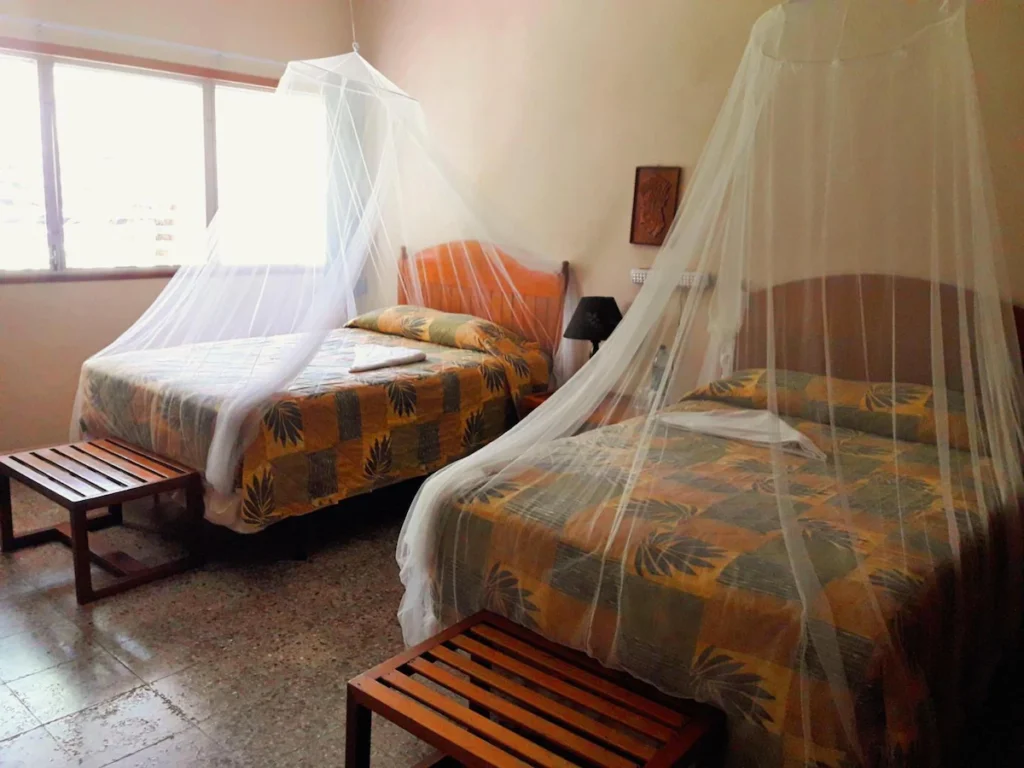
🏆 Rating: 7.6/10 | ⭐️ Class: 3 Stars | ⏰Book Now!
Immerse yourself in the tranquil ambiance of this charming, family-run inn, adorned with traditional Mayan architecture. It’s only a 10-minute walk from Tikal’s Plaza Mayor!
Set amidst the breathtaking Tikal National Park, it offers a serene sanctuary to unwind, observe vibrant birdlife, and bask in the natural splendor.
Indulge in modern comforts including air conditioning, a refreshing pool, a delectable restaurant, and satellite wifi in public areas.
☑️ Listen for Sounds
You can also use your ears to help you spot animals in Tikal National Park. Many of them make sounds that will give away their presence, so keep an ear out for any noises like howling, chirping, or rustling.
Hearing what I assumed to be a jaguar rustling in a bush outside our bedroom window was one of the highlights of our first trip to Guatemala!
☑️ Follow Trails
If you really want to see some of the more elusive animals in Tikal National Park, you can follow a few of the trails that traverse through Tikal.
These trails are often frequented by wildlife and give you a chance to observe them in their natural habitats.

☑️ Respect the Animals
Remember to respect the animals in Tikal and their habitats. Don’t make loud sounds when you’re exploring the park.
This disturbs them in their home and causes them to run away and hide, thus decreasing the chances of seeing them.
And try not to litter or leave anything behind when you’re finished exploring. After all, this is their home.
☑️ Have Fun!
Finally, the most important thing is to have fun! Don’t forget to take some time and just enjoy being in nature.
Tikal National Park has something for everyone—from ancient ruins to fascinating wildlife.

Most Popular Animals in Tikal National Park
Tikal is an incredible place nestled within the vast forest of the Maya Biosphere Reserve.
The park is home to an array of wildlife, including a wide variety of mammals, birds, reptiles, amphibians, and insects.
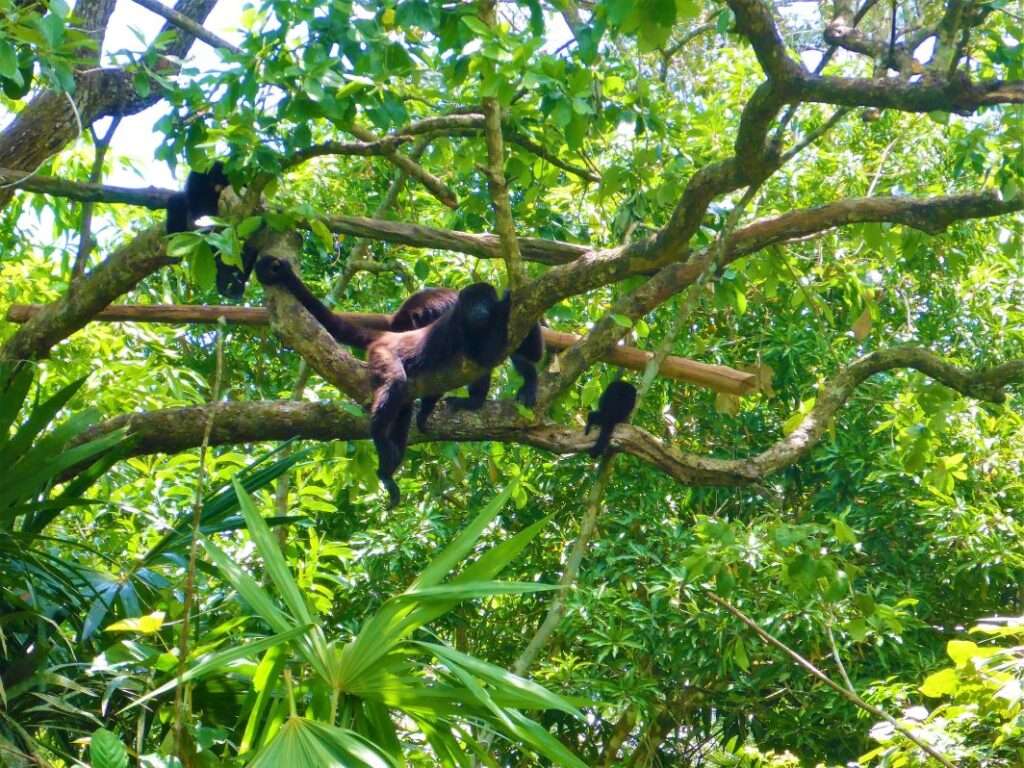
🐾 Howler monkeys: Tikal is a place where the mesmerizing sights of howler monkeys are frequent, accompanied by their unmistakable calls echoing through the air.
These majestic primates, with their imposing size and long, dexterous tails, are renowned for their resounding howls.
🐾 Spider monkeys: Tikal is home to spider monkeys, a prevalent primate species known for their slender limbs and remarkable prehensile tails.
With their agility, they gracefully swing through the trees, showcasing their natural climbing abilities. They’re solitary and pretty shy, so look closely if you want to spot one!

🐾 Jaguars: Jaguars, the largest cats in the Americas, reign as top predators in Tikal. Solitary by nature, they are seldom glimpsed, yet occasional visits to the park are not unheard of.
Your best chance of seeing – or hearing the rustling of one like I did – is to stay in a hotel within the park.

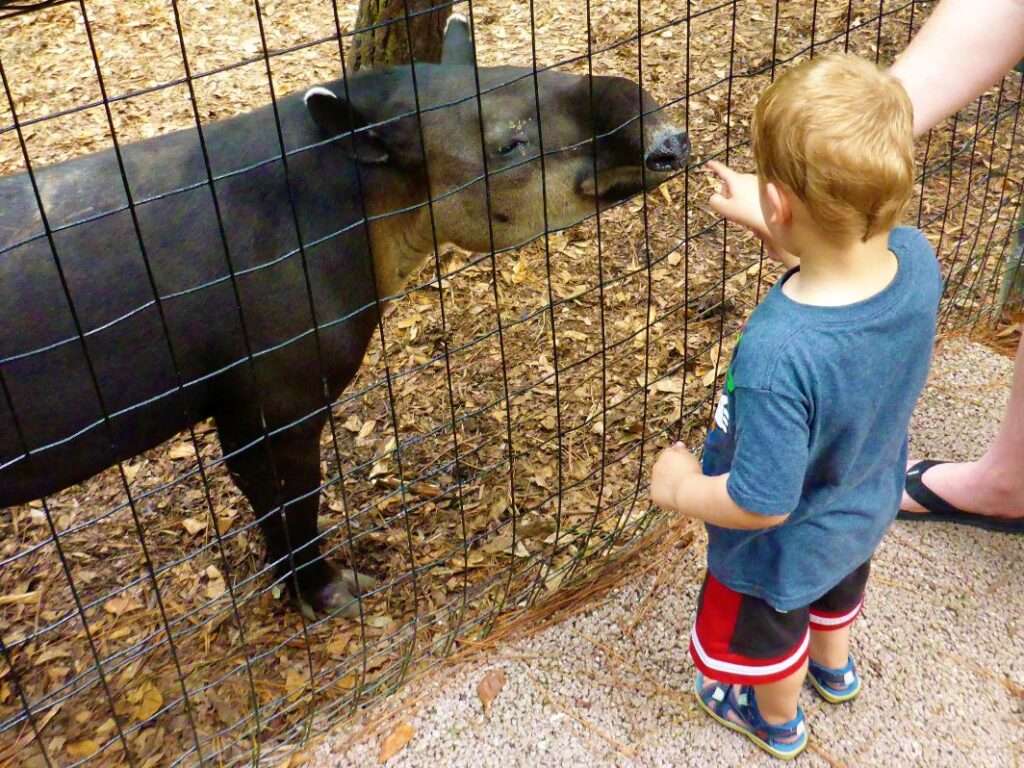
🐾 Tapirs: Tapirs, majestic creatures resembling large pigs, possess unique snouts and sport short, bristly hair. These herbivorous mammals inhabit the lush forests of Tikal, creating an enchanting sight to behold.
We’ve never been lucky enough to see them in the wild, only in some conservation parks in Belize and Colombia.
🐾 Macaws: Macaws, with their vibrant feathers and resonant vocalizations, are a splendid presence frequently encountered in Tikal.
These sizable and brilliantly colored parrots captivate with their stunning plumage and captivating calls.

🐾 Coatimundis: Coatimundis, native to Central and South America, are fascinating creatures with long noses and a feline resemblance.
These omnivorous animals in Tikal can often be observed foraging for food in the park, showcasing their natural instincts. Little Man was obsessed with them on our first visit!

🐾 Sloths: Sloths, the languid arboreal mammals, are indigenous to Central and South America.
Renowned for their leisured locomotion and elongated claws, they adeptly secure their grip on branches. They blend into the trees really well so your best chance of seeing one is on a guided tour.

🐾 Agoutis: Agoutis are remarkable creatures resembling rodents, boasting long ears and a unique coat of dense, reddish-brown fur.
Indigenous to Central and South America, they are frequently encountered in the lush woodlands of Tikal. Every time we’ve seen one, it’s been running away in terror!

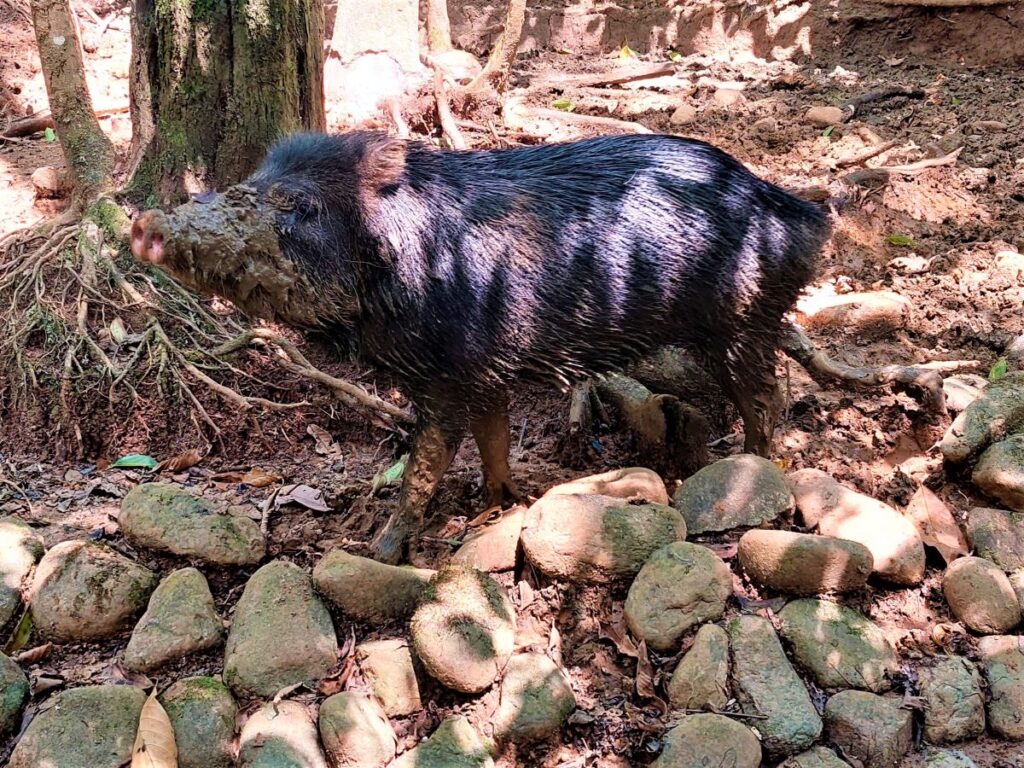
🐾 Peccaries: Peccaries, resembling pigs, are indigenous to Central and South America. These gregarious creatures tend to congregate in groups.
Noteworthy for their unique scent glands and formidable tusks, steer clear if you see one. A tour guide told us that adults can be aggressive, especially if there are babies around!
🐾 Leaf-cutter ants – As you stroll along the park trails, be on the lookout for captivating “ant freeways.” These tiny roads intersect the pathways, teeming with leaf-cutter ants marching in long, orderly lines.
With unwavering dedication, they transport vibrant green leaves and other substantial loads from the trees to their central nest.
Animals in Tikal National Park: Mammals
Let’s embark on an adventure through Tikal National Park, where an incredible array of mammals awaits discovery.
These captivating creatures contribute to the park’s rich biodiversity and play essential roles in maintaining the delicate balance of the ecosystem.
Here are some animals in Tikal you may see during your visit, especially if you stay in a hotel overnight and/or book a guided tour.
1. Spider Monkey
Known for their long limbs and dexterous tails, spider monkeys swing gracefully through the forest canopies of Tikal.
These agile primates are social creatures, living in troops and communicating with distinctive vocalizations.
As seed dispersers, they contribute to the regeneration of the rainforest by spreading seeds far and wide.
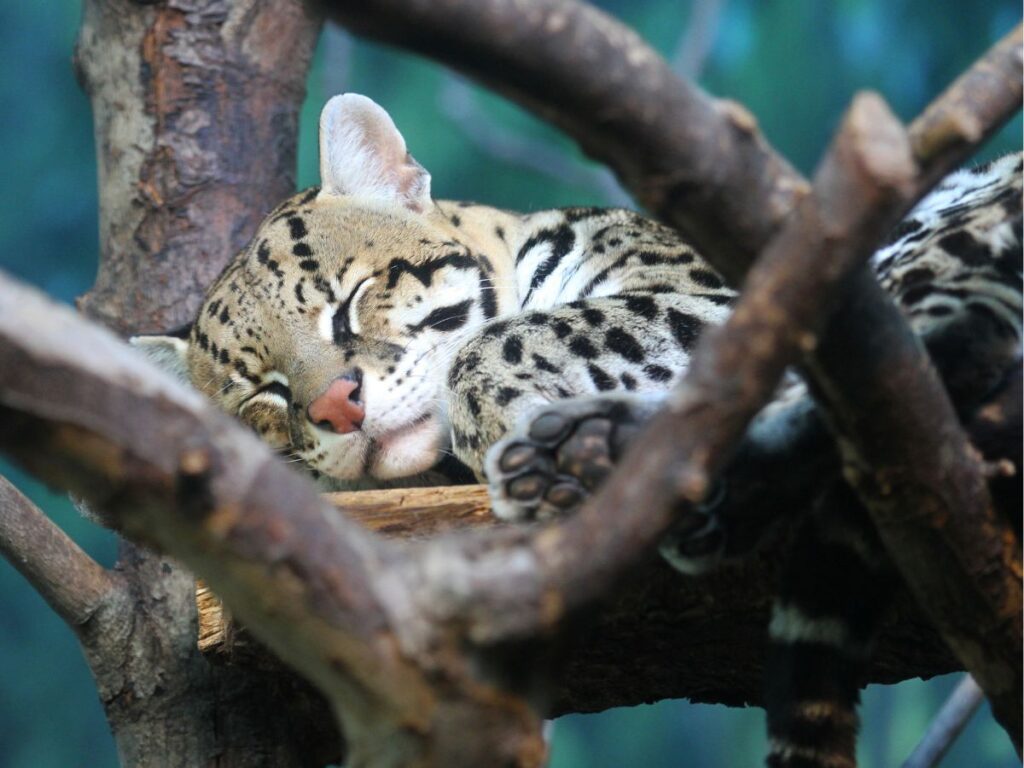
2. Ocelot
Step into the realm of mystery with the ocelot, a small wildcat with a striking coat pattern of rosettes and spots.
These nocturnal hunters are skilled climbers and roam both the forest floor and the treetops. If you see one, it’ll likely be sleeping.
By controlling rodent populations, ocelots help maintain the delicate balance of the ecosystem.
3. Jaguar
The elusive jaguar, a symbol of power and grace, roams the dense forests of Tikal.
With its beautiful rosette patterns and muscular build, this apex predator plays a crucial role in regulating prey populations, and maintaining the balance of the ecosystem.
Spotting a jaguar in the wild is a rare and awe-inspiring experience. Or so I’ve heard. The closest I’ve come is seeing one at the Belize Zoo.
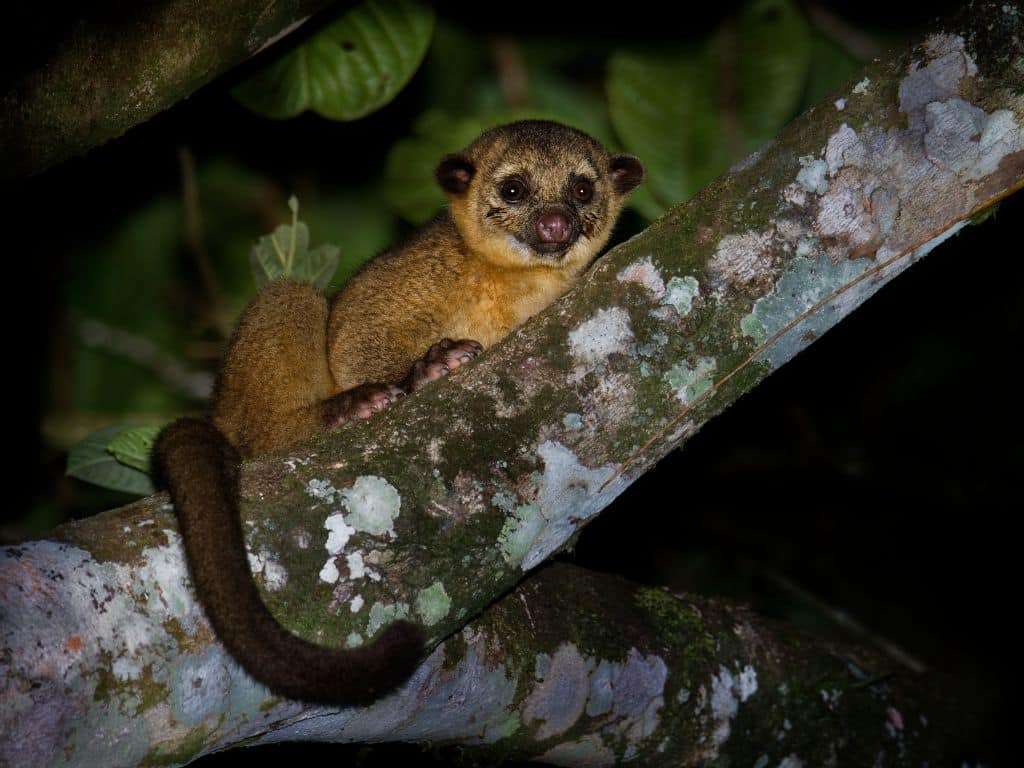
4. Kinkajou
The kinkajou, with its golden fur and large round eyes, is a sight to behold.
These arboreal mammals feed on fruits and nectar, making them important pollinators.
Spot them in the treetops at night, as they are primarily nocturnal creatures. We didn’t see any in Guatemala, but we did in Ecuador. They’re adorable!
5. Collared Peccary
Keep an eye out for these sociable and quirky-looking creatures. With their dark coats and distinctive white collars, collared peccaries travel in small herds, foraging for fruits, seeds, and roots.
Their grazing activities help shape the forest floor and promote plant diversity.
6. Southern Spotted Skunk
The Southern spotted skunk, a native species to Central America, including Tikal National Park. It ranges from Mexico down to Costa Rica, and is known for its unique appearance and behavior.
While exploring the park’s lush vegetation, visitors may catch a glimpse of these skunks with their distinct black and white fur patterns. The southern spotted skunk has a rat-like size and shape.
Its presence adds to the rich biodiversity and wildlife experience that awaits adventurers in Tikal National Park. Just steer clear if you see one because its spray is VERY stinky!

7. White-nosed Coatimundis
With their long snouts and ringed tails, white-nosed coatimundis (also called coatis) bring charm to Tikal’s forests.
Living in social groups known as bands, coatis forage insects, fruits, and small vertebrates. Their foraging behavior contributes to seed dispersal and nutrient cycling within the forest.
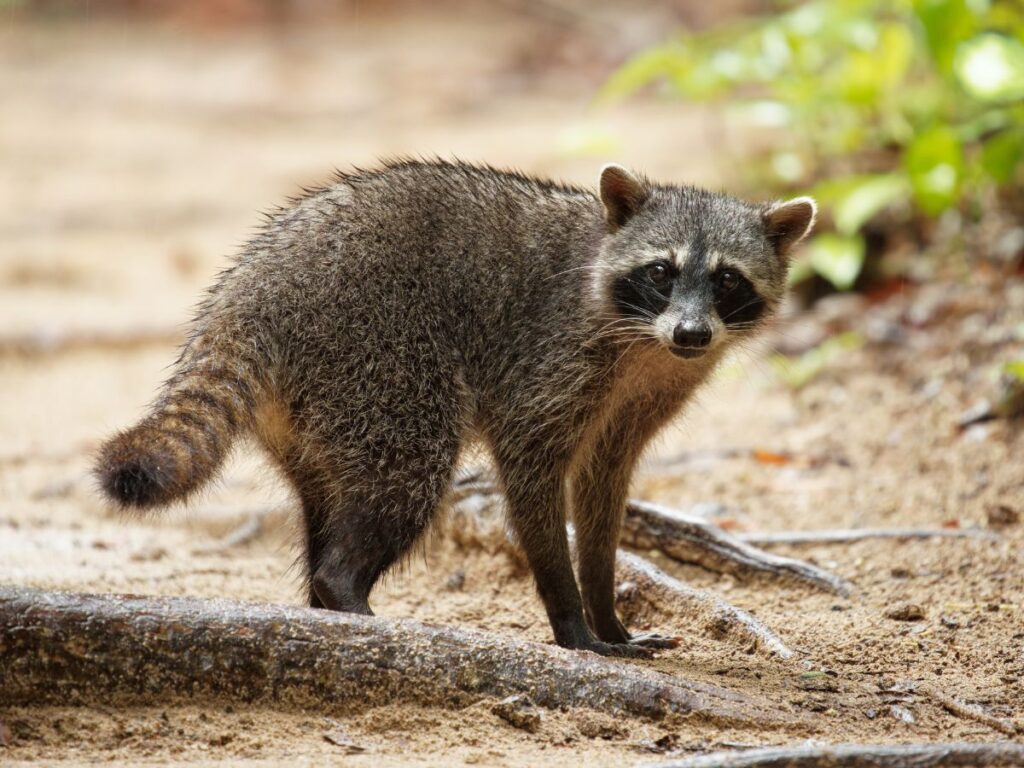
8. Northern Raccoon
Known for their clever and mischievous nature, northern raccoons can be found exploring the nooks and crannies of Tikal’s forests.
With their distinctive mask-like markings and agile paws, they are opportunistic feeders, consuming a variety of foods such as fruits, insects, and small vertebrates.
9. Central American Tapir
Known as the “mountain cow,” the Central American tapir is the largest land mammal in Central America.
These gentle herbivores have a barrel-shaped body, short trunk-like nose, and distinctive black and white coloration.
They play an important role as seed dispersers, helping to maintain the diversity of plant life in the forest.
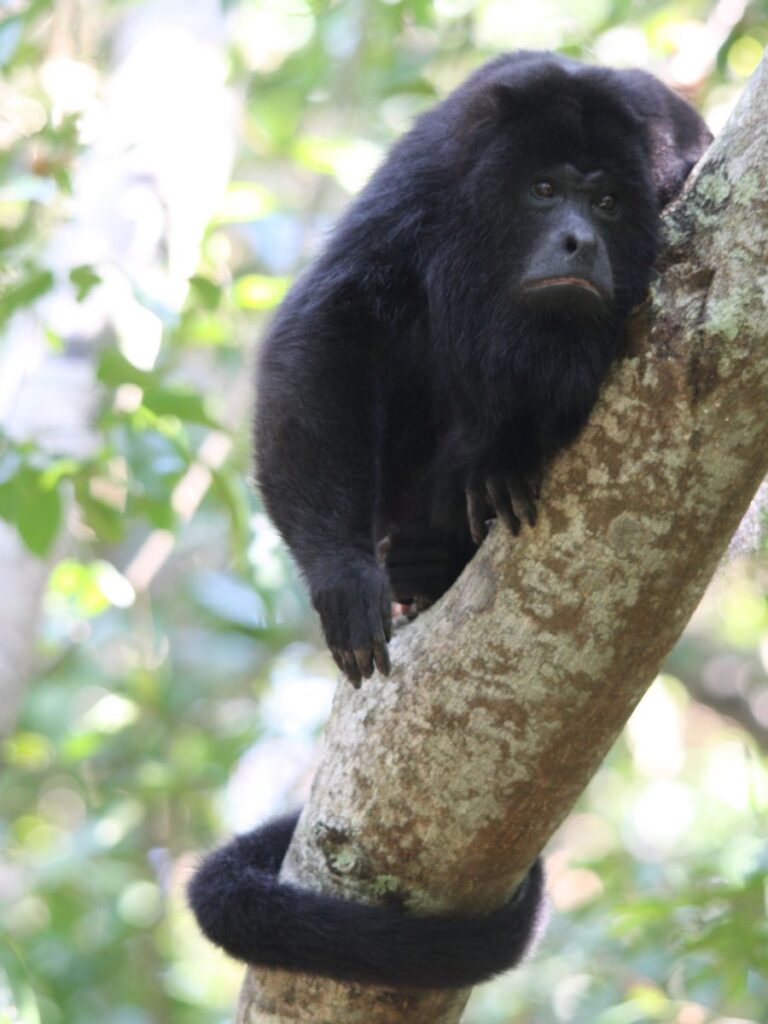
10. Mantled Howler Monkey
The deep, resonant calls of the mantled howler monkeys echo through the canopy of Tikal.
These large and vocal primates have a shaggy black coat and a prehensile tail.
Howler monkeys play a significant role in shaping the forest by feeding on leaves and spreading seeds through their digestive system.
Other Mammals
11. Keep your eyes peeled for the elusive Gray Fox as it gracefully navigates its natural habitat.
12-13. And let’s not forget about the unique inhabitants like the agile Yucatan Squirrel and the endearing Northern Tamandua.
14-16. As you immerse yourself in the enchanting surroundings, don’t miss the chance to spot other remarkable animals in Tikal such as the elusive Margay Cat, the silky-coated Anteater, and the spiky Mexican Porcupine.
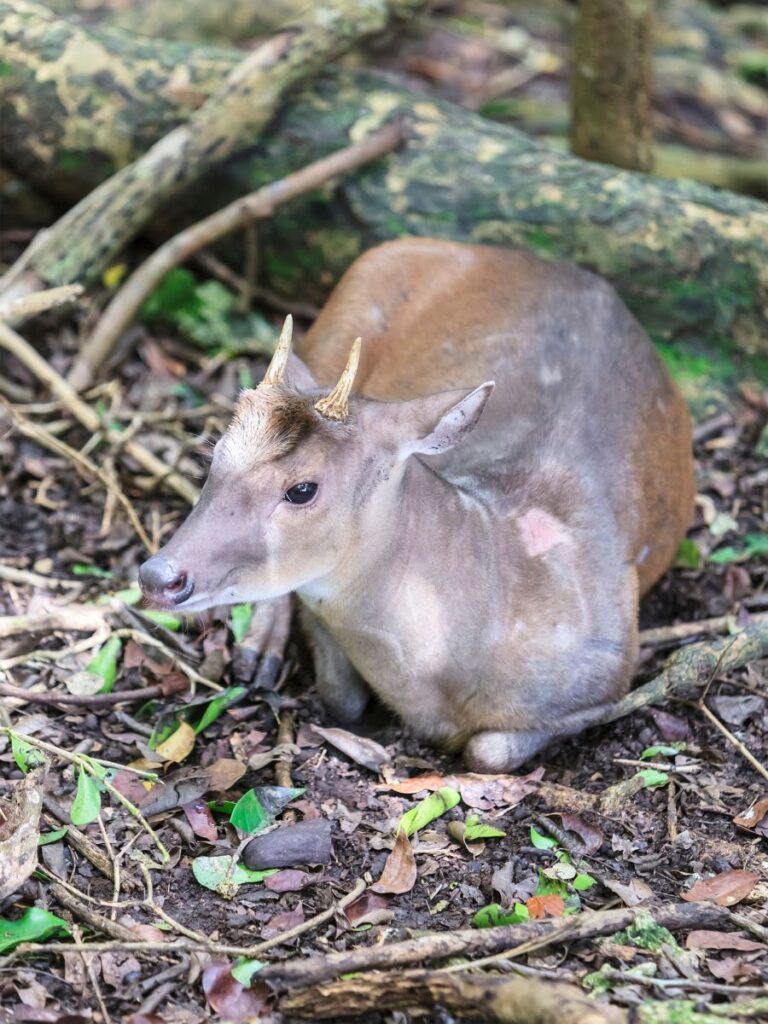
17-19. Keep your senses alert for the graceful White-tailed Deer, the elegant Red Brocket Deer, and the spirited White-lipped Peccary.
Tikal offers a truly unique and unforgettable experience, where every step reveals the captivating wonders of nature.
Animals in Tikal National Park: Birds
Did you know that northern Guatemala’s lowland forests and adjoining open habitats are home to more than 400 bird species?
When you visit Tikal, take advantage of the long-term local knowledge to spot not only common birds but also rare and elusive species.
With the expertise of a specialized ornithology tour guide, you can expect to see over 100 different bird species on a good day.
From macaws and parrots to woodpeckers and tanagers, birdwatchers can observe a wide variety of birds in this area.
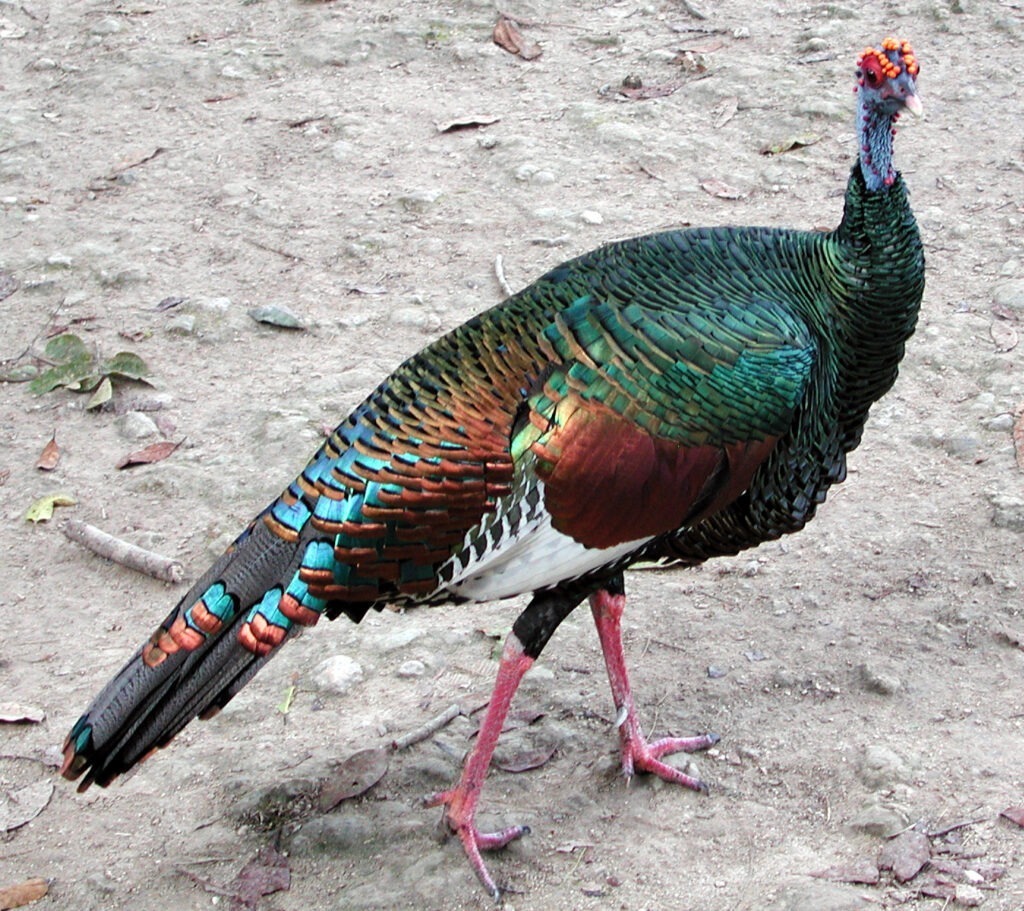
20. Ocellated Turkey
These large, colorful turkeys are endemic to northeastern Peten in Guatemala. Though they can be elusive and wary, they are fairly common and can be spotted throughout Tikal National Park.
Their striking plumage, with iridescent feathers and distinctive eye-shaped spots, makes them a sight to behold.
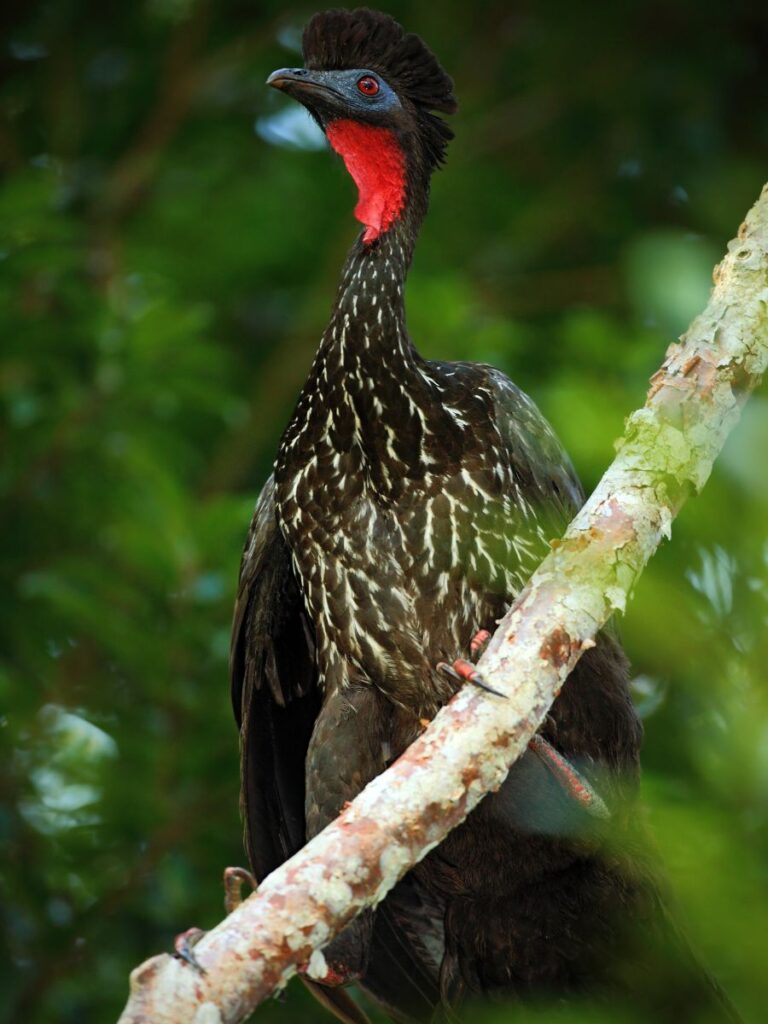
21. Crested Guan
With its striking appearance, including a mohawk-like black crest and a vibrant red throat, the Crested Guan is a must-see in Tikal.
Look for them in the forest canopy, where they feed on fruits and seeds. Their deep, booming calls echo through the trees, adding to the park’s vibrant ambiance.
22. Great Curassow
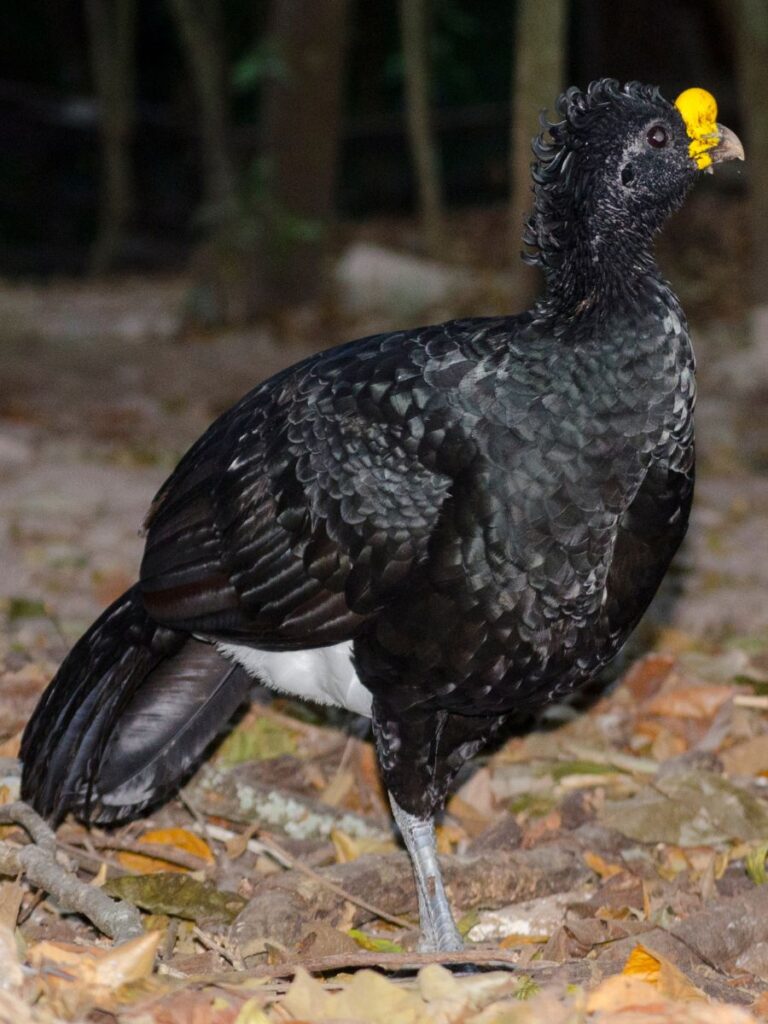
Another impressive bird found in Tikal is the Great Curassow. This large, pheasant-like bird features glossy black plumage, a curled crest, and a bright yellow knob on its bill.
Keep an eye out for them in the understory of the forest as they forage for fruits and insects.
23. Plain Chachalaca
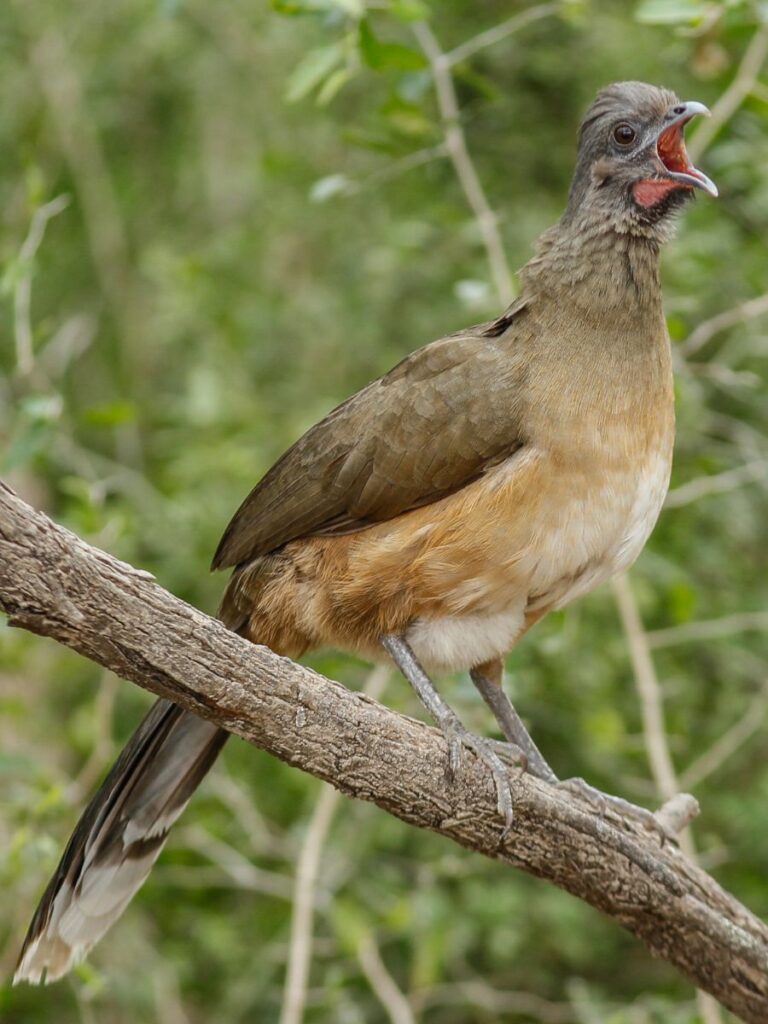
The Plain Chachalaca is known for its loud and distinctive calls that resonate throughout the park.
They blend in really well with the surrounding forest, so you’re more likely to hear them than see them.
These medium-sized birds have brown plumage, long tails, and bare skin around their eyes. They are often seen in groups, hopping and foraging on the forest floor.
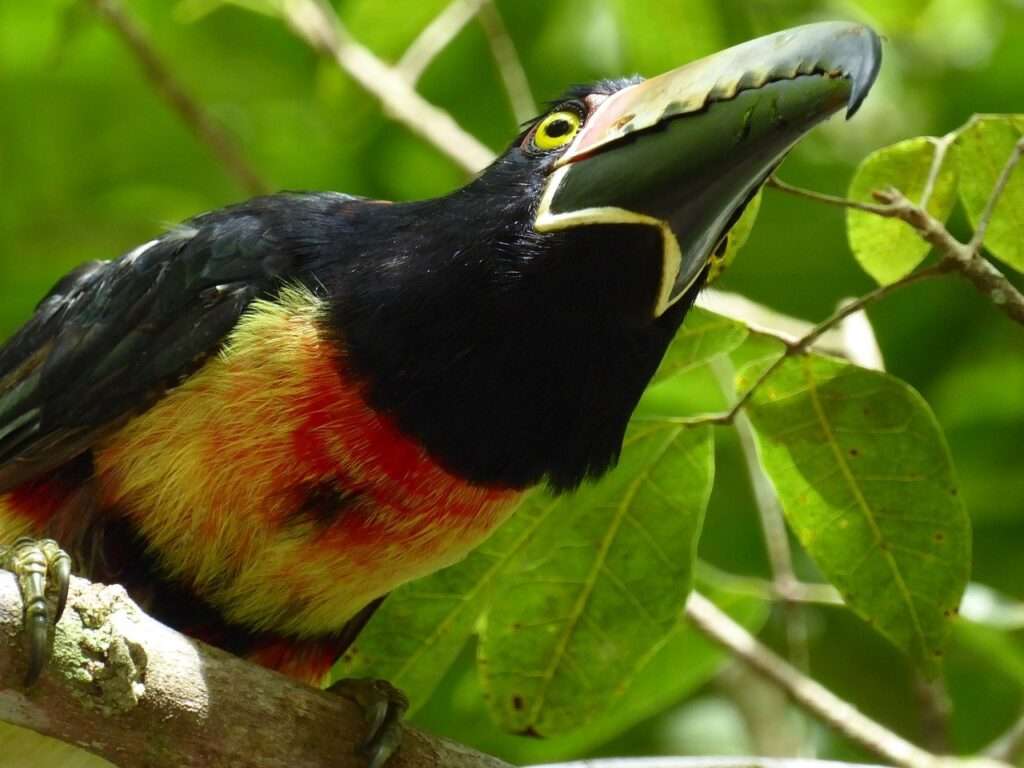
24. Collared Aracari
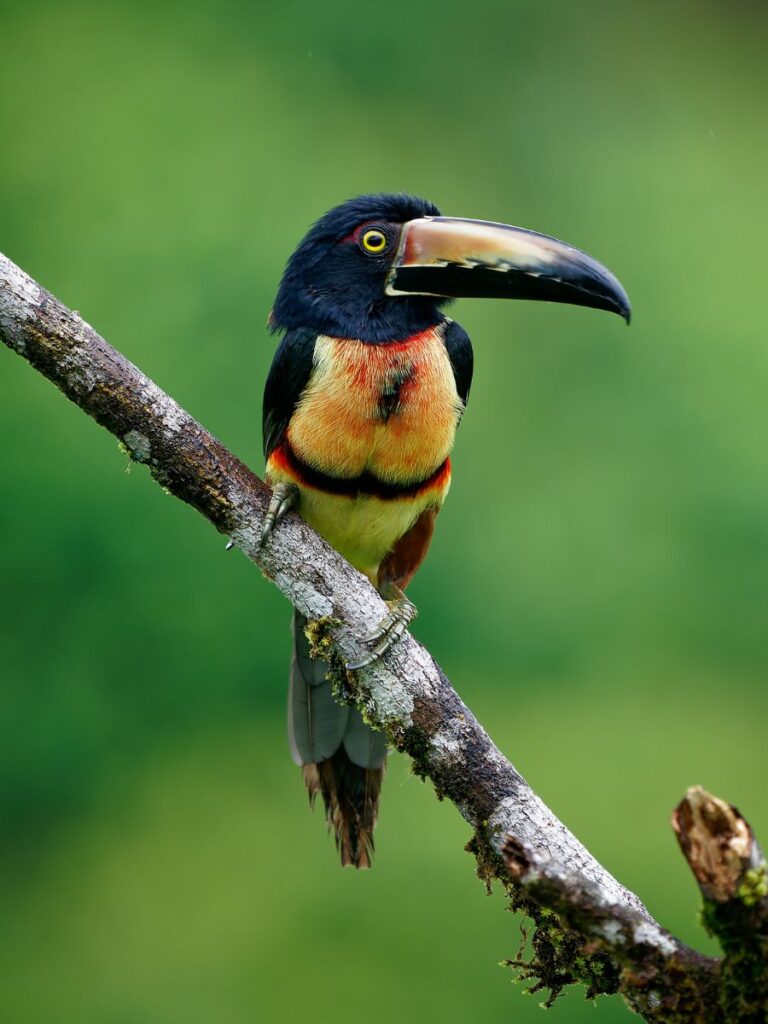
This dazzling member of the toucan family is a common sight in Tikal. Because of it’s beak shape, don’t confuse it with a toucan!
With its multi-colored plumage, including a bright yellow and red chest, yellow belly, and a black, yellow, and white striped bill, the Collared Aracari adds a burst of color to the treetops.
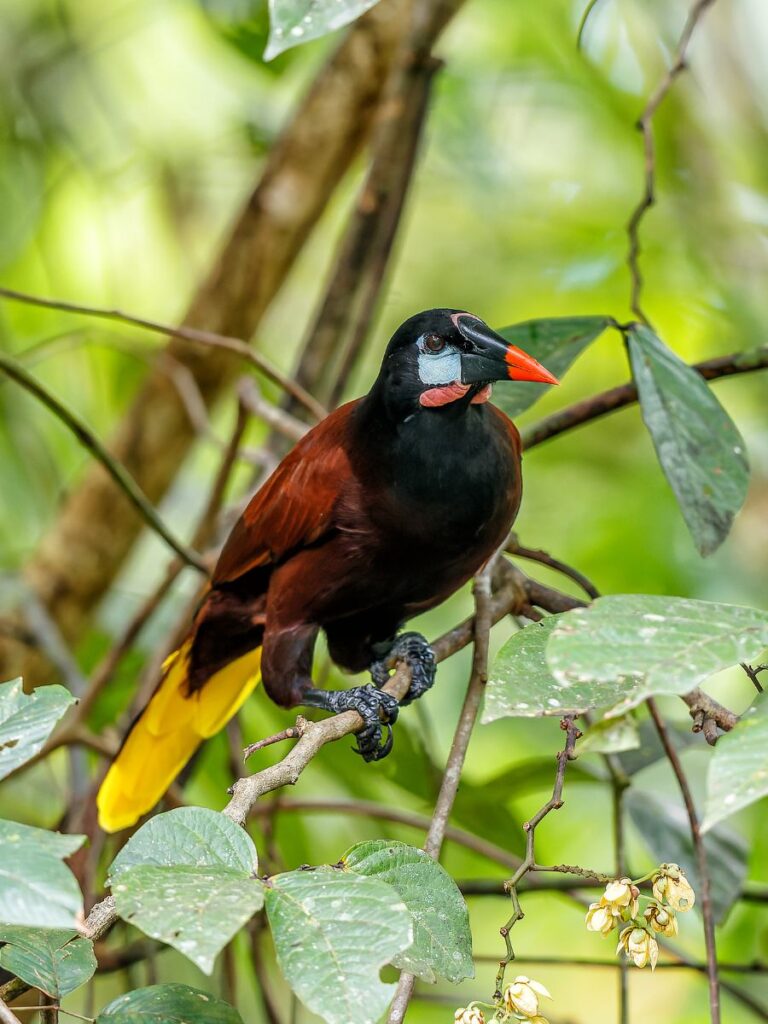
25. Montezuma Oropendola
Look up and you might spot the impressive Montezuma Oropendola. These large, black birds have long tail feathers and a distinctive bright yellow tail tip.
They are known for their intricate hanging nests, which can be seen dangling from tree branches throughout the park.
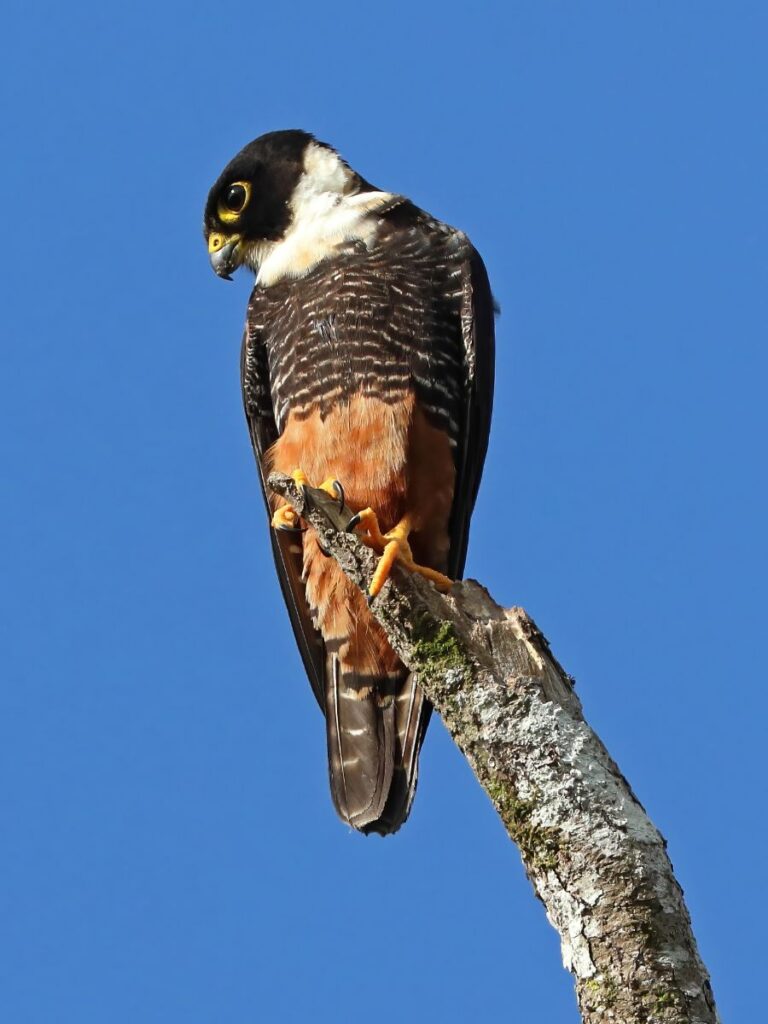
26. Bat Falcon
Sporting a striking black and white pattern, the Bat Falcon is a small but mighty bird of prey found in Tikal.
Little Man is convinced they’re called bat falcons because their black, masklike face looks like Batman. But this isn’t true. It’s because they eat bats.
Watch for them perched on high branches or in flight as they hunt for bats, birds, and insects with impressive agility.
27. Keel-Billed Toucan
One of the most iconic birds of the region, the Keel-billed Toucan is impossible to miss. It also has a really distinguished call.
With its large, colorful bill, bright plumage, and comical appearance, these toucans are a photographer’s dream.
Look for them in the treetops, feasting on fruits. We’ve seen them most often in the early morning or an hour or so before sunset.

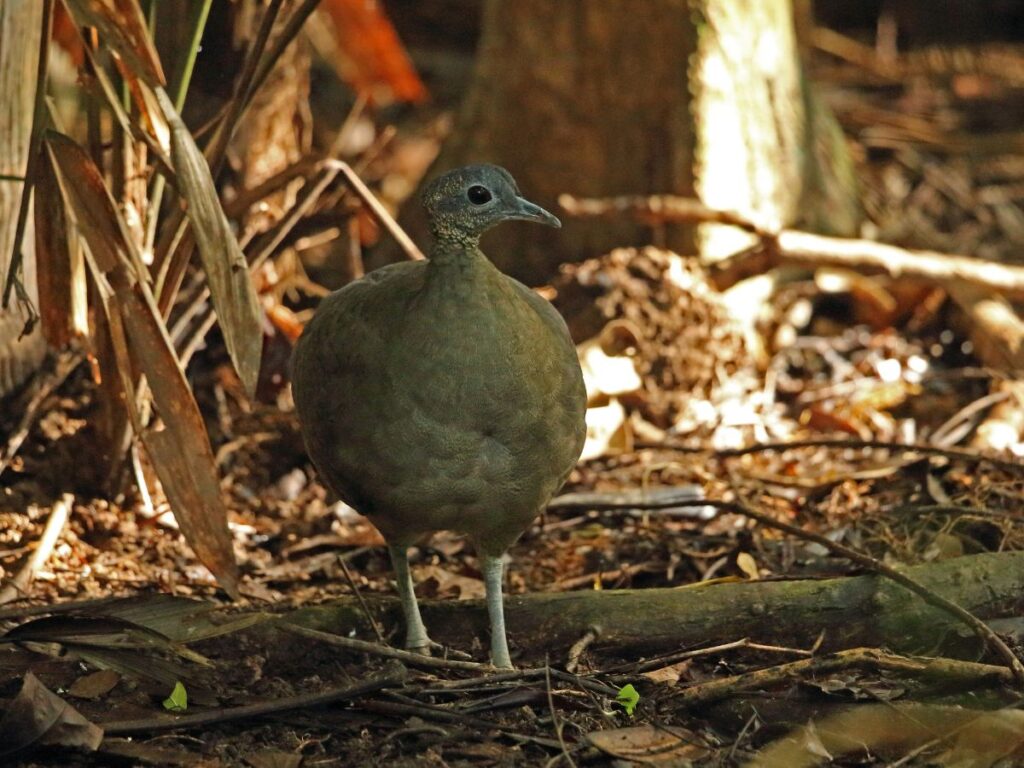
28. Great Tinamou
The Great Tinamou is a shy and elusive bird found in the forest understory. These chicken-sized birds have mottled brown plumage, allowing them to blend seamlessly with their surroundings.
Listen carefully for their deep, haunting calls during the early morning or evening hours. Another reason to take a sunset or sunrise tour at Tikal!
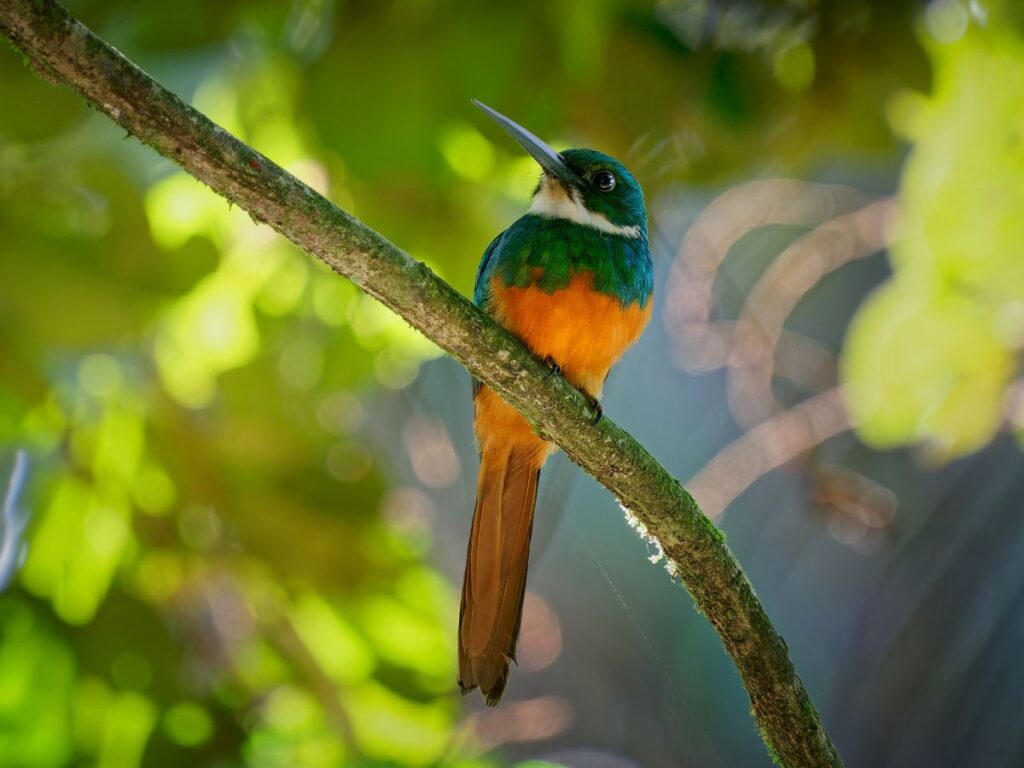
29. Rufous-Tailed Jacamar
This small, jewel-like bird can be found in Tikal’s forest clearings and edges. Keep an eye out for it as you move from jungle paths to open meadows.
With its iridescent green plumage, a long, slender bill, a white neck, and an orange and teal-colored tail, the Rufous-tailed Jacamar is a true gem among the trees.
Other Birds
30. One of the intriguing birds you might encounter is the Mayan Antthrush, known for its preference for dense forests and ground-dwelling behavior.
31. During breeding seasons, the migratory Pheasant Cuckoo makes its way to the park, offering a unique opportunity to observe its breeding behaviors.
32. The Red Lored Parrot, adorned in vibrant plumage, is undoubtedly one of the most remarkable species within the park.
33. As night falls, the park’s tree canopies come alive with the presence of the Guatemalan Screech Owl, a skilled nocturnal predator.
34-35. For those with a keen eye, the Northern Potoo, a master of camouflage, presents a true marvel of nature. The Hook Billed Kite is another noteworthy species, distinguished by its unusual beak shape.
36. Keep an eye out for the Plain Antviro, a small bird that captures attention with its active foraging behavior.
37. The White Collared Manakin, known for its showy mating dance, never fails to impress visitors with its flamboyant displays.
38-39. The Black Throated Shrike Tanager, with its contrasting colors, adds a vibrant touch to the park’s avian diversity. During summer, the park welcomes the migratory Summer Tanager, a beautiful visitor with its striking plumage.
40. And how could we forget the Yellow Flycatcher, whose insect-catching prowess is unmatched? It’s also a bright yellow color so it’s easy to see when it’s on the hunt!
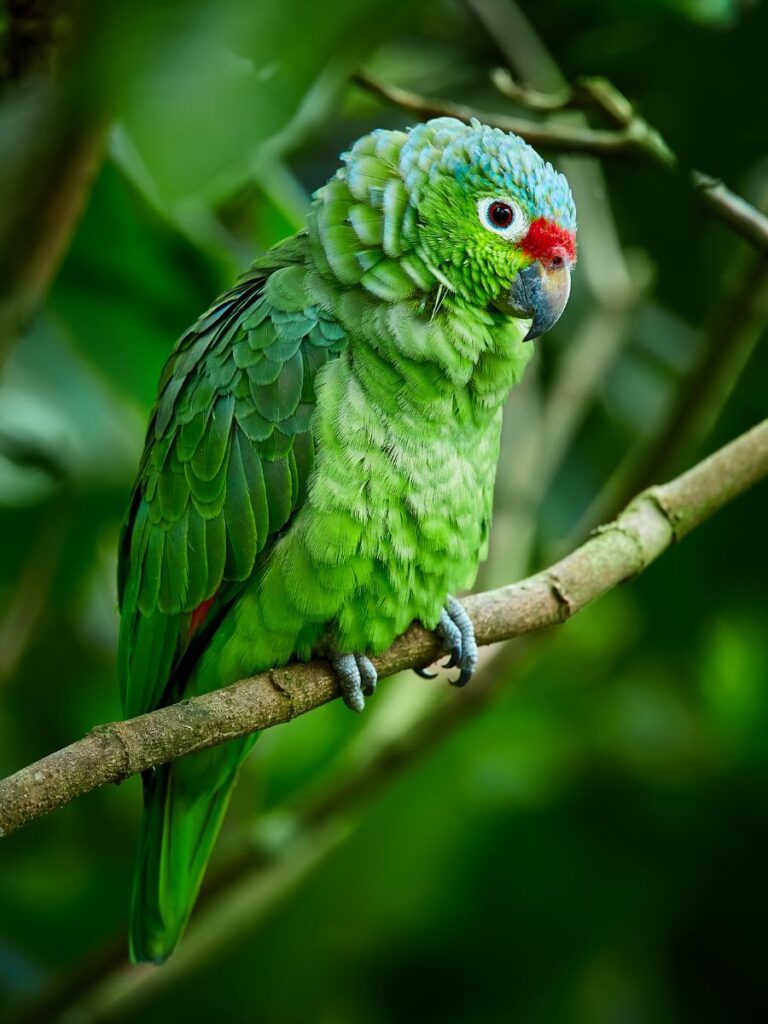
Birds Are Important
Birds play vital roles in the park’s ecosystem, including seed dispersal, pollination, and insect control.
Their interactions with other creatures, such as feeding on fruits and insects, contribute to the delicate balance of the forest.
When observing these birds, it’s important to maintain a respectful distance and not disturb their natural behaviors.
Consider joining a guided birding tour or hiring a knowledgeable local guide who can provide valuable insights and help you spot even more species.
Animals in Tikal National Park: Arachnids & Insects
As a nature enthusiast, let’s dive into the fascinating world of spiders and insects that call Tikal National Park in Guatemala their home.
This lush, biodiverse haven is not only renowned for its ancient Mayan ruins but also for the incredible array of arthropods that inhabit its dense rainforests and vibrant ecosystems.
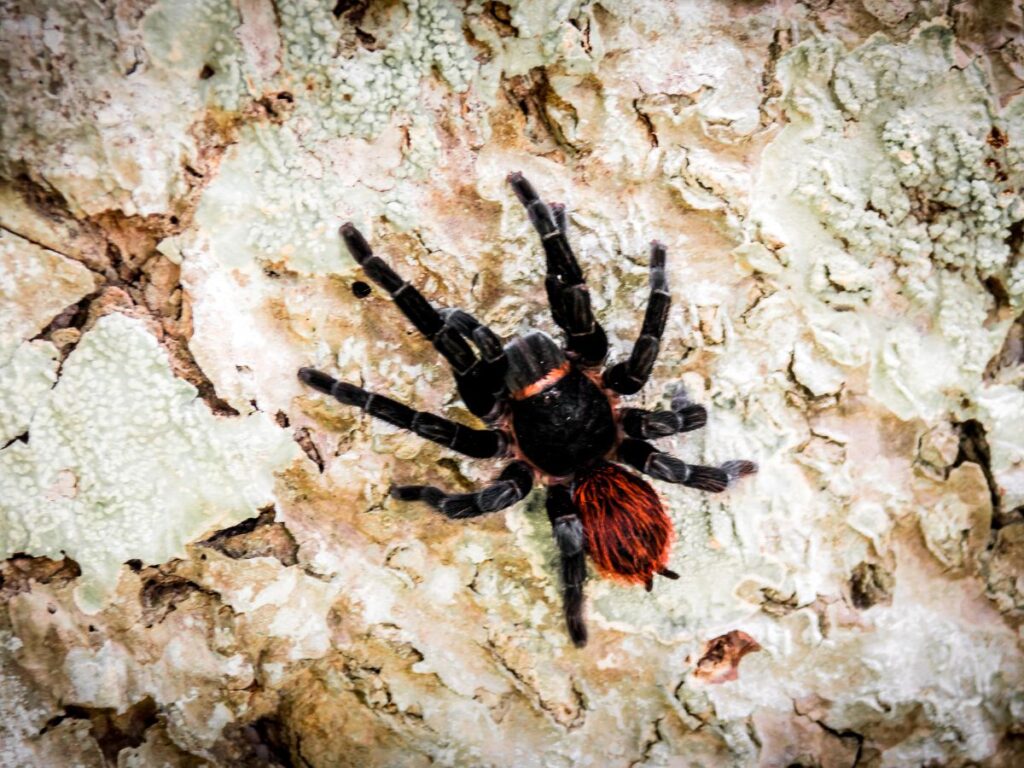
41. Mexican Red Rump Tarantula
The most popular “bug” in Tikal is the tarantula. No, they are not dangerous to humans! On your jungle walk, you’re more likely to see small black and brown striped spiders, scurrying around on the leaves.
However, if you stay in a Tikal hotel overnight be sure to check your shoes before putting them on.
We know someone who found a tarantula holed up in their sneaker overnight! If this happens, just take it outside and gently shake it out. It’ll find its way to its proper home – a burrow or under a fallen log.
42. Golden Silk Orb-Weaver Spider
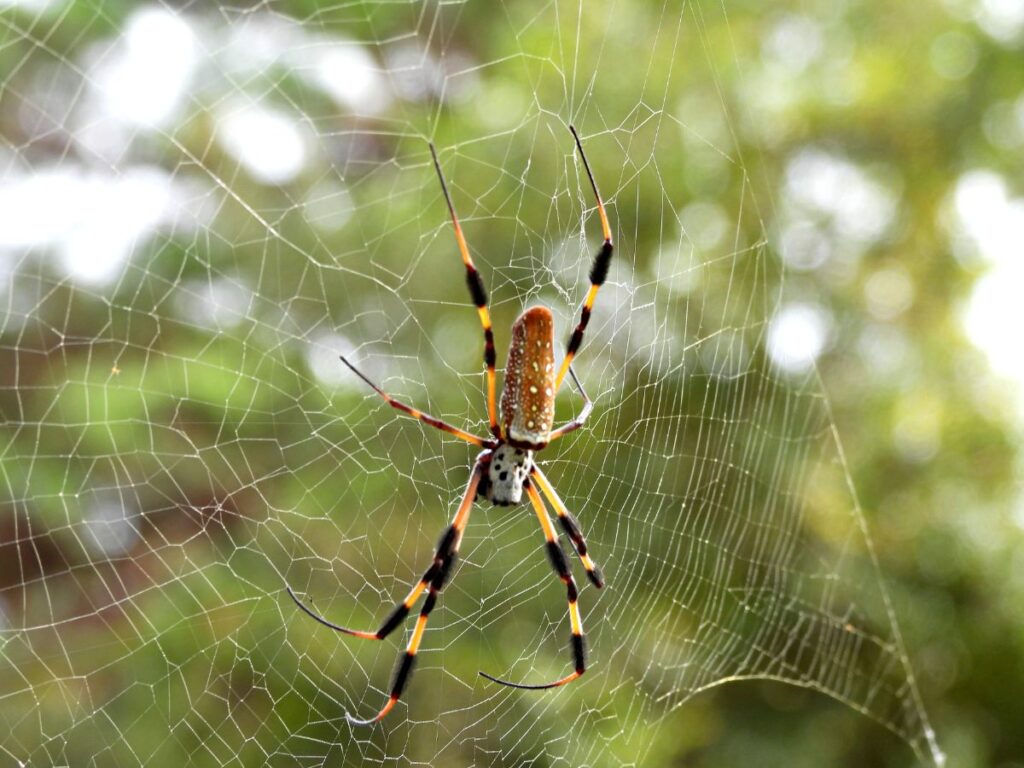
Known for its striking yellow and black coloration, this spider spins intricate orb-shaped webs that shimmer with golden silk when caught in sunlight.
Keep an eye out for them in areas with tall trees and dense vegetation.
43. Bird-Dropping Spider
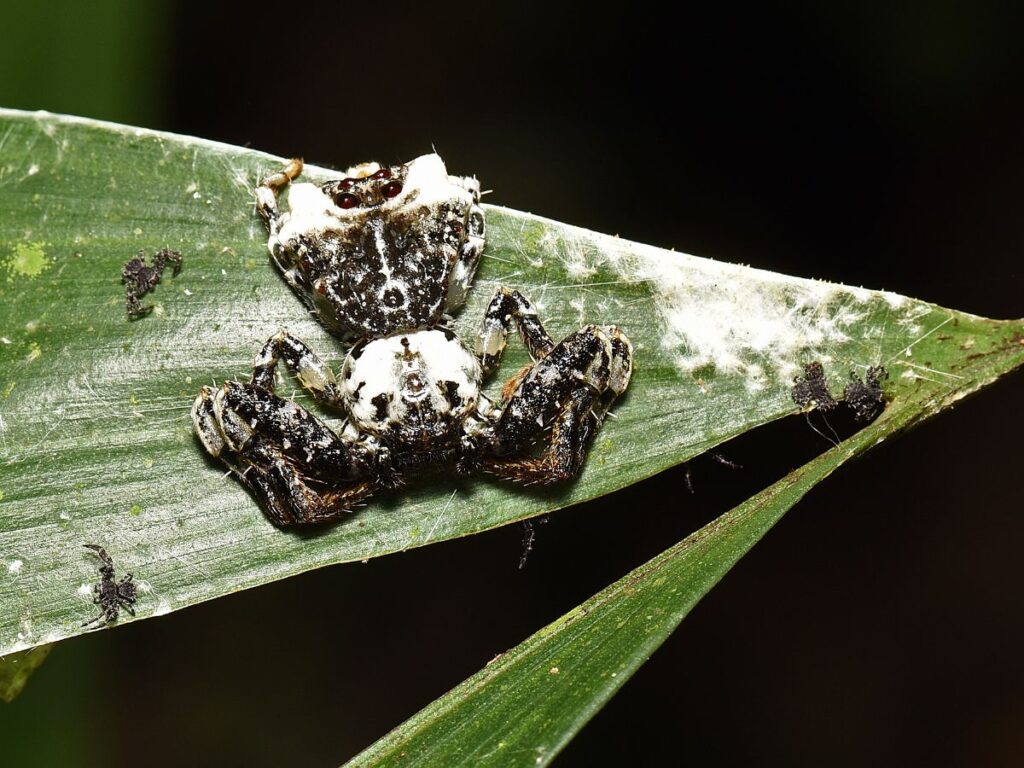
Don’t be fooled by its name! This master of camouflage resembles a bird dropping, making it difficult to spot. If you see some bird poo on a leaf, look closer!
You might find them hanging out on leaves or branches, perfectly blending in with their surroundings.
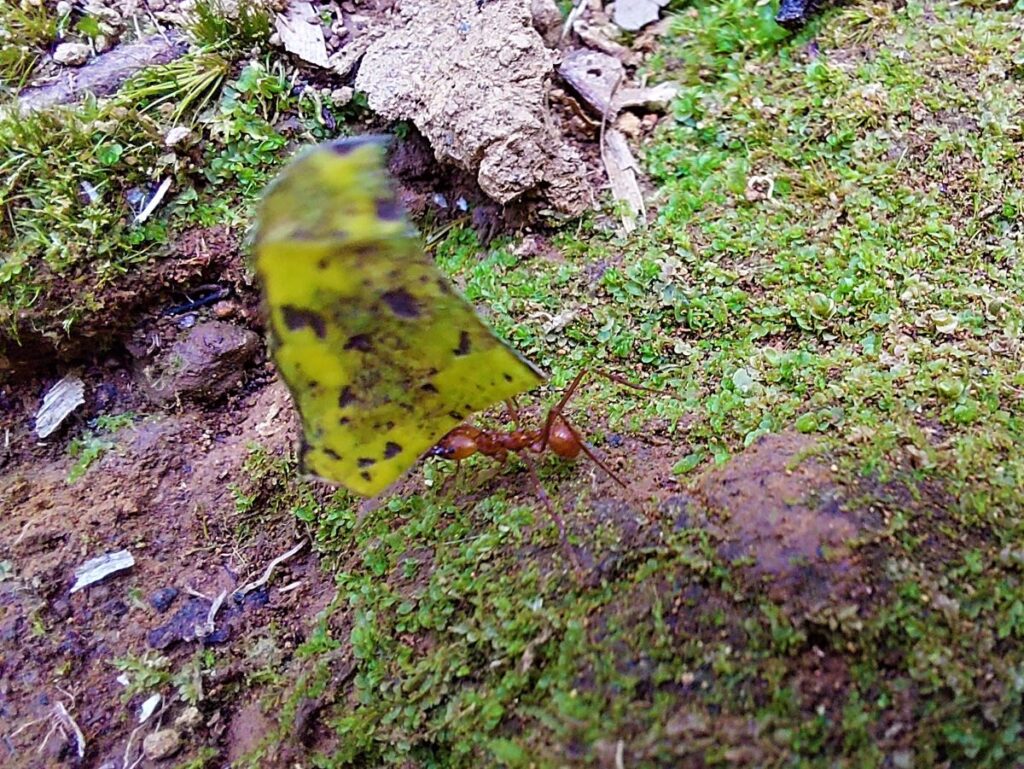
44. Leaf-Cutter Ant
These industrious insects are famous for their ability to cut and transport large leaf fragments back to their underground colonies. They’re one of my favorite jungle insects!
Watch them meticulously carry their leafy burdens along well-defined trails, contributing to the forest’s nutrient distribution.
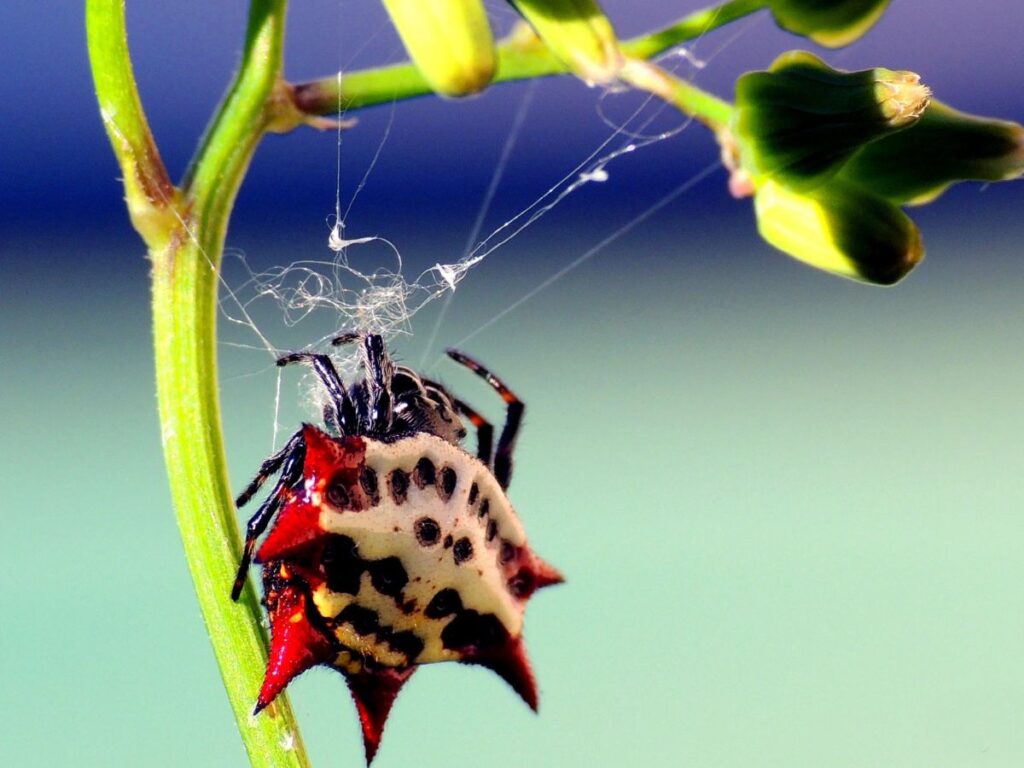
45. Spiny Orb-Weaver Spider
Recognizable by the spikes protruding from its abdomen, the spiny orb-weaver creates intricate webs that serve as traps for unsuspecting prey.
They are probably one of the coolest spiders I’ve ever seen! Be sure to keep an eye out for these fascinating spiders in shrubs and low-hanging foliage.
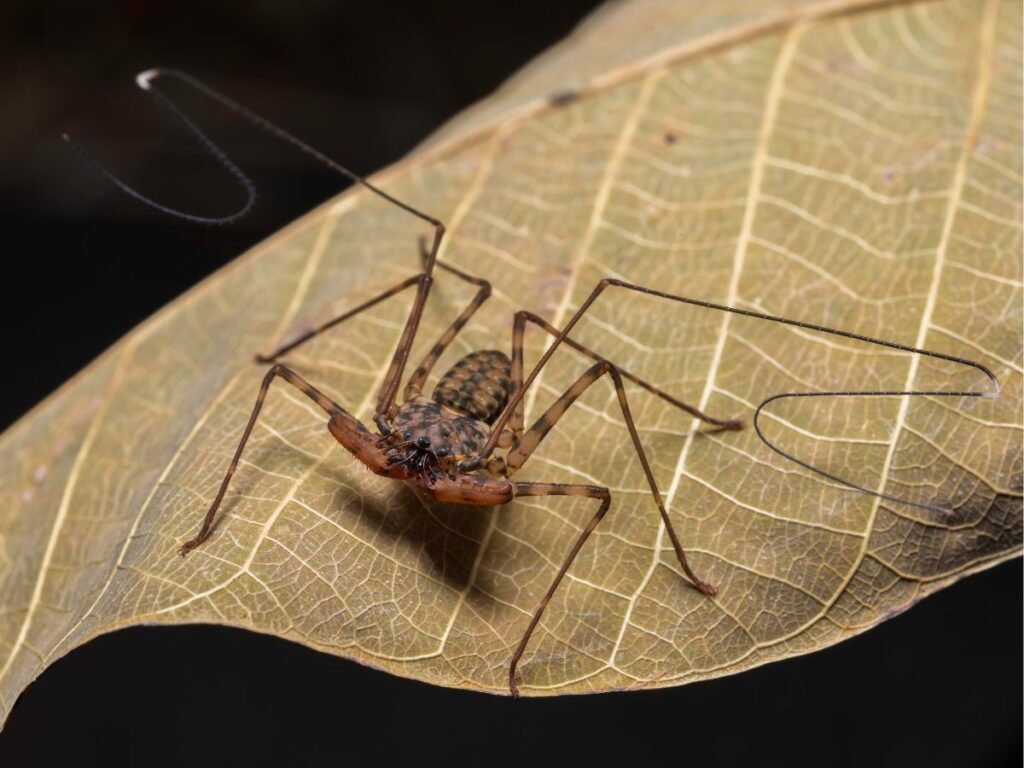
46. Tailless Whip Scorpion
Despite its intimidating appearance, this arachnid is harmless to humans. It hunts insects, including mosquitos.
So it’s actually a good friend to have around. Especially if you see one near your hotel room when you stay in the park to see more animals in Tikal.
With its elongated body and whip-like tail, it prefers dark and moist environments, often hiding under rocks or leaf litter.
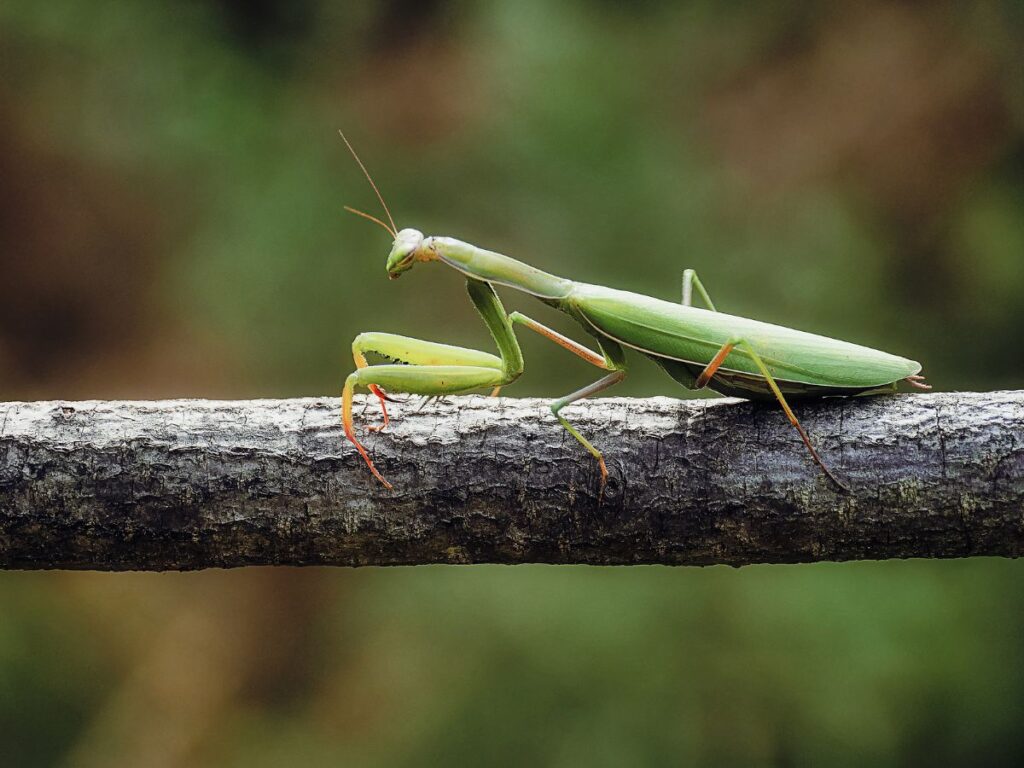
47. Praying Mantis
With their slender bodies and front legs folded in a prayer-like position, these predatory insects are skilled hunters.
You may spot them perched on leaves or tree branches, patiently waiting for their next meal. Sometimes they look like leaves, so have a careful eye!
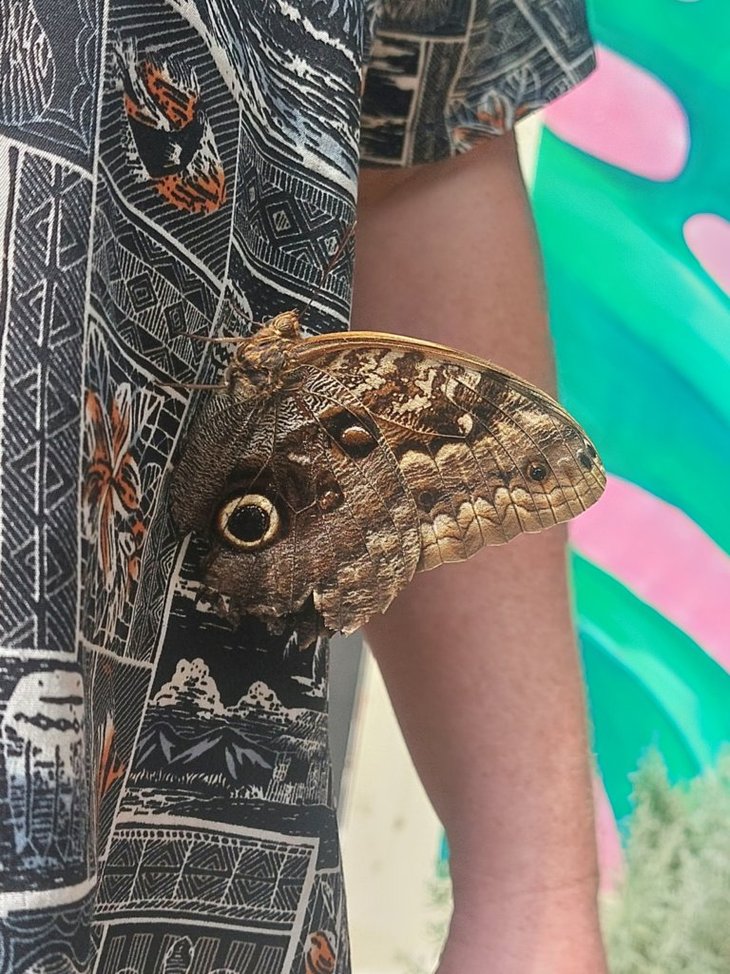
48. Blue Morpho Butterfly
One cannot talk about Tikal’s insects without mentioning the breathtaking Blue Morpho butterfly. Every time I see one I get excited!
With its iridescent blue wings, this majestic creature flutters through the forest, adding a touch of magic to the landscape.
Keep in mind the underside of their wings are shades of brown with eye-like circles so they’re harder to notice when they’re resting on a leaf.
49. Bullet Ant
Known for its excruciatingly painful sting, the bullet ant is a formidable creature.
While it’s important to admire these ants from a safe distance, their presence reminds us of the delicate balance of nature and the importance of respecting all creatures.
Little Man got obsessed with them after watching a Youtube video about them. It was also a great time to talk about created drama. These ants will clearly only sting you as a last resort.
50. Harlequin Beetle

51. Mosquitos
Bugs Matter
Animals in Tikal National Park: Reptiles & Amphibians
52. Central American River Turtle
53. Crocodiles
54. Fer-de-Lance
55. Black Forest Racer
56. Beaded Lizard
57. Green Vine Snake
58. Mexican Burrowing Toad
59. Red-eyed Tree Frog
60. Guatemala Spikethumb Frog
61. Clown Treefrog
62. Green Iguana
63. Coral Snake
Reptiles, Amphibians, and Ecosystems
👉 While we have global health insurance for our day-to-day lives, we also elect travel insurance with SafetyWing for our spurts of fast travel adventure!


