

Our Offbeat Life contains affiliate links & participates in the Amazon Services LLC Associates Program & other affiliate programs. If you buy something using an Amazon or other link, we may receive a commission at no extra cost to you. See our Disclosure for more details.
How do Repositioning Cruises Work? + Why to Take One

Wondering how do repositioning cruises work? I can help!
Our first time, we took a repositioning cruise from the USA to Asia, and it was a really unique experience.
Despite having never been on a cruise ship before, we took the plunge and booked a transpacific cruise with Carnival Cruise Lines from Los Angeles to Singapore. And I’m so glad we did it!
Since then we’ve taken several more repositioning cruises, and even have one planned for later this year!
I can’t imagine doing “normal cruises” at all because there are many benefits to making a repositioning cruise work for your schedule. So let’s talk more about this weird and cool cruising option!
What are Repositioning Cruises?
Sometimes also called a relocation cruise, these are one-way cruises. Often they traverse between continents. They do not end in the same port where they began.
This is a unique feature that allows cruise companies to move their fleet around the globe to suit business needs.
So how do repositioning cruises work? They allow the cruise companies to move the ships and crew while (hopefully) filling them with paying passengers.
Common repositioning cruise line routes include between the US or the Caribbean and Europe, North and South America, North America to Asia, and Asia to Europe.
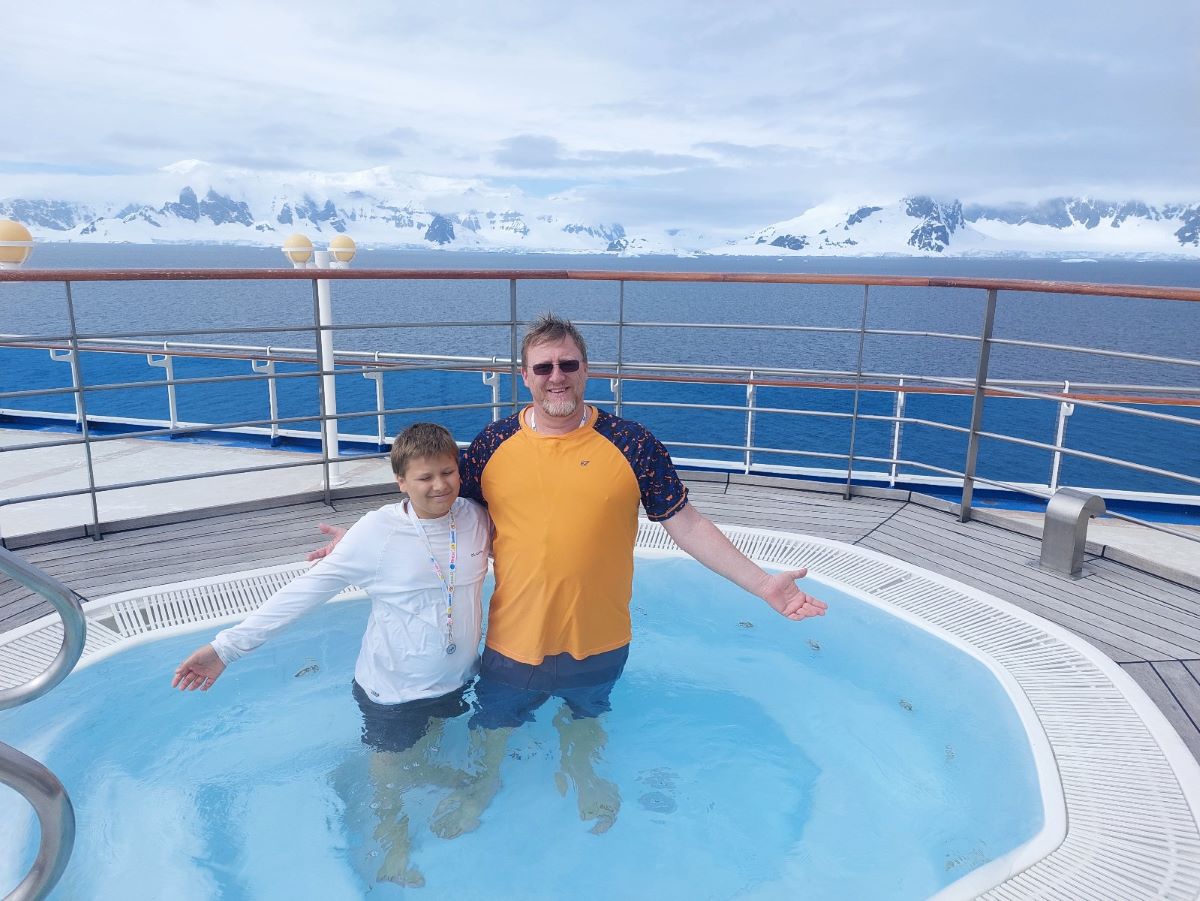
Many times, especially if one books the cruise early, the cruises are sold at very competitive prices.
Cruise companies want to ensure that they aren’t losing money moving their ships around, so lower prices encourage people to book them.
They know that some people avoid these cruises because there can be extra airfare expenses by booking two one-way airfares instead of a simple round-trip ticket.
Where to Book Repositioning Cruises
If you are an avid cruiser with priority status on one or more of the major cruise lines, you can simply search that line’s website for itineraries that suit your needs.
However, if you want a repositioning cruise that works for your schedule or destination preference then you’ll need a more general search site to find one.
👉 We used Cruise Critic to source our repositioning cruise.
They provided excellent customer service and even offered us cruise credit just for booking with them. Their offers and discounts do change, so this might not be available when you book.
Cruise Critic even helped us track open rooms on the ship in a better area. That’s how we upgraded from an interior cabin to an oceanview one.
I also liked that we could pay it in stages rather than the entire thing all upfront. Plus, if we had been more flexible on our destination or timing we could have easily booked a last-minute deal!

The only thing I didn’t like about their website was that they don’t have an option to search just for repositioning cruises.
They break them down into subsections including Indian Ocean Cruises, Transatlantic Cruises, South America Cruises, World Cruises, etc. However, once I figured that out it was easy to find what I wanted!
➡️ Wondering what to take on your cruise? We have answers!
7 Benefits of Repositioning Cruises
If you can figure out how repositioning cruises work for your schedule, there are a number of strong reasons to consider taking one.
1. No Jet Lag
When we flew to Asia in 2014, the trip was grueling. We were so exhausted from the flights that we wasted our first day in Cambodia sleeping. Somehow, we barely woke up for the Night Market.
During each of our remaining two days in Siem Reap, we were still a bit jet-lagged. Looking back, we missed out on things since we were so tired. On relocation cruises, there is no jet lag.
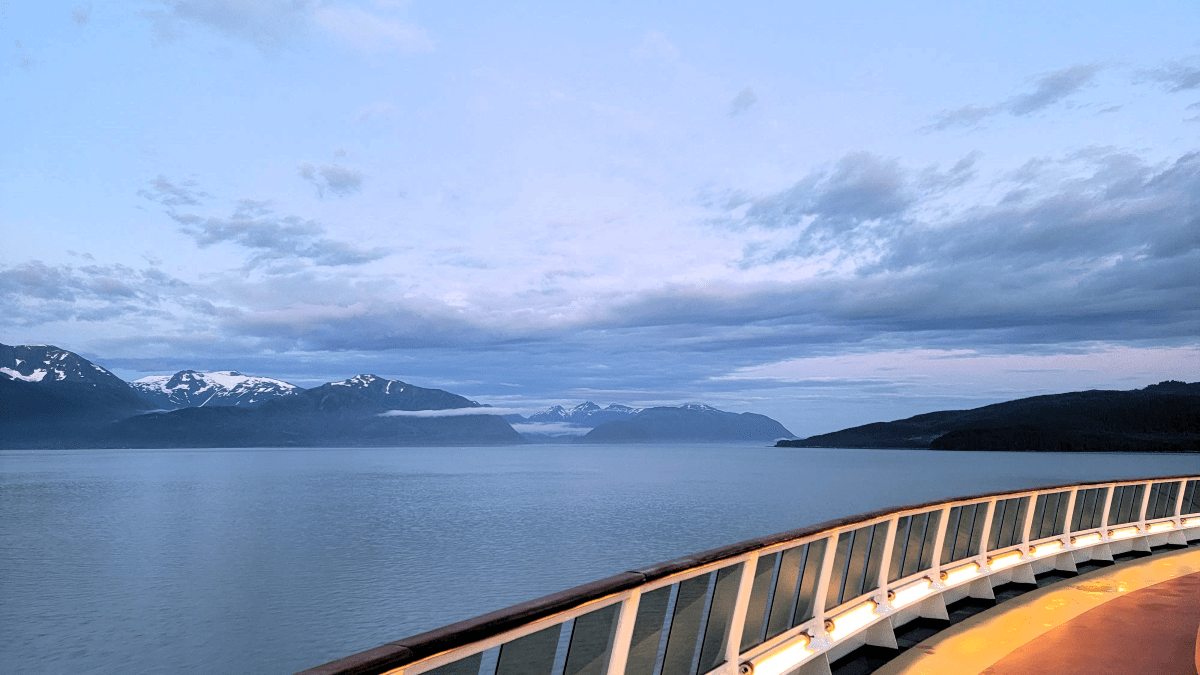
Instead, on our repositioning cruise, we adjusted to the time gradually as we crossed the ocean. As we boarded, we were provided a schedule of the time changes each day. In addition, these changes were announced daily.
This ensured that when we arrived in Singapore, there was no downtime and no napping! Our bodies were all well adjusted to the time zone in Singapore!
2. No Ill Health Effects from Long Haul Flights
Research has shown that long-haul flights aren’t great for one’s health. Medical providers recommend compression socks, stretching, etc.
There are even health supplements designed for people taking long-haul flights. Don’t forget the boredom and discomfort from sitting for half a day at a time.
Fun Fact: Or not so fun…Our flight from Chicago to Beijing in 2014 lasted 13.5 hours! And that didn’t include the flights afterward from Beijing to Bangkok and Bangkok to Siem Reap!
Other than the very minor potential for seasickness, there weren’t really any major health warnings for cruises. (This was pre-pandemic, obviously.)
After all, we weren’t breathing recycled air and the germs of our fellow passengers on a cruise ship. Don’t worry, we stayed away from the edge to avoid falling overboard!

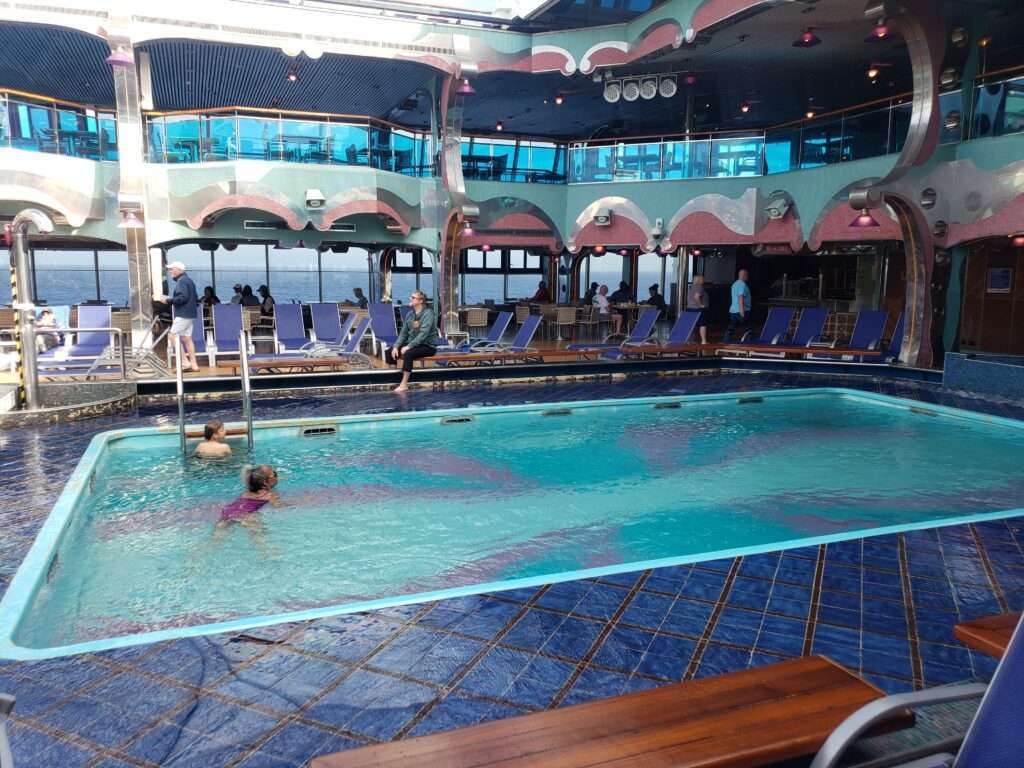
At least we weren’t stuck in an 18-inch seat for 36 hours breathing the coughs and illnesses of our fellow flyers. Instead, we enjoyed multiple pools, a water slide, a basketball court, a jogging track, and an onboard fitness center.
Repositioning cruises work to ensure passengers arrive at the final destination well-rested, well-fed, and well-exercised.
3. Minimal Extra Expense
Repositioning cruises are budget friendly. We’re always looking for ways to save money on cruising, right?
Flights from Chicago to Bali ran about $600 one way, before the pandemic if we were lucky. Two weeks in a Bali Airbnb with decent wifi would have run us about $500.
Three weeks’ worth of living costs in Bali (including airport dining and travel costs) would have cost us about $1,200. So all in, the cost would be ~$3,500 for the same three-week time frame that our cruise covered.

The cruise was just about $3,700 because we upgraded to an oceanview room, so while we didn’t save money I also don’t feel like we were “losing out” by doing this cruise.
Full Disclosure: We actually spent a tiny bit more (~$67/per person extra) than what we would have paid to fly to Asia.
It felt like a worthwhile investment in a truly unique experience for our family.
4. Extra Sightseeing
Before arriving in SE Asia, we also got to stop in five unique locations throughout our cruise. Some we’d seen before. So we were able to either branch out and do something new or just have a relaxing beach day.
Others, we’d never seen and got to explore together. Either way, it’s exciting to re-experience an old adventure as parents and to see new places as a family unit.
Our stops between Los Angeles and Singapore were Hawaii, Guam, Vietnam, and Malaysia. We’d been to Los Angeles and Honolulu before.
However, Maui, Guam, Vietnam, Malaysia, and Singapore were all some new adventures for us!

When we looked at other repositioning cruises to other destinations, we saw some really off-the-beaten-path destinations in southern Japan, Oceania, and even smaller islands in the Indian Ocean.
Some routes I wanted to take just to be able to see destinations we’d probably never visit otherwise.
5. Fewer Crowds
Because repositioning cruises tend to take longer, they don’t always sell out. This means that you can actually enjoy the hot tub alone or the pool without 50 other people in it.
On average when we went swimming with Little Man, there were maybe 10 other people in there with us. It was lovely!
In addition, we never really needed reservations for anything. There were several ports where typically popular excursions still had openings the day of the stop.
According to the staff on the ship, it was usually unheard of for the Hawaiian Luau excursion to availability before the cruise started, let alone on a port day.
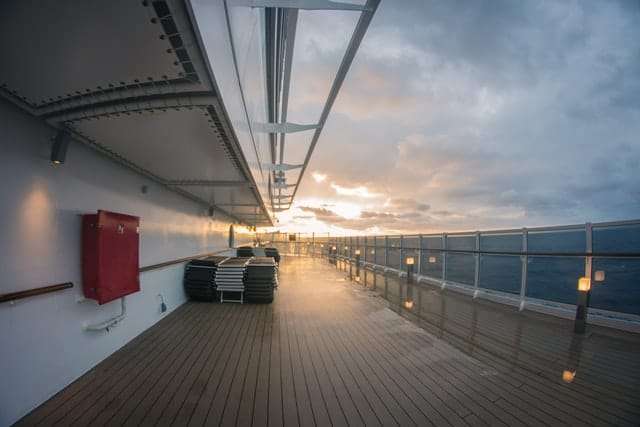
The smaller crowds on the ship also meant that it was easier to get on and off the ship. Even waiting in line right when the doors were opened to the deboarding ramps, the lines were small.
Our deboarding process only the amount of time it to actually walk off the ship. We ran into ship staff, who take turns with days off at each port of call, and they said it was usually much more crowded and chaotic on port days.
6. You (and Your Kid) Will Make Friends More Easily
The lack of crowds also means that you’ll never have a hard time checking your kid into the kids club. On our cruise ship that held over 3,000 people, there were only about 30 kids on board.
The kids’ ages ranged from infants to teenagers, so the number of kids close in age to our son was fairly small. This meant that the kids ages 6-11 got to be very close friends.
Several of us worked with the maitre d’s at dinner to change tables and sit together. We even changed from open table seating to early timed seating with a simple request to the manager.
This wouldn’t have been as easy to do in a fully booked ship on a traditional cruise circuit.
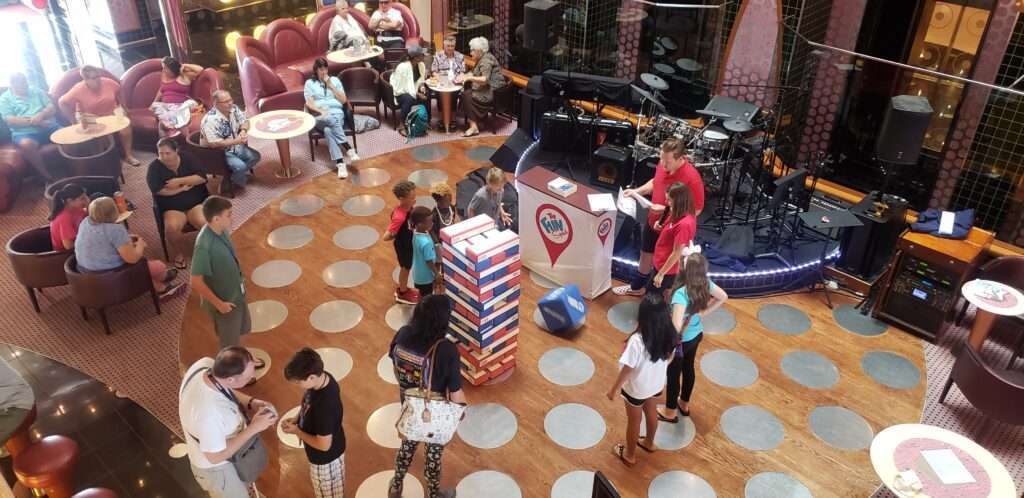
This also meant that all the parents got to know each other pretty well, and we could easily make plans with them for our kids to socialize.
After three weeks with the same set of adults with kids, we got to be pretty good friends. As did our kiddos. Years later, we are still in touch with many of them.
7. Mega Points!
Most major cruise lines offer membership rewards cards or programs. These usually have categories based on the number of days you’ve sailed with the cruise line.
Usually, repositioning cruises work on a longer sailing timeframe than the traditional one-week cruise. This means you go up in status MUCH faster on a single repositioning cruise than a single Caribbean cruise.
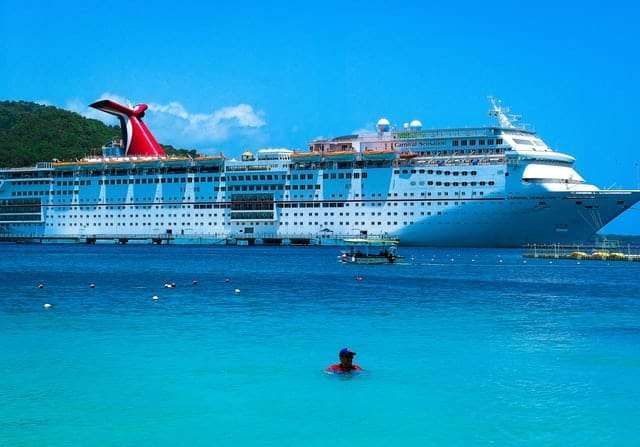
We had never sailed with Carnival before, since this was our first cruise EVER. In our 24-day cruise we went from newbie cruisers to the second-tier status.
So if we ever sail with Carnival again we’ll get a bunch of bonus perks!
Drawbacks to How Repositioning Cruises Work
Time is the biggest drawback to booking a relocation cruise. Instead of getting to Asia in two days, it took us about three and a half weeks.
Especially for Americans, it can be difficult to get that much time off work or school for vacation.
Most of the people on our ship were either self-employed (like us) or retired. The kids on board with us were either homeschooled or got permission from their school to take the time off.
As digital nomads, we can make our own schedules. However, if we aren’t working, we aren’t earning. Internet isn’t great in the middle of the ocean. So we weren’t able to work during the time we were cruising.
This meant that we needed an extra cushion of funds to depend on while we got back into the swing of remote work after arriving in Asia.
Because repositioning cruises work on a one-way travel system, airfare scheduling can be more difficult. It can also be more expensive, especially if you’re booking flights from more exotic destinations.
If you aren’t planning to make a repositioning cruise work as your mode of relocation, don’t forget to factor in the cost of airfare back to your hometown.
Travel Tips for Making Repositioning Cruises Work for You

- Be flexible with when and where you’re traveling. This will ensure you get the best repositioning cruise deals.
- Even if you’re traditionally a luxury cruise person, don’t be afraid to book on a different line. After all, different cruises have different amenities and unique ports of call.
- Embrace sea days! Typically there are fewer days at sea on a normal cruise itinerary. It tends to be the opposite with repositioning cruises. We loved sea days because they were more relaxing than port days.
- If you find something you like, book it fast! Repositioning cruises have grown in popularity. The prices on repositioning cruises almost never go down the closer to the departure date.
- Even if you aren’t usually seasick on cruises, most repositioning cruises work itineraries that traverse the open ocean. We were warned that the water between the mainland US and Hawaii could get quite rough.
Thankfully, we lucked out and had calm seas the entire 24-day journey. But I was grateful we had some motion sickness meds just in case.
👉 Take Dramamine for both adults and for kids. If you aren’t into pills, we have heard good things from friends about these motion sickness patches.
How Do Repositioning Cruises Work: Conclusion
Whether you call it a transoceanic cruise, repositioning cruise, long-term cruise, one-way cruise, or relocation cruise they’re all the same thing. As you can see, there are a number of benefits to taking one!
Despite not being able to work while cruising, we came out of the experience believing that this was worthwhile to relocate to another country by cruise ship.
Overall, repositioning cruises work best for people who have a bit of time and enjoy visiting unusual destinations.
👉 We recommend Cruise Critic for sourcing repositioning cruises.


